


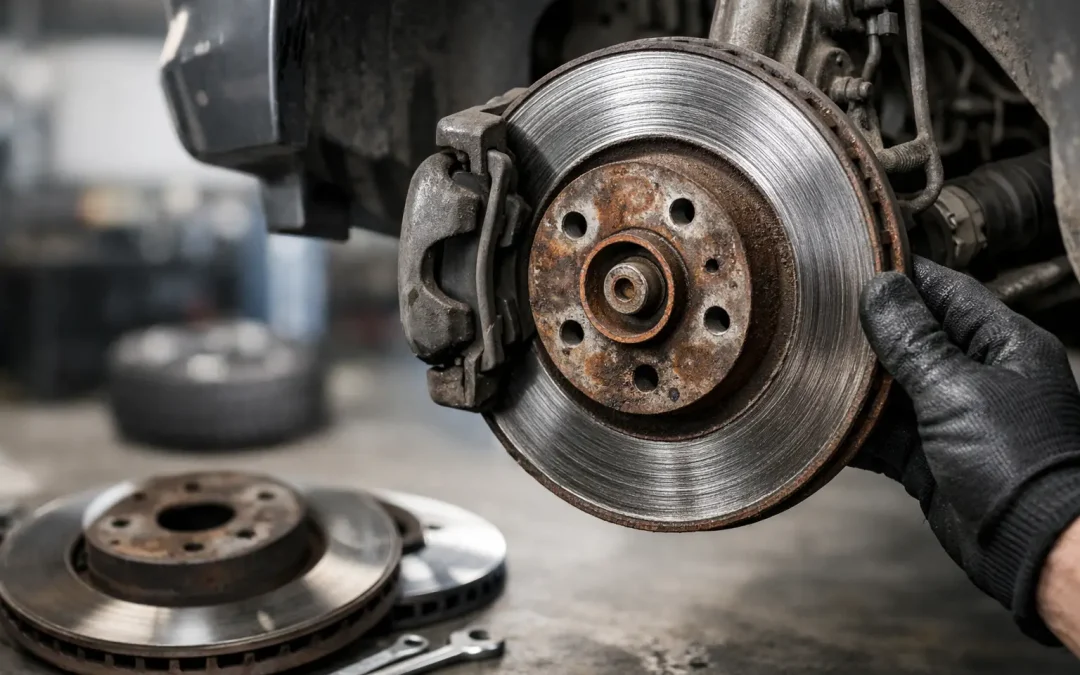
You usually feel brake rotor problems before you fully understand them. The brake pedal might start pulsing at the lights, the steering wheel may shimmy on the highway, or the car just stops with less confidence than it used to. These are common signs of worn brake rotors, and they are not the sort of warning you should put off until next service.
Brake rotors are the metal discs your brake pads clamp onto to slow the vehicle. Every time you brake, they deal with heat, pressure and friction. Over time, that wear is normal. The issue is knowing when normal wear has turned into a safety problem, or when another fault is being mistaken for rotor wear. That is where proper diagnosis matters.
What worn brake rotors actually mean
A worn rotor is not always just an old rotor. In some cases, the disc has thinned down past its safe minimum thickness. In others, the surface may be heat-spotted, grooved, cracked, warped or unevenly worn. The result is the same – reduced braking performance, extra stress on pads and calipers, and a vehicle that does not brake as smoothly or safely as it should.
For everyday drivers, that can show up as annoying vibrations or noises. For 4x4s, tow vehicles and heavier setups, worn rotors can become a bigger issue much faster because the braking system is working harder more often.
7 signs of worn brake rotors
1. The brake pedal pulses under your foot
This is one of the most recognised signs of worn brake rotors. If the pedal rises and falls or pulses when you slow down, the rotor surface may no longer be even. People often call this “warped rotors”, but the cause can also be uneven material transfer from the pads or thickness variation across the disc.
Either way, the pads are no longer contacting the rotor evenly. That means braking becomes less smooth and, in some cases, less effective.
2. The steering wheel shakes when braking
If the steering wheel shudders as you brake, especially from higher speeds, the front rotors are often worth checking. Vibration through the wheel usually points to a problem in the front braking system because that is where most of the stopping force happens.
That said, it depends. Wheel balance, suspension wear and tyre issues can also cause shaking. The difference is that rotor-related vibration tends to appear mainly when the brakes are applied.
3. You hear scraping, grinding or a harsh rubbing sound
Brake noise is not always caused by rotors, but worn or damaged discs are a common reason. Deep grooves, scoring or rust build-up on the rotor surface can create a rough contact point for the pads. If the pads are also worn down, metal-on-metal contact can quickly damage the rotor beyond repair.
A light squeal can sometimes just be pad material or brake dust. A harsh grinding sound is different. That needs attention straight away.
4. The car takes longer to stop
A braking system in good condition should feel predictable. If you have to press harder than usual, or the vehicle is not pulling up as confidently as it should, worn rotors could be part of the problem.
This is especially relevant if the issue has developed gradually. Drivers often adapt without noticing at first. They leave a bigger gap, press earlier, and get used to a brake pedal that no longer feels right. That does not mean the vehicle is safe. It just means the problem has become familiar.
5. You can see grooves, scoring or a lip on the rotor edge
You do not need to be a mechanic to spot obvious rotor wear. If you can see deep circular grooves on the disc surface, or feel a pronounced lip around the outer edge, the rotor has been wearing down for some time.
Surface rust after rain is normal and often clears after a short drive. Heavy corrosion, pitting or visible heat marks are different. Those signs usually mean the rotor surface is compromised and should be inspected properly.
6. There is a burning smell after braking hard
Rotors that are overheating can give off a hot, acrid smell, especially after repeated braking on hills, towing, or stop-start driving. On its own, that smell does not automatically confirm rotor wear. It can also point to dragging calipers, seized slide pins, poor-quality pads or a brake system working beyond its intended load.
Still, overheating and rotor damage often go together. If a rotor has been exposed to repeated high heat, it may develop hard spots, surface cracking or thickness variation.
7. The vehicle pulls or feels unsettled under braking
A worn rotor can contribute to uneven braking force from one side to the other. The car might pull slightly, feel nervous when stopping, or seem less stable in wet conditions.
Again, it depends on the full condition of the brake system. A sticking caliper, uneven pad wear or contaminated brake components can create similar symptoms. That is why guessing is not enough with brakes. The right repair starts with the right fault found first.
Why brake rotors wear out sooner than expected
Brake rotors are consumable parts, but some wear out faster than they should. One common cause is driving style. Heavy braking, frequent downhill driving and towing all generate more heat and shorten rotor life.
Another factor is the quality of the parts fitted. Cheap pads and rotors can wear unevenly, create more noise and struggle with heat. That is often where drivers end up paying twice – once for the cheaper parts, and again when they need replacing much sooner.
Vehicle setup matters too. Larger tyres, increased GVM, extra touring gear and heavy trailer loads all ask more of the braking system. In those cases, standard brake components may be doing a job they were never really designed for.
Can brake rotors be machined, or do they need replacing?
Sometimes rotors can be machined, but not always. If there is enough material left above minimum thickness and the damage is minor, machining may restore a clean, even surface. If the rotor is too thin, badly scored, cracked, heat-damaged or already near its limit, replacement is the safer option.
This is where honest advice matters. Not every rotor has to be replaced immediately, but not every rotor should be machined just to save money in the short term. The right call depends on thickness, condition, how the vehicle is used and whether the repair will hold up properly.
Why you should not ignore worn rotors
Rotor problems rarely fix themselves. Left too long, they can wear pads faster, overwork calipers, increase stopping distances and make the whole braking system less predictable. In emergency braking, that loss of consistency matters.
There is also the cost side. Catching rotor wear early may mean a simpler repair. Leaving it until pads are damaged, calipers are affected or the braking system has overheated can turn it into a much more expensive job.
What to do if you notice signs of worn brake rotors
If the vehicle is vibrating, making brake noise, or just not stopping as it should, get it checked sooner rather than later. A proper inspection should include rotor thickness measurement, pad condition, caliper operation and a check for related faults that can mimic rotor wear.
That is especially true before a road trip, before towing, or if your vehicle carries extra load regularly. For drivers around Albury Wodonga, where regional driving can mean long distances, varied roads and more towing use, brake issues have a habit of showing up at the worst possible time.
At Albury Brake and Clutch Centre, the focus is on diagnosing the issue properly and recommending the repair that makes sense – no pressure, no unnecessary extras, just brakes done properly.
If your brakes have started feeling different, trust that instinct. A small vibration or noise now is often the first warning that something in the system needs attention, and the earlier you act, the easier it usually is to put right.