


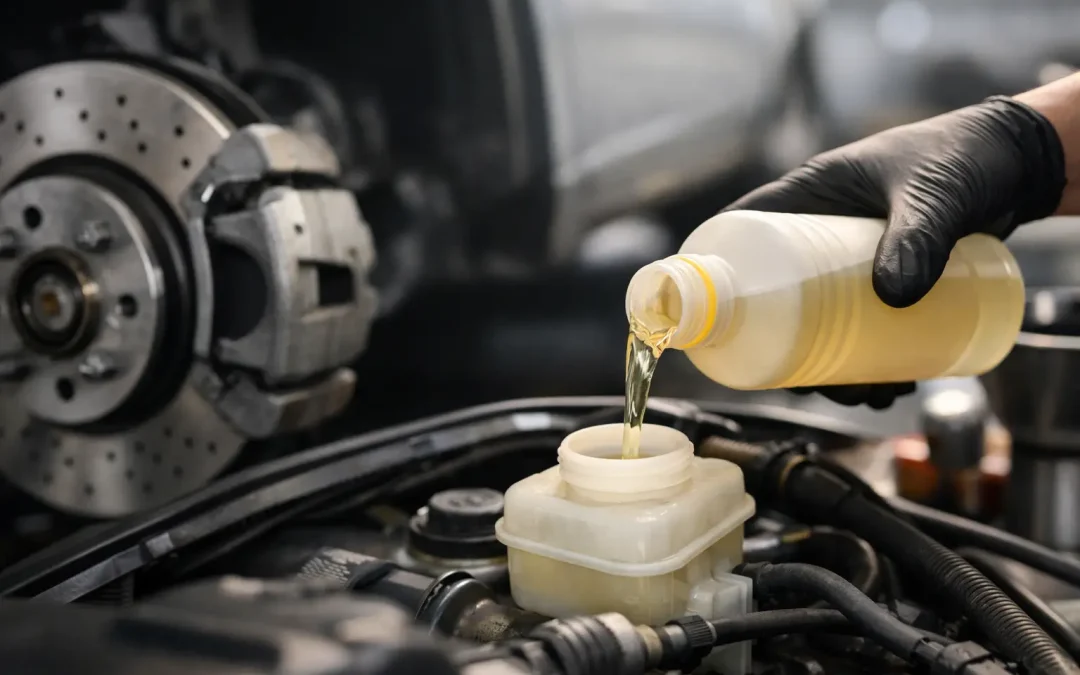
Brake fluid usually gets ignored until the pedal feels wrong – and by then, you may already be dealing with reduced braking performance or avoidable wear. If you’re wondering how often should brake fluid be changed, the short answer is usually every 2 years, but the right interval depends on your vehicle, driving conditions and the fluid already in the system.
Unlike engine oil, brake fluid is not something most drivers think about between services. The problem is that it does not stay in the same condition forever. Brake fluid absorbs moisture over time, and that changes how well your braking system performs under pressure and heat. In a safety-critical system, that matters.
How often should brake fluid be changed in real terms?
For most passenger vehicles, a brake fluid change every 2 years is a solid rule of thumb. Some manufacturers specify a time-based interval, while others may recommend it at a certain kilometre mark, often around 40,000 km. If your owner’s manual gives a clear interval, that should always be the first reference point.
That said, there is no one-size-fits-all answer. A car used mainly for short local trips may age its brake fluid differently to a 4×4 that tows a caravan through hilly country. Time matters as much as distance because brake fluid absorbs moisture from the air even when the vehicle is not doing big kilometres.
If your vehicle tows, carries heavy loads, sees regular mountain driving or spends time off-road, brake fluid condition becomes even more important. Heat is one of the biggest enemies of consistent braking, and older contaminated fluid handles heat far worse than fresh fluid.
Why brake fluid needs changing at all
Brake fluid works by transferring the force from your foot on the pedal to the brakes at each wheel. For that to happen properly, the fluid needs to stay stable under pressure and high temperature.
The issue is that most common brake fluids are hygroscopic, which means they absorb moisture over time. Even in a sealed braking system, small amounts of moisture can still enter through hoses, seals and normal atmospheric exposure during servicing. Once water content rises, the fluid’s boiling point drops.
That is where problems start. Under heavier braking, especially when towing or driving in stop-start traffic, brake temperatures rise. If the fluid gets hot enough to boil, it can create vapour in the system. Vapour compresses far more than fluid, which can leave you with a soft pedal, reduced braking response or a pedal that suddenly feels inconsistent.
Moisture can also contribute to internal corrosion. That puts parts like calipers, wheel cylinders, ABS components and the master cylinder at risk. Replacing brake fluid at the right time is much cheaper than replacing damaged hydraulic components.
Signs your brake fluid may be overdue
You cannot always judge brake fluid condition by sight alone, but there are a few signs that should not be brushed off.
A brake pedal that feels spongy or less responsive than usual is one of the more obvious warnings. If braking effort feels inconsistent, especially after the brakes heat up, old fluid could be part of the problem. A fluid reservoir that shows dark or dirty-looking fluid can also be a clue, though colour alone is not a proper test.
If your vehicle is due by time and you cannot remember the last brake fluid service, that is reason enough to have it checked. In many cases, there are no obvious symptoms until the fluid has already degraded well past where it should be.
A proper workshop will not guess. Fluid testing, service history and the condition of the broader brake system should all be considered before recommending work.
What changes the brake fluid interval?
Driving conditions play a big part. A vehicle that spends most of its life on the highway may place less heat stress on the brakes than one doing repeated school runs, steep descents or stop-start urban driving. Towing is another major factor, particularly with utes and 4x4s that carry extra weight or run upgraded GVM setups.
Vehicle design matters too. Some braking systems are more sensitive than others, especially modern vehicles with ABS and electronic stability systems. Those components rely on clean, stable hydraulic fluid to operate correctly.
Then there is service history. If a vehicle has missed intervals in the past, it may be worth being more cautious rather than trying to stretch the next change. Old fluid does not improve with time, and leaving it too long can create faults that go beyond the fluid itself.
Should you wait for symptoms?
No. Brake fluid is a maintenance item, not something to leave until there is a clear problem. By the time symptoms show up, braking performance may already be compromised, or internal wear may already be underway.
That does not mean every vehicle needs the same treatment on the same date. It means brake fluid should be assessed properly and replaced based on time, use and condition – not ignored because the pedal still feels acceptable today.
This is where specialist brake servicing matters. A proper inspection looks at the fluid, but also the pads, rotors, hoses, calipers and the general feel and operation of the system. If there is another issue causing poor pedal feel, that needs to be diagnosed properly rather than assuming fluid is the only cause.
What happens during a brake fluid change?
A proper brake fluid service is more than just topping up the reservoir. Old fluid needs to be flushed through the system and replaced with the correct specification fluid for the vehicle.
That process helps remove contaminated fluid and moisture from the hydraulic lines and components. The system is then bled to remove any air and restore proper hydraulic pressure. Using the wrong fluid, mixing incompatible types or bleeding the system incorrectly can create more problems than it solves.
On vehicles with ABS or more advanced brake electronics, correct procedure matters even more. Some systems require specific methods or equipment to bleed properly. That is one reason brake fluid replacement is worth having done by a workshop that deals with braking systems every day.
Is dark brake fluid always bad?
Not always, but it should not be dismissed either. Brake fluid can darken with age and use, but colour alone does not tell you everything about moisture content or boiling point. Some fluid that still looks acceptable can already be past its best.
That is why testing and service records matter more than assumptions. A workshop focused on honest advice should be able to tell you whether the fluid is due, marginal or still serviceable, rather than pushing unnecessary work.
Brake fluid and heavier vehicles
If you drive a 4×4, tow regularly or have fitted larger tyres, brake fluid condition becomes even more important. Heavier vehicles ask more from the braking system, especially under sustained load. More heat, more braking effort and longer descents all place extra stress on the fluid.
In those cases, sticking closely to the recommended interval makes sense, and in some situations, checking fluid condition more often is wise. The same applies to vehicles set up for touring or trade use where reliability matters and downtime is more than just an inconvenience.
For drivers around Albury Wodonga doing a mix of local driving, highway kilometres and towing, brake fluid often gets worked harder than many realise.
The bottom line on brake fluid service intervals
If you want the practical answer, change brake fluid about every 2 years unless your manufacturer says otherwise. If the vehicle tows, works hard, has an unknown service history or shows signs of poor brake feel, get it checked sooner rather than later.
The cost of replacing brake fluid is modest compared with the cost of neglected brake components or reduced stopping performance when you need it most. More importantly, it is one of those services that helps keep the whole braking system working the way it should.
At Albury Brake and Clutch Centre, this is the sort of work that should be done properly the first time – with the right fluid, the right process and a clear explanation of what your vehicle actually needs.
If you are not sure when your brake fluid was last changed, that uncertainty is your answer. Get it checked, get straight advice, and make the decision before your brakes give you a reason to wish you had.