


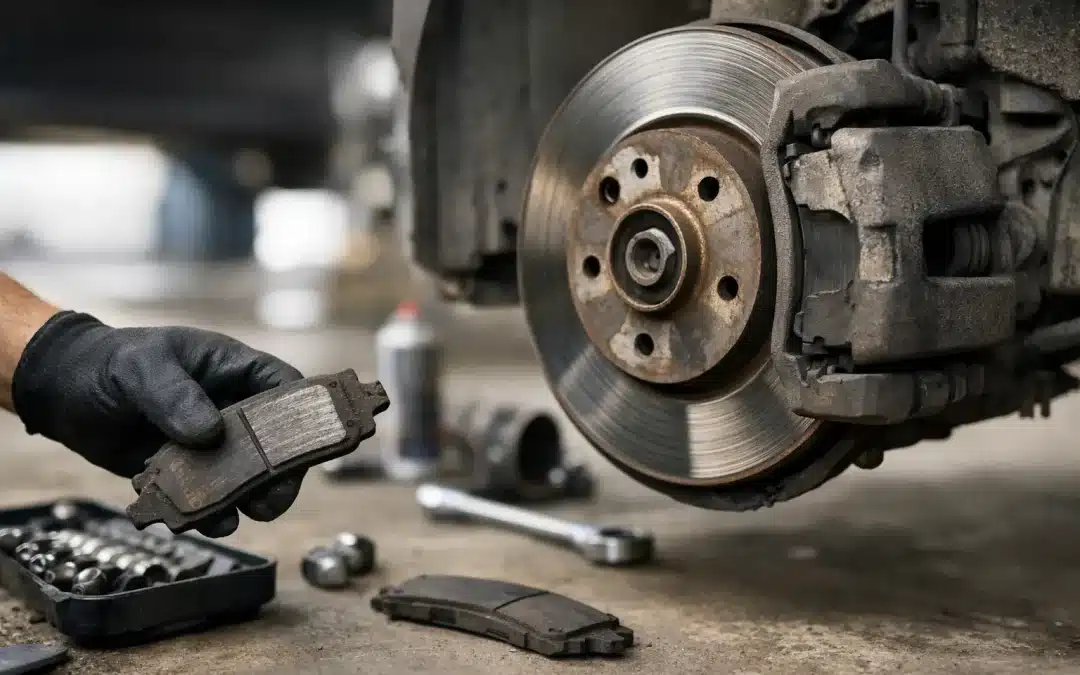
If your car pulls slightly under braking, the steering wheel shudders, or one pad wears out long before the other, you are likely dealing with one of the top causes of uneven brake wear. That kind of wear is not just a nuisance. It usually means a fault somewhere in the braking system, and if it is left too long, it can turn a straightforward repair into a more expensive one.
Brake pads and rotors are meant to wear at a fairly even rate. In the real world, that does not always happen. Driving style plays a part, but uneven wear is more often tied to a mechanical issue, poor-quality parts, or a brake system that has not been checked properly. The key is to find the actual cause rather than just fitting another set of pads and hoping for the best.
Why uneven brake wear should not be ignored
Brakes are a safety system, not a guesswork job. When one side or one corner of the vehicle is doing more work than it should, stopping distances can change, heat builds up where it should not, and other components start wearing faster as well.
You might first notice squealing, grinding, or a vibration through the pedal. Sometimes there is no obvious noise at all, and the problem only shows up during an inspection. That is one reason proper diagnosis matters. Replacing worn parts without checking the underlying fault often leads to the same issue coming back.
The top causes of uneven brake wear
1. Sticking caliper slides or seized calipers
This is one of the most common faults. A brake caliper needs to move freely so the pads apply even pressure to the rotor. If the slides are dry, corroded or partly seized, one pad can stay in contact with the rotor more than it should. That creates extra heat and rapid wear on one side.
A fully seized caliper is worse again. It can cause constant drag, a burning smell, poor fuel economy and a vehicle that pulls to one side. In some cases, the inner pad wears out much faster than the outer pad, which is easy to miss without removing the wheel and inspecting it properly.
2. Worn or poor-quality brake pads
Not all brake pads wear the same way. A cheap or unsuitable pad compound can wear quickly, glaze over, or struggle with heat. That matters even more if the vehicle tows, carries heavy loads, or runs larger tyres.
On a family car used for school runs, poor pad quality might just mean shorter life and more dust. On a 4×4 or ute used for towing, it can mean the brakes are working outside their comfort zone all the time. In those cases, uneven wear may be a sign the parts fitted are not matched to how the vehicle is actually used.
3. Rotor problems
Brake rotors need a clean, even surface and correct thickness to work properly. If a rotor is badly scored, heat-spotted, warped or worn below spec, the pad will not contact it evenly. That can create high spots and low spots across the pad surface, leading to patchy wear and vibration under braking.
Rotor issues are not always obvious from the driver’s seat. A slight shudder might only happen at higher speeds or on a long downhill section. Machining or replacement depends on rotor condition, thickness and overall system health. Sometimes replacing pads alone is false economy if the rotor surface is already compromised.
4. Brake hose or hydraulic faults
Braking relies on hydraulic pressure being applied and released cleanly. If a flexible brake hose starts to break down internally, it can act like a one-way valve. Pressure goes to the caliper, but it does not release properly. The result is a brake that drags and wears one pad or one wheel faster than the rest.
Master cylinder and ABS-related faults can also affect brake balance, although those are less common than caliper and pad issues. The point is that uneven wear is not always just about the visible parts. Sometimes the problem sits deeper in the hydraulic side of the system.
Other common causes of uneven brake wear
5. Incorrect installation
Brake work needs to be done properly. Pads fitted without cleaning contact points, missing hardware, incorrect lubrication, or bolts not torqued correctly can all cause trouble. Even something as simple as not bedding in new pads and rotors correctly can affect wear patterns early.
This is where specialist brake work makes a difference. A rushed fit-up might look fine on day one, but it often shows up later as noise, poor feel, or one side wearing faster than the other.
6. Suspension or wheel bearing issues
Not every brake wear problem starts in the brakes. Worn suspension bushes, loose ball joints, alignment problems or failing wheel bearings can change how the rotor and pad meet under load. If components are moving more than they should, braking force can become inconsistent.
This is one of those it-depends situations. If the wear is mild, the issue may still be local to the caliper or pad. If there is movement elsewhere in the front end, a proper inspection should include those areas too. Otherwise, the brake parts may be replaced while the real cause remains.
7. Driving conditions and heat load
Regional driving, stop-start traffic, steep descents, towing and fully loaded vehicles all put more heat into the brakes. Heat on its own does not always cause uneven wear, but it exposes weaknesses fast. A marginal pad, sticky slide or undersized setup becomes a bigger problem once the system is under sustained load.
This is especially relevant for 4x4s set up for touring or towing. Add larger tyres, more accessories and increased vehicle weight, and the standard brake package may no longer be ideal. In that case, uneven wear can be the first sign the vehicle needs a more suitable brake setup rather than another standard replacement.
Signs your brake wear is uneven
Some vehicles make the warning obvious. Others do not. Common signs include the car pulling left or right during braking, squealing from one corner, vibration through the pedal or steering wheel, reduced braking performance, or one wheel producing more brake dust than the others.
You might also notice the outer pad looks reasonable while the inner pad is almost gone. That is a classic sign of a caliper movement issue. If the wear pattern is diagonal, tapered, or much heavier on one end of the pad, that points to a fault worth investigating rather than normal wear and tear.
Why replacing pads alone often does not fix it
A lot of brake problems get masked by fresh parts for a short time. New pads might feel better for a few weeks, but if a caliper is dragging or the rotor surface is poor, the same uneven wear comes back.
That is why diagnosis matters as much as the repair itself. A proper brake inspection should look at pad thickness, rotor condition, caliper operation, slide movement, hardware, fluid condition and any related front-end issues. It is not about making the job bigger than it needs to be. It is about fixing the actual problem once.
What to do if you suspect uneven brake wear
If the vehicle is making noise, pulling up poorly, or the brakes feel different from normal, get it checked sooner rather than later. Brake wear does not usually improve on its own. The longer a sticking caliper or damaged rotor is left in service, the more likely it is to take other parts with it.
A good workshop will tell you whether the fix is simple or whether there is a broader issue in the system. In many cases, catching it early means a smaller repair bill and less time off the road. That matters whether it is the family car, a work ute, or a touring 4×4 that needs to be dependable.
At Albury Brake and Clutch Centre, this is exactly the kind of fault that benefits from specialist attention rather than a quick guess. Uneven brake wear usually has a reason behind it, and once that reason is found, the right repair is much more straightforward.
If your brakes are wearing unevenly, making noise or just not feeling right, trust that instinct. A small change in brake feel is often the first sign something needs attention, and getting it sorted early is usually the smarter, safer move.