


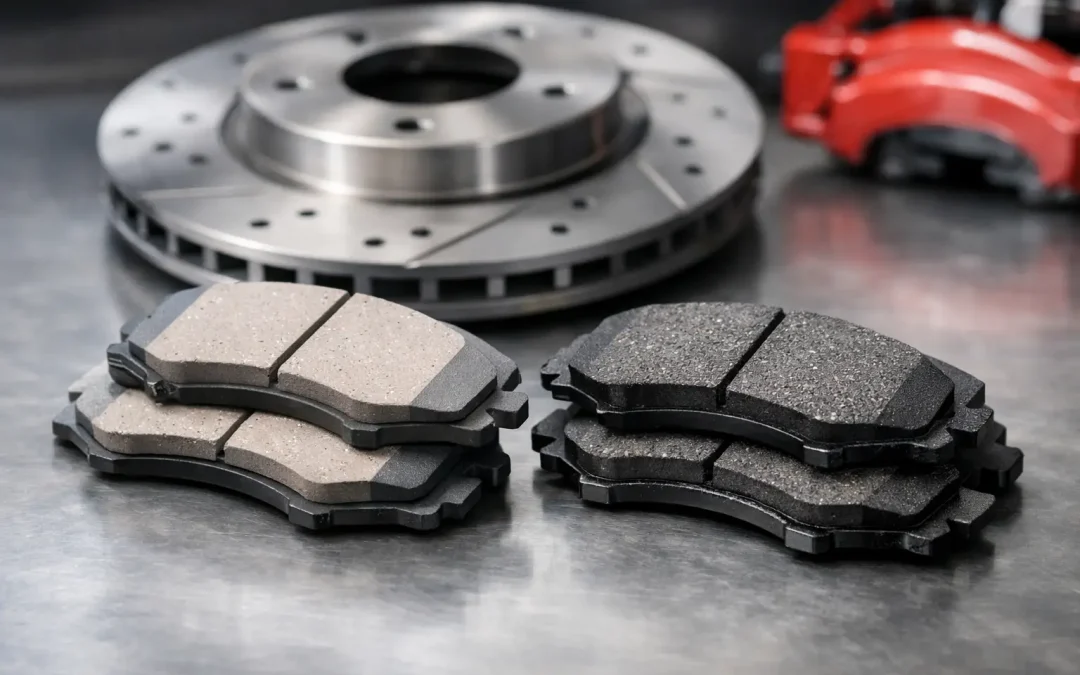
You usually notice the wrong brake pad choice after the money has been spent – squealing at the lights, black dust all over the wheels, or brakes that feel ordinary once the vehicle is loaded up. When people ask about ceramic vs semi metallic brake pads, they are really asking a practical question: what will stop well, last properly, and suit the way I actually drive?
The answer is not as simple as saying one is better than the other. Brake pads need to match the vehicle, the driving conditions, and the driver’s expectations. A pad that feels excellent in a small commuter car can be a poor fit in a 4×4 that tows a caravan on weekends. In the same way, a pad built for heavier work can feel noisy or dusty in a family runabout where comfort matters more than outright bite.
Ceramic vs semi metallic brake pads: what’s the difference?
Ceramic brake pads are made from a dense friction material that typically includes ceramic fibres, bonding agents and small amounts of metal. They are designed to provide smooth braking, quieter operation and less visible brake dust. That is why they are often fitted to passenger cars where comfort and clean wheels matter.
Semi metallic brake pads contain a higher proportion of metal, often including steel, copper or iron mixed with friction materials and resins. That extra metal content helps them transfer heat and deliver strong braking performance, particularly when the brakes are working hard. For many heavier vehicles and tougher driving conditions, that matters.
On paper, both types stop the vehicle. In real use, they behave differently. Ceramic pads generally lean towards refinement. Semi metallic pads generally lean towards stronger bite and better heat handling.
How ceramic pads behave on the road
Ceramic pads are often the pick for everyday drivers who want predictable braking without extra noise or mess. They tend to engage smoothly, which can make the brake pedal feel more progressive in normal traffic. Around town, that can be a very comfortable setup.
They also usually produce finer, lighter-coloured brake dust, which is less obvious on the wheels. For drivers who hate seeing dark dust building up after a few days, that is a genuine advantage.
Another plus is noise control. While any brake pad can become noisy if the rotors are worn, the hardware is poor quality, or the installation is not done properly, ceramic pads are commonly quieter in normal driving. That is part of their appeal for late-model passenger vehicles.
Where ceramic pads can be less convincing is under sustained heavy braking or high-load use. If a vehicle regularly tows, carries extra weight, runs larger tyres or spends time descending long hills, ceramic pads may not offer the same level of confidence as a quality semi metallic option. They can still work well in some applications, but the pad needs to suit the job.
How semi metallic pads behave on the road
Semi metallic pads are usually chosen when braking performance matters more than refinement. They tend to offer stronger initial bite, and they generally manage heat better when the brakes are repeatedly worked hard. That makes them a common choice for utes, 4x4s, performance vehicles and anything doing towing or country kilometres.
If you drive a heavier vehicle, or one that has been modified with larger tyres or increased GVM, the extra braking demand is real. In those cases, semi metallic pads often make more sense because they are better suited to the extra load and heat.
The trade-off is that they can be noisier and dustier. Some drivers notice more wheel dust, and some notice a firmer or slightly harsher feel through the pedal. Depending on the formulation, semi metallic pads can also contribute to more rotor wear than ceramic pads. That does not mean they are a bad choice. It just means there is no free lunch.
Which brake pad lasts longer?
People often expect a straight answer here, but lifespan depends on more than pad material. Vehicle weight, traffic conditions, rotor condition, driving style and installation quality all affect wear.
In many normal passenger car applications, ceramic pads can wear slowly and deliver good service life. They are stable and well suited to steady commuting. But if they are used in a vehicle or driving condition they are not designed for, wear can increase and braking performance can fall away sooner than expected.
Semi metallic pads can also last very well, especially in applications where their heat handling and stronger friction characteristics are an advantage. In a heavier vehicle doing harder work, they may outlast a ceramic pad simply because they are the more suitable product.
This is why proper diagnosis matters. The best pad is not the one with the longest advertised lifespan. It is the one that matches the vehicle and the way it is used.
Noise, dust and comfort
For many drivers, braking feel matters just as much as stopping power. If the vehicle is mainly used for school runs, commuting and local errands, a quiet and clean pad can make everyday ownership easier.
That is where ceramic pads often come out in front. They are usually the more civilised option. Less visible dust and lower noise levels are worthwhile if the vehicle is lightly loaded and driven in ordinary conditions.
Semi metallic pads are usually less concerned with being polite. They are built to cope with harder work, and sometimes that means more noise and more brake dust. For a driver focused on towing confidence or stronger braking under load, those compromises may be completely acceptable.
Heat is where the real difference shows up
Brakes convert speed into heat. The harder and longer they work, the more important heat control becomes. This is where a lot of confusion around brake pads gets cleared up.
If a vehicle spends most of its life in moderate suburban or highway driving, heat may never become a major issue. In that case, ceramic pads can be an excellent fit.
But if the vehicle is towing, descending long ranges, carrying tools, pulling a trailer, or fitted with accessories that add weight, brake temperatures rise fast. Semi metallic pads generally cope better with that repeated heat. They are often the safer and more durable choice in those conditions.
That is especially relevant for 4x4s and work utes. A pad that feels fine unloaded around town can become marginal once the vehicle is packed for a trip or hitched to a van.
So which one should you choose?
If you drive a passenger car, small SUV or daily family vehicle and you value quiet operation, lower dust and smooth braking, ceramic pads are often a smart choice. They suit normal road use well when matched with quality rotors and fitted correctly.
If you drive a heavier vehicle, tow regularly, carry loads, or want stronger bite and better performance under heat, semi metallic pads are often the better option. They are commonly the more appropriate choice for hard-working setups.
There is also a middle ground that gets missed. Not all ceramic pads behave the same way, and not all semi metallic pads are aggressive or noisy. Pad quality, vehicle design and rotor compatibility all matter. A cheap pad of either type can be disappointing. A good quality pad, fitted properly to a sound braking system, is what delivers results.
Why the rest of the brake system matters
Brake pads do not work in isolation. Rotor condition, caliper operation, brake fluid, hardware and bedding-in procedures all affect the final outcome. A new pad fitted to worn or unsuitable rotors will not perform as it should. The same goes for sticking calipers or poor-quality hardware.
That is one reason why specialist brake workshops take pad selection seriously. It is not just about selling a set of pads off the shelf. It is about checking how the vehicle is used, inspecting the full system, and choosing a setup that will work properly over time.
At Albury Brake and Clutch Centre, that kind of advice matters most for drivers who tow, tour or rely on their vehicle every day. The right brake package can make a noticeable difference in confidence and wear.
The better question to ask
Instead of asking whether ceramic or semi metallic pads are best, ask which pad suits your vehicle and driving. That is the question that leads to safer braking, better value and fewer regrets after the job is done.
If your priorities are comfort, low dust and quiet operation, ceramic may be the right fit. If your priorities are load carrying, heat control and dependable stopping under pressure, semi metallic may be the better choice. Either way, the best result comes from matching the parts to the real job, not just the catalogue.
Good brakes should feel dependable every time you press the pedal. If you are unsure what your vehicle actually needs, straight advice from a brake specialist is worth more than guessing from the box.