


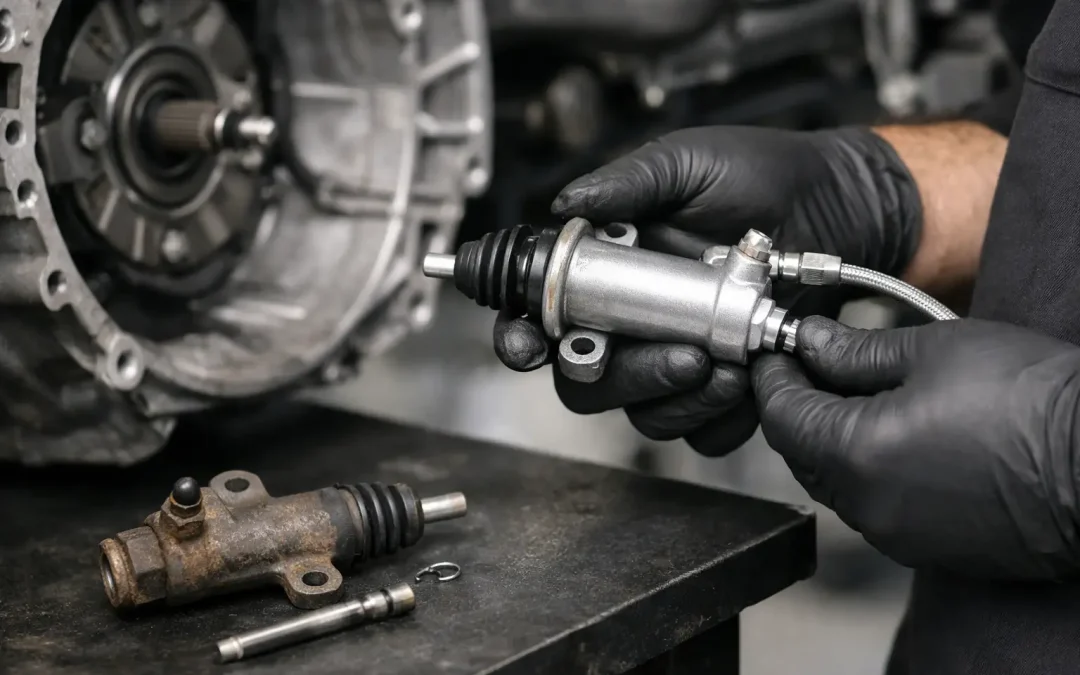
A clutch pedal that suddenly feels soft, sticks to the floor, or refuses to disengage properly is rarely something to ignore. In many cases, clutch slave cylinder replacement is the fix, but the real issue is making sure the fault has been diagnosed properly before parts are changed. That matters because clutch hydraulic problems can feel similar to worn clutches, master cylinder faults, or even gearbox-related issues.
What the slave cylinder actually does
Your clutch hydraulic system uses fluid pressure to transfer movement from the pedal to the clutch itself. When you press the pedal, the master cylinder creates hydraulic pressure, and the slave cylinder uses that pressure to move the release mechanism. That movement allows the clutch to disengage so you can change gears.
When the slave cylinder starts failing, the pressure in the system drops away or becomes inconsistent. That is when you get symptoms like difficult gear changes, a spongy pedal, low pedal engagement, or fluid loss. In some vehicles, the slave cylinder is mounted externally on the gearbox. In others, it is a concentric slave cylinder fitted inside the bellhousing around the input shaft. That design difference has a big effect on labour time and overall repair cost.
Signs you may need clutch slave cylinder replacement
The most common warning sign is a clutch pedal that feels wrong. Drivers often describe it as soft, springy, slow to return, or dropping to the floor. Sometimes pumping the pedal improves it for a short time. That usually points to a hydraulic issue rather than a worn friction plate alone.
You might also notice trouble selecting gears, especially reverse or first. If the clutch is not fully disengaging, the gearbox will resist the shift because the input shaft is still being driven. Some vehicles will creep forward slightly with the pedal fully depressed, which is another strong sign the clutch is not releasing as it should.
Fluid loss is another clue. If the clutch fluid reservoir keeps dropping, there is a leak somewhere in the system. On an external slave cylinder, you may see fluid around the cylinder body or on nearby components. On an internal slave cylinder, the leak can stay hidden inside the bellhousing, so the first obvious symptom may simply be loss of pedal pressure.
Then there is the intermittent fault – the kind that shows up in traffic, after the vehicle warms up, or only under load. These can be frustrating because they mimic other clutch problems. That is why proper diagnosis matters more than guessing.
Why diagnosis comes first
Not every poor clutch pedal means the slave cylinder has failed. The master cylinder can cause very similar symptoms. Air in the hydraulic system, contaminated fluid, damaged lines, worn seals, or mechanical clutch wear can all muddy the picture.
A good workshop will check pedal feel, inspect fluid condition, look for leaks, and test how the clutch is disengaging before recommending clutch slave cylinder replacement. If the slave cylinder is internal, there is even more reason to be certain. Replacing an internal unit generally means removing the gearbox, so you want to know the repair is necessary and that related wear items are being considered at the same time.
This is where specialist clutch workshops tend to save customers money in the long run. Accurate diagnosis avoids replacing the wrong part and helps prevent repeat labour.
External vs internal slave cylinders
An external slave cylinder is usually simpler to access. In many vehicles, it bolts to the outside of the gearbox and operates the clutch fork. If it leaks or fails, replacement can be relatively straightforward, followed by bleeding the system and checking clutch operation.
An internal slave cylinder is more involved. Often called a concentric slave cylinder, it sits inside the bellhousing and acts directly on the pressure plate fingers. The packaging is neat, but replacement is labour-heavy because the gearbox has to come out. That changes the repair conversation.
If the gearbox is already being removed for clutch slave cylinder replacement, it is often sensible to inspect the clutch kit, rear main seal, spigot bearing and related components at the same time. It depends on vehicle age, kilometres travelled, and the condition of the parts, but combining work can be far better value than paying for gearbox removal twice.
What causes a slave cylinder to fail?
Wear over time is the usual reason. The seals inside the cylinder harden, wear out, or become damaged, allowing fluid to bypass internally or leak externally. Heat, age, moisture contamination in the fluid and general use all contribute.
Fluid condition is often overlooked. Hydraulic fluid absorbs moisture over time, which can lead to internal corrosion and seal wear. In vehicles that tow, carry heavier loads, or spend time in stop-start driving, the clutch system can work harder and generate more heat. That does not automatically mean the slave cylinder will fail early, but it can add to long-term wear.
Poor-quality replacement parts can also create problems. A cheap hydraulic component that does not seal properly or has inconsistent manufacturing tolerances can fail far sooner than expected. For a repair as important as this, quality matters.
What happens during clutch slave cylinder replacement
The repair process depends on the vehicle design, but it should always start with confirmation of the fault. Once the problem has been identified, the old cylinder is removed and the new unit is installed. The hydraulic system is then bled to remove air, fluid levels are corrected, and clutch operation is tested.
With an external slave cylinder, the job is usually more straightforward. With an internal slave cylinder, gearbox removal is the major part of the labour. That is why workshops often discuss whether the clutch assembly should also be replaced if there are signs of wear. There is no one-size-fits-all answer. If the clutch is relatively new and in good condition, it may not need doing. If it is worn and the gearbox is already out, replacing it at the same time is often the more practical choice.
A proper repair should also include checking why the old component failed. If the fluid is contaminated, the line is damaged, or the master cylinder is weak, replacing only the slave cylinder may not solve the problem for long.
Can you keep driving with a failing slave cylinder?
Sometimes you can – for a while. That does not make it a good idea.
A failing slave cylinder can leave you unable to select gears or stuck in one gear with no warning. If the hydraulic pressure drops away completely, the clutch may stop disengaging altogether. That can turn a manageable repair into a breakdown at the side of the road, or worse, a safety issue in traffic.
Even before total failure, driving with poor clutch disengagement can put extra strain on the gearbox synchronisers and make the vehicle harder to control smoothly. If the pedal feel has changed or the gearbox is getting difficult to shift, it is worth having it checked sooner rather than later.
How much does clutch slave cylinder replacement cost?
This is where the answer really is: it depends.
The part itself may not be the expensive part of the repair. Labour is often the bigger factor, especially with internal slave cylinders. Vehicle make and model, gearbox layout, parts quality and whether other clutch components need attention all affect the final cost.
That is why clear quoting matters. A workshop should explain whether the cylinder is internal or external, whether gearbox removal is required, and whether there are sensible while-you’re-there options worth considering. Straight answers make it much easier to decide what is necessary now and what can reasonably wait.
Why quality workmanship matters
Hydraulic clutch repairs are not just about fitting a new part. The system needs to be bled correctly, checked for leaks, and tested under real operating conditions. A rushed job can leave trapped air in the system, poor pedal feel, or repeat failures that send you back to the workshop.
For regional drivers, tradies, family vehicles and 4×4 owners who rely on their vehicles every day, downtime is more than an inconvenience. It affects work, school runs, travel plans and towing reliability. That is why this sort of repair needs to be done properly the first time.
At a specialist workshop like Albury Brake and Clutch Centre, that means looking at the whole clutch hydraulic system, using quality components, and giving customers a clear explanation of what has failed and why. No guesswork, no pressure, and no replacing parts for the sake of it.
When to book it in
If your clutch pedal has gone soft, gear changes are getting harder, or the fluid level is dropping, do not wait for a complete failure. Early diagnosis can mean a simpler repair, less risk of collateral wear, and a better chance of avoiding being stranded.
The good news is that most clutch hydraulic faults are very manageable when they are caught early. A proper inspection gives you a clear picture of what is happening, what needs fixing now, and whether any related parts should be addressed at the same time. That kind of clarity is what turns an annoying clutch problem into a repair you can get sorted with confidence.