


A grinding noise when you press the brake pedal is not a sound to put off until next service. If you are asking, why are my brakes grinding, the short answer is that metal may be contacting metal somewhere in the braking system. The vehicle may still stop, but continuing to drive can turn a straightforward repair into damaged rotors, seized components and a much larger bill.
Brake noises are not all the same, and neither are the causes. A specialist inspection is the only way to confirm what is happening, but knowing the common reasons helps you make a safe call on what to do next.
Why are my brakes grinding when I stop?
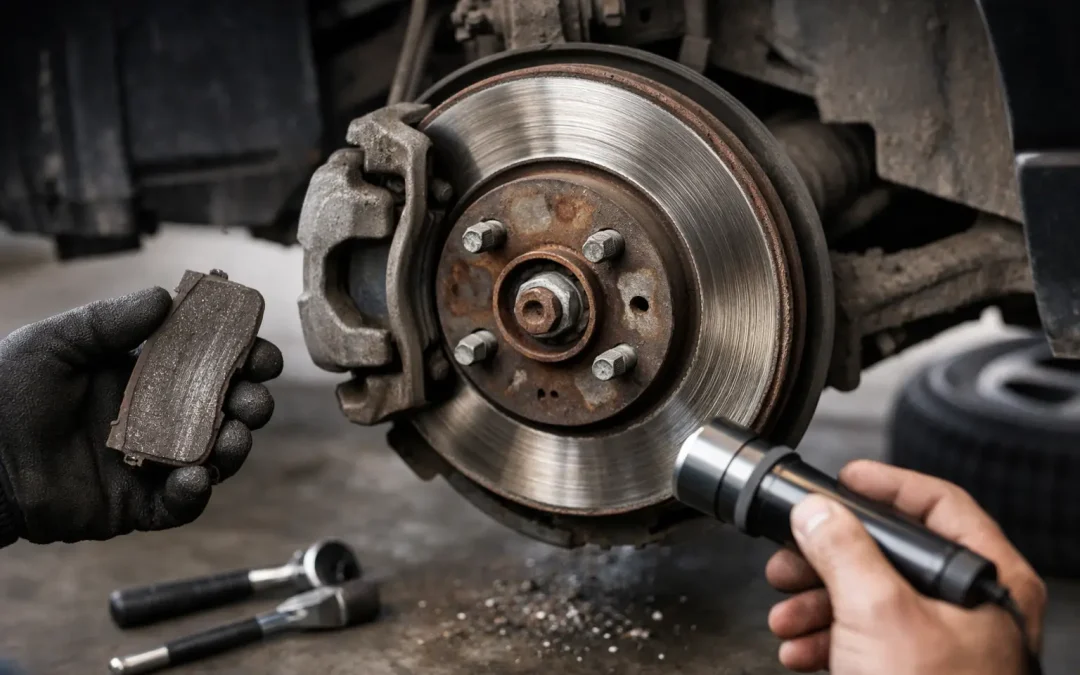
The most common cause is brake pads that are worn beyond their usable material. Brake pads have a friction lining designed to grip the brake rotor and slow the vehicle. Once that lining is worn away, the metal backing plate can rub directly against the rotor. That creates the harsh grinding or scraping noise many drivers notice when braking.
At this point, replacing the pads alone is often not enough. Metal-on-metal contact can score, groove or overheat the rotor. Depending on the damage and the rotor’s minimum thickness, the rotors may need machining or replacement as well. This is why acting early matters.
Some pads have a small wear indicator that makes a high-pitched squeal before the pad reaches the metal backing. Grinding usually means the warning has been missed, or the pads have worn quickly between checks. Not every vehicle gives the same warning, particularly if wear is uneven.
Worn or damaged brake rotors
Rotors can become badly scored from worn pads, but they can also suffer damage from heat, corrosion or debris. A rough rotor surface may make a grinding sound and can be felt through the brake pedal or steering wheel as a shudder under braking.
Towing, long downhill runs, heavy loads and repeated hard braking place extra heat into a brake system. That does not automatically mean something has failed, but it can expose components that are already worn or not suited to the vehicle’s use. For 4x4s with larger tyres, increased GVM or regular towing duties, the correct brake setup matters just as much as replacing parts when they wear out.
A stone or debris caught near the rotor
A small stone lodged between the brake rotor and backing plate can make a sharp scraping or grinding noise, sometimes even when you are not pressing the pedal. This can happen after driving on gravel roads, through roadworks or across rough tracks.
It may be a relatively simple fix, but do not assume that is the cause without checking. A noise that starts suddenly after a gravel road could be debris. A noise that has gradually worsened over days or weeks is more likely to be brake wear. Either way, forcing debris out yourself or bending the backing plate can create another problem.
Sticking calipers and uneven pad wear
Brake pads should wear at a reasonably even rate. If a caliper is sticking, a slide pin has seized or a brake hose is restricted, one pad may stay in contact with the rotor when it should release. The result can be rapid wear, heat damage, a burning smell, the vehicle pulling to one side or grinding from one wheel.
Replacing only the visibly worn pad without fixing the cause is false economy. A proper diagnosis checks the full braking assembly, including caliper operation, slide pins, pad fitment, rotor condition and brake fluid condition. That is how the repair is done properly rather than repeated a few months later.
Can I drive with grinding brakes?
It depends on the cause, but grinding brakes should be treated as an urgent safety issue. If the noise is loud, persistent or gets worse when braking, avoid driving the vehicle other than to get it safely inspected. If braking feels weak, the pedal feels unusual, the vehicle pulls, a warning light is on, or there is smoke or a hot burning smell, stop driving and arrange assistance.
A vehicle with grinding brakes can sometimes still feel as though it stops normally on a short trip. That is not proof the brakes are safe. Brake performance can deteriorate quickly once the friction material has gone, especially in wet conditions, traffic, on a steep descent or when towing.
Do not try to solve the problem by pumping the pedal, using the handbrake while moving or spraying products around the wheels. Those actions can make matters worse and do not address the underlying fault.
Grinding, squealing or scraping: does the sound matter?
The type of noise offers clues, although it cannot replace an inspection. A light squeal that disappears once the brakes warm up may come from pad material, moisture on the rotors or normal vibration. It still deserves mention at the next service if it persists.
A deep, coarse grind when applying the brakes is more concerning and commonly points to worn pads or rotor damage. Scraping that happens while cruising can indicate debris, a bent backing plate or a binding brake component. A clunk combined with grinding may suggest loose hardware or more serious mechanical wear.
Pay attention to when the noise occurs. Is it only at low speed? Does it happen in reverse? Is it worse after rain, when turning or under heavier braking? These details help the technician narrow down the fault efficiently. They also help separate a genuine brake issue from a wheel bearing, CV joint or driveline noise that may sound similar from inside the cabin.
What a proper brake inspection should check
Brake repairs should never be based on noise alone. The workshop needs to inspect both sides of the axle and assess the condition of the entire system. A sound inspection includes pad thickness and wear pattern, rotor thickness and surface condition, caliper and slide movement, brake hoses, fluid, hardware and any signs of leaks or overheating.
The technician should also road-test the vehicle where safe to do so, confirm the noise and check for pedal pulsation, pulling or vibration. On modern vehicles, warning lights and electronic brake systems may require additional checks. The aim is not to replace the most obvious part. It is to find out why it wore or failed and recommend only what is needed for a safe, durable repair.
Quality parts matter here. Cheap or unsuitable pads can be noisy, wear quickly or perform poorly under heat. The best choice depends on the vehicle and how it is used. A family SUV used for school runs has different needs from a work ute towing a trailer most days, or a touring 4×4 carrying extra weight across regional roads.
How to avoid another grinding brake problem
The simplest prevention is regular brake checks before the pads are completely worn out. Brakes should be inspected at scheduled services, before a long trip, and whenever you notice a change in noise, pedal feel or stopping performance. If you tow, carry heavy loads or drive regularly on dusty or unsealed roads, earlier inspections are sensible.
Avoid resting your foot on the brake pedal while driving, as this can create excess heat and wear. After water crossings or prolonged rain, a light application of the brakes at low speed can help clear surface moisture, provided the road is safe. Most importantly, do not wait for a minor squeal to become a grind.
For drivers in Albury Wodonga, Albury Brake and Clutch Centre can inspect the system, explain the fault in plain language and carry out the repair with components suited to the job. There is no benefit in guessing with brakes – a prompt inspection gives you straight answers and helps keep a small issue from becoming a safety risk.
If your brakes have started grinding, park the vehicle where safe, avoid unnecessary driving and book an inspection as soon as you can. Your brakes are designed to wear, but they should never be allowed to wear through.