


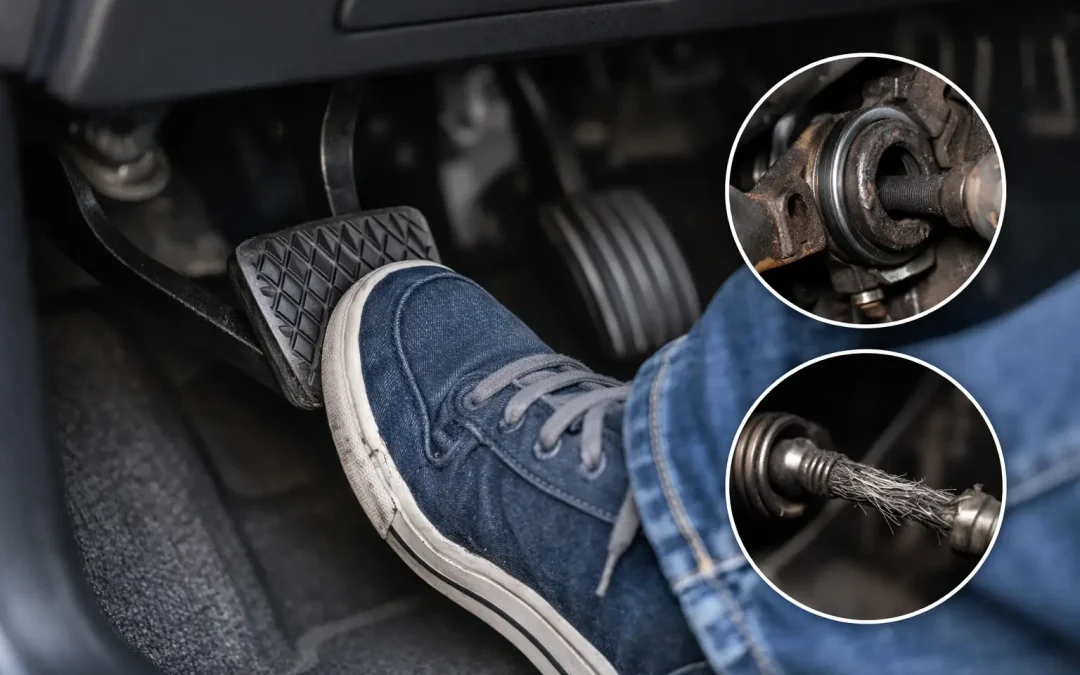
A clutch pedal that stays on the floor, returns slowly or feels as though it is catching is more than an annoyance at the lights. If you are asking, “why does my clutch pedal stick?”, your vehicle may be losing the ability to disengage the clutch properly. That can leave you unable to select a gear, stranded in traffic, or putting extra stress on the gearbox.
The fault might be a relatively contained issue around the pedal or hydraulic system. It can also point to wear inside the clutch assembly itself. The key is not to guess based on one symptom. A proper diagnosis identifies where the pedal movement is being lost, then fixes the cause rather than simply masking it.
Why does my clutch pedal stick?
Most modern manual vehicles use a hydraulic clutch system. Pressing the pedal moves fluid from the clutch master cylinder to the slave cylinder, which operates the clutch. If fluid pressure is lost, a cylinder is failing or air gets into the system, the pedal may stick down, feel soft or fail to return fully.
Older vehicles and some specific models use a cable-operated clutch. In those vehicles, a sticking pedal may come from a frayed, dry or kinked cable, or a worn pedal mechanism. Regardless of the design, the pedal, its linkage and the clutch release system all need to move freely and apply the right amount of force.
A sticking pedal does not always mean the clutch plate is worn out. However, it should not be ignored. The longer the vehicle is driven with a clutch fault, the greater the chance of being unable to change gears or causing further damage.
Common causes of a sticking clutch pedal
Low or contaminated clutch fluid
On many vehicles, the clutch hydraulic system shares a fluid reservoir with the brake master cylinder. A low fluid level can allow air into the clutch circuit, causing inconsistent pedal feel and poor clutch operation. Fluid that is old or contaminated can also affect seals and internal components.
Low fluid is a warning sign, not a repair in itself. Hydraulic fluid does not normally disappear. If the level is down, there may be a leak from the master cylinder, slave cylinder, a hose or fitting. Simply topping it up may get the pedal moving temporarily, but it does not address why the fluid was lost.
Failing clutch master cylinder
The clutch master cylinder sits near the pedal and converts pedal movement into hydraulic pressure. Internal seals can wear, allowing fluid to bypass inside the cylinder rather than being pushed through the system. The result may be a pedal that sinks, stays down, returns slowly or needs pumping before the clutch will disengage.
You may also notice dampness around the pedal area or on the firewall. Not every master-cylinder failure leaks externally, though. Internal bypass can produce confusing symptoms, which is why testing matters.
Failing clutch slave cylinder
The slave cylinder is located at the gearbox end of the hydraulic system. Depending on the vehicle, it may be mounted externally or built into the bellhousing as a concentric slave cylinder. External units can sometimes be replaced without removing the gearbox. Internal units often require gearbox removal, so it makes sense to inspect the clutch assembly at the same time.
A leaking or weak slave cylinder can make gear selection difficult, especially when the engine is running. You may find reverse crunches, first gear is hard to engage, or the vehicle creeps forward despite the pedal being fully depressed.
Air in the hydraulic system
Air compresses where hydraulic fluid does not. That means pedal pressure is not transferred efficiently to the clutch release mechanism. The pedal can feel spongy, have an inconsistent bite point or require repeated pumping.
A clutch system may need bleeding after component replacement, but air generally gets in because of a leak, poor previous repair or low fluid. Bleeding alone is only the answer when the rest of the system is confirmed to be sound.
Worn pedal pivot, return spring or linkage
Sometimes the problem is above the floor rather than under the bonnet. Pedal pivots can wear, bushes can bind and return springs can stretch, break or come loose. Dirt, corrosion or a damaged floor mat interfering with pedal travel can also create a sticking sensation.
These faults are often more noticeable as a pedal that physically catches or does not spring back cleanly, while the clutch itself may still release normally. They are usually less involved than gearbox-related repairs, but still need attention so the pedal remains predictable.
Clutch cable problems
A cable clutch can become stiff as the inner cable frays or loses lubrication. It may feel heavy, notchy or reluctant to return. If the cable finally breaks, the pedal may go to the floor with little resistance and the clutch will no longer disengage.
Do not try to lubricate a damaged cable and assume the issue is sorted. Once strands start fraying, replacement is the reliable fix.
Problems inside the clutch assembly
A worn release bearing, damaged clutch fork, faulty pressure plate or binding release mechanism can all affect pedal operation. In some cases, the clutch pedal feels normal but the clutch drags, making gear changes difficult. In others, the pedal effort changes suddenly, there is noise when the pedal is pressed, or the pedal does not return as it should.
These faults require the gearbox to be removed for inspection and repair. It is usually false economy to replace one worn internal part while leaving the clutch disc, pressure plate or release bearing with limited life remaining. The right scope depends on the vehicle, component condition and how much labour is involved in accessing the clutch.
Warning signs that mean you should stop driving
A clutch issue can progress without much notice. If the pedal stays on the floor, you cannot select gears, the vehicle moves with the pedal fully depressed, or fluid is visibly leaking, do not keep forcing it. Arrange an inspection rather than trying to drive home through traffic.
Take particular care if the clutch fluid reservoir is shared with the brake system. While the circuits are usually separate, a low reservoir should always be checked promptly because brakes are safety-critical. A spongy brake pedal, brake warning light or low brake fluid needs immediate attention.
If the pedal is only occasionally slow to return but gears still select cleanly, you may be able to drive a short distance to a workshop. Even then, avoid towing, steep hills, heavy loads and busy stop-start conditions. The fault can worsen quickly, and a failed clutch operation at the wrong moment is not worth the risk.
What a proper clutch diagnosis looks like
A good diagnosis starts by confirming the symptom. Is the pedal physically binding? Is it soft and hydraulic? Does it return normally but fail to disengage the clutch? These details point the inspection in the right direction.
The technician should check fluid condition and level, inspect for leaks, assess pedal pivots and springs, and test master and slave cylinder operation. Gear selection is then checked with the engine off and running. This helps separate a gearbox selection issue from a clutch-release problem.
If the hydraulic system appears sound but the clutch is still dragging or making noise, internal clutch components may need inspection. At that stage, clear advice matters. You should understand what has failed, which parts are recommended, what work is required to access them and why the repair is being proposed.
For vehicles used for towing, trade work or touring, it is also worth discussing whether the replacement clutch suits the job. A heavier-duty clutch can be useful for genuine load and towing demands, but the wrong choice can make pedal effort unnecessarily high or compromise everyday drivability. The best option is one matched to the vehicle and how you use it.
Can you fix a sticking clutch pedal yourself?
Checking that a floor mat is not obstructing the pedal and looking for an obvious fluid leak are sensible first checks. Beyond that, clutch faults are best left to a qualified technician. Brake and clutch fluid can damage paintwork, hydraulic systems need correct bleeding procedures, and internal clutch repairs involve gearbox removal and safe lifting equipment.
Avoid forcing the gear lever, pumping the pedal endlessly or continuing to drive with a known leak. Those workarounds can make a small fault more expensive and may leave you stuck when the pedal fails completely.
If your clutch pedal is sticking in Albury-Wodonga, Albury Brake and Clutch Centre can assess the full system, explain the fault in plain language and carry out the repair properly. A clutch pedal should feel consistent every time you use it – if it does not, getting it checked early is the practical way to protect your vehicle and your plans for the day.