


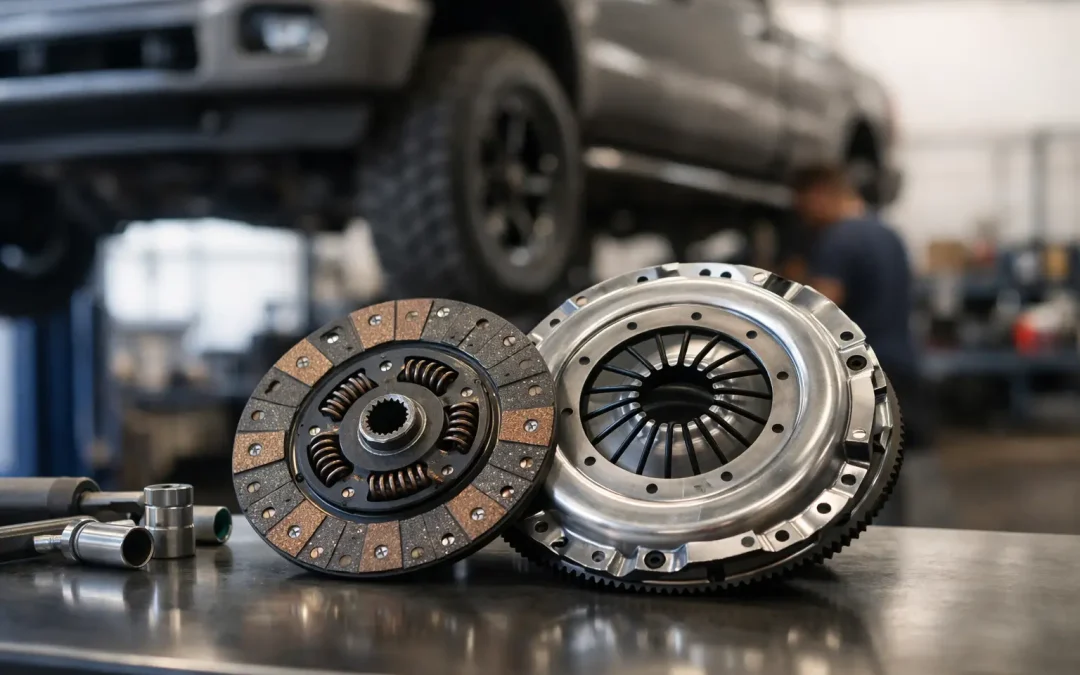
A clutch that feels fine on the school run can start showing its limits the first time you hook up a van, load up the tray, or head off with bigger tyres and extra gear on board. That is usually where heavy duty clutch upgrades come into the conversation – not as a flashy add-on, but as a practical fix for a vehicle that is being asked to do more than standard.
For plenty of drivers, the factory clutch is perfectly adequate. It is designed to suit the vehicle in standard trim, normal traffic, and average use. But once you add regular towing, off-road work, trade loads, performance tuning, or stop-start driving under heavier strain, the gap between standard capacity and real-world demand can become obvious.
What heavy duty clutch upgrades actually do
A heavy duty clutch upgrade is designed to handle higher loads and more heat than a standard replacement clutch. In simple terms, it gives the driveline more holding power. That matters when the engine is producing more torque, or when the vehicle is carrying and pulling more weight than the original setup was really built around.
Most upgrades achieve this through stronger pressure plates, friction materials better suited to heat, and in some cases revised clutch disc designs. The aim is not just to stop clutch slip. It is to maintain reliable engagement under tougher conditions and reduce the chance of premature wear.
That said, not every upgrade feels the same from the driver’s seat. Some are only slightly firmer than standard, while others can bring a noticeably heavier pedal or a more abrupt take-up. That is why proper part selection matters. The best option is not the toughest one on the shelf. It is the one that matches how the vehicle is actually used.
When heavy duty clutch upgrades are worth considering
The most common trigger is towing. If you regularly tow a caravan, horse float, trailer or work equipment, your clutch works harder every time you take off, reverse into position, or climb under load. Even if the vehicle remains within legal towing limits, repeated strain can shorten clutch life.
The next big factor is weight. A 4WD set up for touring often carries far more than standard – bar work, recovery gear, roof loads, drawers, long-range tanks and camping equipment all add up. Add larger tyres and the extra rolling resistance places more demand on the driveline again. In those cases, a standard clutch may still work, but it may not last the way you expect.
Trade vehicles are another example. Utes that spend their lives carrying tools, stock or equipment, especially in regional driving or on hilly routes, can wear through standard clutches quickly. The same applies to vehicles used in paddocks, on job sites or for repeated low-speed manoeuvring.
Performance modifications matter too. If the engine has been tuned for more torque, especially in a diesel, the original clutch can become the weak point. Clutch slip under load is often one of the first signs that the standard setup is no longer up to the job.
Signs your current clutch may be under-specced
Sometimes the clutch is simply worn out. Other times, the clutch is not technically failed, but it is operating at the edge of its capacity. The difference matters because it affects what should be fitted next.
Common signs include rising revs without matching acceleration, a burning smell when towing or reversing uphill, difficulty taking off smoothly under load, or a clutch that starts to feel inconsistent after hard use. You might also notice the vehicle struggles more when loaded than it used to, even if the engine itself seems healthy.
A worn clutch and an under-specced clutch can look similar from the driver’s seat, which is why diagnosis comes first. There is no value in fitting a heavy duty unit if the real problem sits elsewhere in the hydraulic system, flywheel, rear main seal, gearbox input area or even engine tune.
The trade-offs are real
This is the part many drivers are not told clearly enough. Heavy duty clutch upgrades can be a very good solution, but they are not automatically better in every situation.
A stronger pressure plate often means a firmer pedal. Some drivers do not mind that at all. Others, particularly in daily stop-start traffic, find it annoying pretty quickly. Depending on the clutch design, engagement can also feel sharper. That may suit a work ute or tow vehicle, but not every family car owner will enjoy it.
There can also be extra driveline shock if the setup is too aggressive for the application. In plain terms, if the clutch bites too hard for how the vehicle is used, that load has to go somewhere. That can affect comfort and, in some cases, place more stress on related components.
This is why honest advice matters. If your vehicle spends 95 per cent of its time unladen around town and only tows a small trailer twice a year, a quality standard replacement may be the smarter and more economical choice. On the other hand, if you are burning through standard clutches because the vehicle works hard every week, fitting the same thing again is often false economy.
Choosing the right upgrade, not just the biggest one
Not all heavy duty clutch upgrades are built for the same purpose. Some are designed for towing and load carrying with near-standard drivability. Others lean more toward performance use, where holding power matters more than comfort. Getting that wrong can leave you with a clutch that technically works but feels ordinary to live with.
A proper recommendation should take into account vehicle type, engine output, whether it is tuned, what it tows, how much weight it carries, tyre size, and how often it does hard work. A 4WD tourer, a farm ute, and a modified diesel dual cab might all need an upgrade, but not necessarily the same one.
It is also worth looking at the full clutch system rather than just the friction plate. Depending on the vehicle, flywheel condition, slave and master cylinders, release bearings, spigot bearings and associated seals should all be checked while the gearbox is out. Reusing tired components to save a bit upfront can undo the value of the clutch replacement itself.
Why installation quality matters as much as the parts
A good clutch fitted poorly will still give trouble. This is one of those jobs where the labour involved is significant, so it makes sense to do it properly the first time.
Correct machining or replacement of the flywheel where required, proper inspection of surrounding components, and careful setup all affect how the clutch performs and how long it lasts. If there is contamination from an oil leak, hydraulic faults, or wear in related parts, those issues need to be addressed before the vehicle goes back together.
That is especially important on vehicles used for towing or work. When a clutch fails early, the cost is not just the repair bill. It is downtime, missed work, cancelled trips, and the hassle of having the vehicle off the road again.
For drivers around Albury Wodonga who rely on their vehicle every day, that is where a specialist workshop earns its keep. At Albury Brake and Clutch Centre, the value is not in simply fitting a heavier clutch. It is in making sure the diagnosis is right, the parts suit the job, and the repair is done to last.
Is a heavy duty clutch the answer to every clutch problem?
No, and that is worth saying plainly. If a clutch is slipping because it is worn out after years of normal use, replacing it with a good quality standard equivalent may be exactly the right repair. If the pedal is heavy because of a hydraulic issue, a clutch upgrade will not fix that. If the vehicle shudders because of contamination or flywheel problems, the clutch type alone is not the root cause.
There is also no point paying for extra capacity you will never use. The right repair is the one that matches the vehicle, the driver, and the job it actually does.
Where heavy duty clutch upgrades do make sense is when the vehicle has outgrown the standard setup. That might be because of towing, touring, trade use, performance changes, or repeated heavy loading. In those cases, an upgrade can improve reliability, reduce the chance of slip, and give you more confidence that the vehicle will handle the work without chewing through another clutch too soon.
If you are unsure, the best starting point is not picking a brand or clutch kit online. It is getting the vehicle assessed properly and talking through how it is really used. Straight answers early usually save money later, and a clutch matched to the job is always better than one chosen on guesswork.
A good clutch should feel right, hold properly, and last for the kind of driving you actually do – not just the driving the vehicle was built for when it left the factory.