


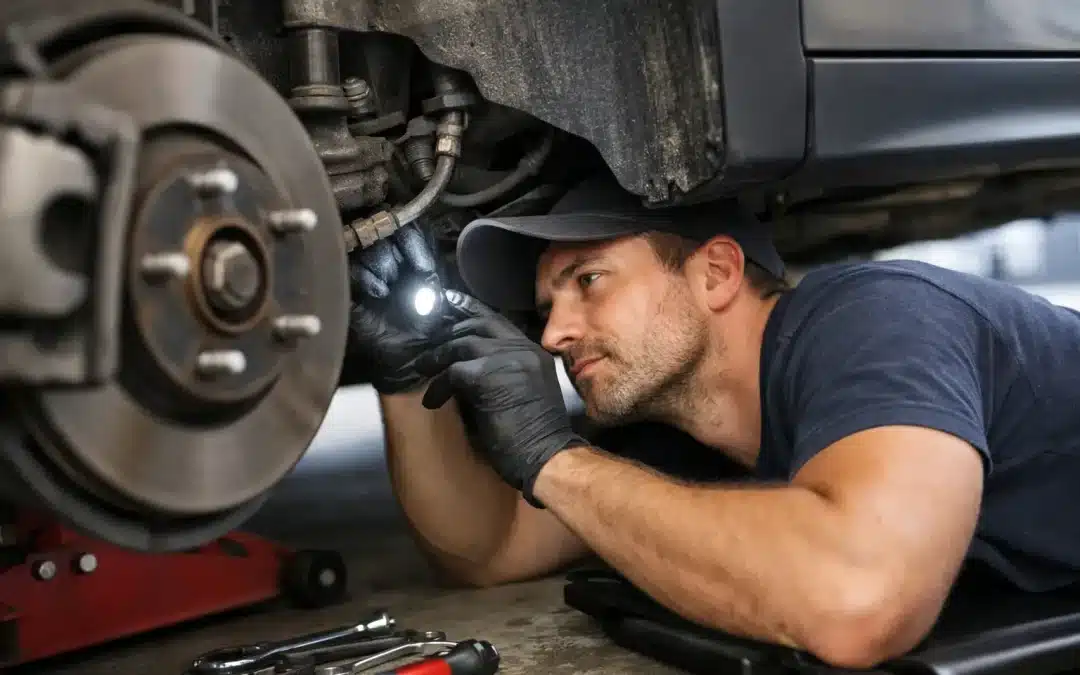
A brake line can look fine from the driveway and still be corroding where you cannot easily see it. That is why knowing how to inspect brake lines is useful for every driver, particularly if your vehicle sees wet roads, gravel, towing work, farm tracks or regular trips around Albury-Wodonga.
A basic visual check will not replace a proper brake inspection, but it can help you spot a problem before it becomes a roadside emergency. Brake fluid loss, damaged hoses and rusted steel lines can reduce braking performance quickly. If you find a leak, a swollen hose or heavy corrosion, do not take chances – arrange a brake repair before driving the vehicle again.
Why brake line checks matter
Your braking system relies on hydraulic pressure. When you press the brake pedal, brake fluid travels through rigid metal lines and flexible rubber hoses to operate the brakes at each wheel. The system is sealed, so the fluid level should not steadily drop and the pedal should not suddenly feel soft.
Steel brake lines can corrode from the outside, especially where road grime and moisture collect around clips, bends, underbody guards and the rear of the vehicle. Flexible hoses can age, crack, rub against suspension parts or deteriorate internally. A problem in either can lead to fluid loss and reduced braking capacity.
This matters even more for 4x4s and utes that tow, carry loads or run larger tyres. Extra weight and harder use create more heat and demand more from every part of the braking system. A sound brake line is only one part of safe braking, but it is not a part to overlook.
What you will need before you inspect brake lines
Start on level ground in good light. Have a torch, clean rag, disposable gloves and a small mirror handy. Brake fluid can damage paint, so wipe up any spills promptly and keep it away from painted panels.
Do not crawl under a vehicle supported only by a jack. If you need to inspect underneath, use correctly rated jack stands on firm, level ground, follow the vehicle manufacturer’s lifting points and chock the wheels. If you are not comfortable lifting the vehicle safely, you can still inspect the accessible areas around the engine bay and wheels, then book a workshop check for the rest.
Avoid opening brake bleed screws or loosening line fittings during a visual inspection. Introducing air into the system or damaging a seized fitting can turn a simple check into a repair. You are looking for warning signs, not attempting to diagnose every fault at home.
How to inspect brake lines step by step
Check the brake fluid reservoir first
With the bonnet open, locate the brake fluid reservoir, usually mounted near the brake master cylinder on the driver’s side of the engine bay. Check that the fluid sits between the minimum and maximum marks. A level slightly lower than maximum can be normal as brake pads wear, but a low level or a level that has dropped noticeably since the last service needs attention.
Look at the area around the master cylinder and reservoir for dampness or fluid staining. Brake fluid is often clear to amber when new, though it darkens with age. A wet patch, oily residue or paint damage around the master cylinder is not something to ignore.
Do not simply top up low brake fluid and continue driving. The level may be low because pads are worn, but it can also indicate a leak. The cause needs to be identified properly.
Follow the visible metal lines
From the master cylinder, trace any visible steel brake lines as far as you can. Use your torch to inspect bends, unions, retaining clips and areas where the line passes through the engine bay or along the chassis.
Surface discolouration is not always an immediate failure. Light rust on surrounding brackets or a dusty line may be manageable. Flaking rust, deep pitting, bubbling under the protective coating or a line that looks heavily scaled are different matters. Corrosion weakens the tube wall, and a line can fail when hard brake pressure is applied.
Pay close attention to areas that trap dirt and water. On many vehicles, the rear underbody, fuel tank area, wheel arches and locations hidden behind plastic guards deserve a careful look. A line may also rust beneath a clamp where only a small section is visible.
Inspect flexible brake hoses at each wheel
Flexible hoses connect the fixed brake lines to the moving suspension and brake calipers or wheel cylinders. Turn the steering from lock to lock and inspect the front hoses where they flex. Look for cracks, splits, rubbing marks, chafing, kinks or a hose that has pulled tight.
A hose should not look swollen, soft or blistered. Bulging can mean the hose has weakened internally, while an internal collapse may restrict brake fluid flow without showing obvious external damage. Signs can include a brake that drags, a vehicle pulling to one side or a wheel that becomes unusually hot after a normal drive.
Check the rear hoses as well, particularly on vehicles that travel rough roads or tow regularly. Suspension movement can expose poor routing, damaged clips or hoses rubbing against sharp edges.
Look for leaks at fittings and brake components
Brake fluid leaks often appear around line joins, hose fittings, calipers, wheel cylinders, master cylinders and ABS hydraulic units. Run a clean rag near – not over – suspect fittings and check for fresh wetness. Do not put your fingers near moving parts or inspect immediately after a drive when brakes may be hot.
At the wheels, inspect behind the tyre and around the brake caliper. Wet streaks, fluid on the inside of the wheel, or dampness around a brake hose connection can indicate a leak. On vehicles with rear drum brakes, fluid may leak inside the drum and be harder to see. A brake pedal that sinks lower than usual, combined with a falling fluid level, needs urgent professional attention.
Check how the brake pedal feels
Before starting the engine, press the brake pedal several times. It should feel firm and should not slowly sink to the floor while you hold steady pressure. Once the engine starts, the pedal will usually move slightly as the brake booster assists, but it should still feel controlled and consistent.
A spongy pedal can be caused by air in the hydraulic system, old fluid, a flexible hose issue or a leak. A hard pedal may point to a brake booster or vacuum problem rather than brake lines. Either way, pedal feel alone is not a final diagnosis. It is a reason to have the complete system checked.
Brake line warning signs that mean stop driving
Some brake concerns can wait for a booked inspection. Others should be treated as a no-drive fault. Stop and arrange assistance if you notice any of the following:
- The brake warning light stays on, particularly with a low fluid level.
- The brake pedal suddenly goes soft, travels much farther than usual or sinks under pressure.
- Fresh brake fluid is visible under the vehicle or around a wheel.
- A brake hose is split, swollen, badly rubbed or hanging loose.
- A metal brake line is heavily corroded, cracked, crushed or wet with fluid.
- Braking becomes uneven, the vehicle pulls sharply, or stopping distance increases.
Do not rely on pumping the pedal to get home. A minor leak can become a complete loss of hydraulic pressure with very little warning.
When a workshop inspection is the better call
A home check is useful for catching obvious problems, but brake lines are often hidden behind covers, above fuel tanks or along sections of the chassis that need the vehicle raised. Proper inspection also includes checking line condition under clips, assessing calipers and wheel cylinders, testing brake performance and confirming there are no internal hose faults.
If your vehicle is older, has spent time near the coast, has been off-road, or is used for towing, it is sensible to ask for a brake line inspection during regular brake servicing. The same applies if you have recently noticed a soft pedal, fluid loss, uneven braking or one hot wheel.
At Albury Brake and Clutch Centre, the focus is on finding the cause rather than replacing parts on guesswork. That means checking the whole hydraulic system and explaining what is urgent, what can be monitored and what repair will give you lasting reliability.
A quick look under the bonnet and around each wheel can give you early warning, but brakes are not the place to push your luck. If anything looks wet, rusty, damaged or uncertain, get it checked properly before your next trip.