


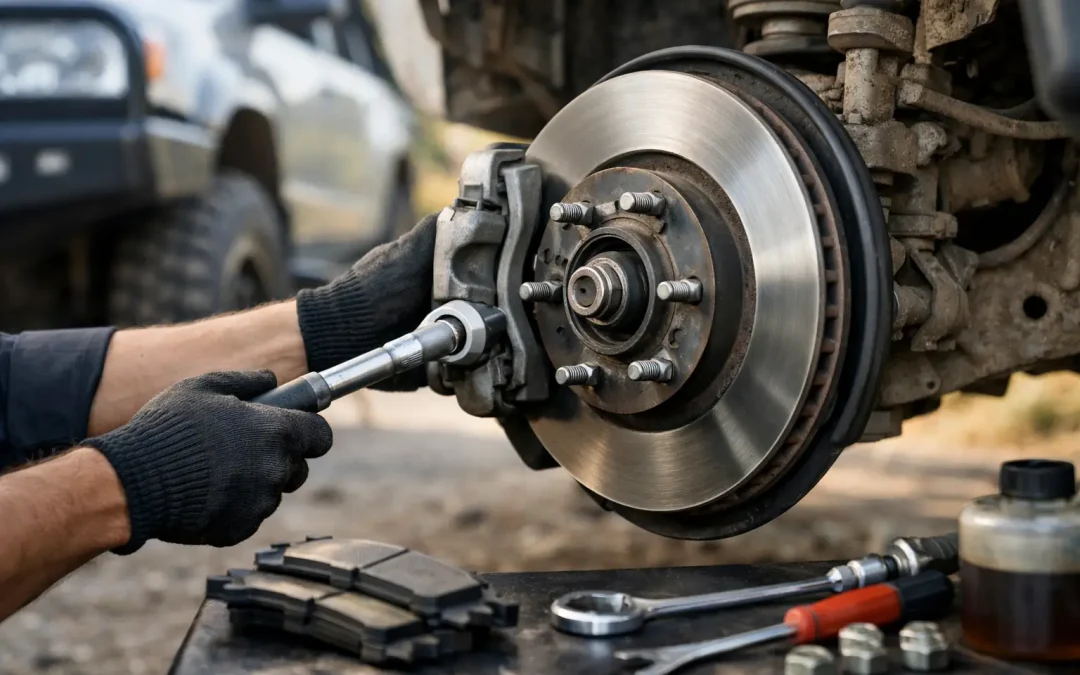
A 4WD can carry more gear, run bigger tyres and tow a serious load, but none of that matters if it cannot stop safely. Knowing how to maintain 4wd brakes means looking beyond whether the pedal still feels normal. Touring tracks, river crossings, long descents and heavy trailers all create demands that ordinary daily driving does not.
Brake maintenance is not about replacing parts early for the sake of it. It is about catching wear, contamination and heat-related issues before they become an expensive repair or, worse, a safety problem on the road.
Why 4WD brakes need closer attention
Most modern 4WDs are heavy before accessories are fitted. Add a bull bar, winch, canopy, drawers, recovery gear, fridge, roof rack and passengers, and the vehicle may be carrying far more weight than it did when it left the factory. If you also tow a caravan, camper or work trailer, the brakes have a much harder job.
Larger tyres can increase braking effort too. They have more rotating mass and may alter how the vehicle responds under brakes. A GVM upgrade does not automatically make the original braking system better suited to the extra load, so it is worth having the full setup assessed rather than assuming everything is covered.
Mud, dust, corrugations, sand and water create their own problems. Grit can accelerate pad and rotor wear. Mud can pack around components and hold moisture. Water crossings can affect braking performance temporarily and, where seals or fluid condition are poor, contribute to longer-term issues. This does not mean a 4WD should avoid the bush. It means it needs sensible checks after working hard.
How to maintain 4WD brakes between services
Start with simple observations every time you drive. The brake pedal should feel firm and consistent. The vehicle should pull up straight, without pulling to one side, vibrating through the pedal or steering wheel, or needing noticeably more distance to stop. Listen for squealing, grinding or a repeated scraping noise at low speed.
A quick look through the wheels can sometimes reveal heavy brake dust, a deeply scored rotor or pads that appear very thin. It is useful information, but it is not a substitute for a proper inspection. Inner pads often wear differently from outer pads, and caliper slide problems are not always visible from the outside.
After a muddy trip or water crossing, rinse the wheels, calipers and underbody with clean water as soon as practical. Avoid directing a high-pressure cleaner right at seals, electrical connections or brake hose joins from close range. The aim is to remove mud and salt, not force water into places it does not belong.
If the brakes are wet after a crossing, apply them gently and progressively when it is safe to do so. This helps dry the pads and rotors. Do not test them with a hard stop immediately after leaving the water, particularly if the track surface is loose or uneven.
Check brake fluid properly
Brake fluid absorbs moisture over time. That lowers its boiling point and can lead to a soft pedal or brake fade when the system gets hot, such as on a long downhill run with a loaded trailer. Fluid may look acceptable in the reservoir but still be due for replacement, which is why service intervals matter.
Check the reservoir level under the bonnet as part of your regular vehicle checks, following the vehicle handbook’s instructions. A dropping level can be normal as pads wear, but it can also point to a leak or another fault. Never ignore a low fluid level, and do not simply top it up without finding out why it has dropped.
Brake fluid replacement should be done with the correct specification for your vehicle and using a proper bleeding process. Modern 4WDs can have ABS, stability control and electronic brake systems that require correct procedures. This is a job where accurate diagnosis and workshop equipment are worth having.
Keep an eye on tyres and wheel bearings
Braking is only as effective as the tyres meeting the road. Uneven wear, incorrect pressures and damaged tyres can make a braking fault feel worse, or make good brakes feel poor. Check tyre pressures cold, particularly before towing or heading away with a fully loaded vehicle.
Wheel bearing problems can also affect brake performance and rotor wear. A droning noise, wheel movement, grease around the hub or unusual heat after a drive should be inspected promptly. On some 4WDs, bearing servicing is especially relevant after regular water crossings or off-road use.
Drive in a way that protects your brakes
The best brake maintenance habit costs nothing: do not make the brakes do all the work downhill. Select a lower gear early and use engine braking to control speed. This is particularly important when towing, on alpine roads or when coming down long grades with a loaded 4WD.
Riding the brakes creates heat quickly. As pads and rotors overheat, braking force can fade and the pedal may feel different. Repeated overheating can glaze pads, distort rotors and shorten the life of brake fluid. If you smell hot brakes, feel fade or see smoke, pull over somewhere safe and let the system cool naturally. Do not spray cold water over hot rotors, as sudden cooling can damage components.
Leave a bigger gap to the vehicle ahead when loaded. It sounds basic, but it gives you time to slow steadily rather than relying on repeated hard braking. On loose tracks, smooth inputs also help keep the vehicle stable and reduce unnecessary heat.
When standard brakes may not be enough
Regular maintenance cannot change the limits of an undersized braking setup. If your 4WD is regularly towing, fitted with substantially larger tyres, carrying permanent touring weight or operating near its legal mass limits, a brake upgrade may be a sensible safety investment.
The right solution depends on the vehicle and how it is used. It may involve higher-quality rotors and pads, improved calipers, braided lines where appropriate, or a complete engineered upgrade package. Bigger parts are not automatically better. Components need to suit the vehicle, wheel clearance, load, driving conditions and legal requirements.
Quality parts also matter. Cheap pads can be noisy, wear quickly or lose performance when hot. A proper assessment considers pad compound, rotor condition, caliper operation, brake hoses, fluid and the vehicle’s real workload. Replacing only the visibly worn item can leave the cause of uneven wear unresolved.
Warning signs that need a workshop inspection
Book an inspection soon if the brake warning light stays on, the pedal is soft or sinks, the vehicle pulls under braking, or there is a grinding sound. Steering wheel shake, pedal pulsation, burning smells and one wheel that is much hotter than the others are also signs not to put off.
Do not wait for the next scheduled service if braking has changed after a trip, towing job or water crossing. A small issue such as a sticking caliper slide or contaminated pad can turn into damaged rotors, failed components and a larger bill if it is left alone.
For 4WD owners around Albury-Wodonga, Albury Brake and Clutch Centre can inspect the complete braking system, explain what is worn and recommend repairs or upgrades that suit the way the vehicle is actually used. You should get straight answers, not pressure to replace parts that still have safe service life.
A well-maintained 4WD should feel predictable whether it is on the school run, loaded for a long trip or towing home after a weekend away. Give the brakes the same attention as your tyres and recovery gear, and they will be ready when the road asks the most of them.