


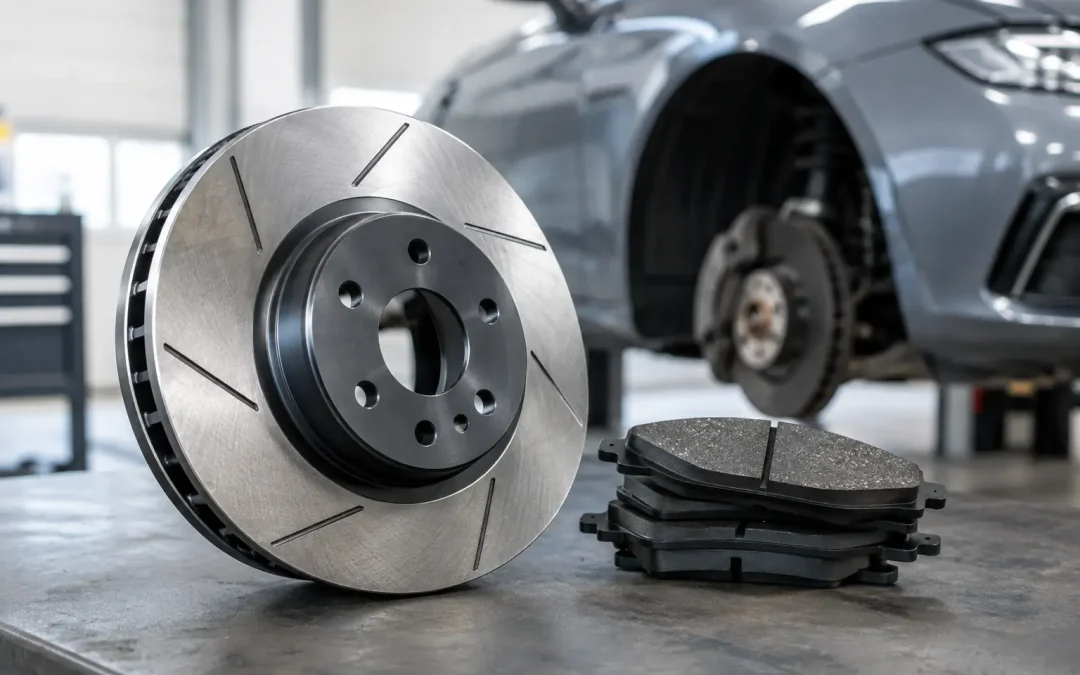
A brake rotor is not the sort of part you want to think about only when the steering wheel starts shaking or the pedal feels wrong. In this DBA rotor review, we look at why DBA rotors have earned a strong reputation with everyday drivers, 4×4 owners and workshop professionals – and where choosing the right rotor matters more than simply buying the most expensive option.
DBA, or Disc Brakes Australia, is a well-known Australian brake component manufacturer. Its rotors are designed for local conditions, from stop-start commuting to regional highway driving, towing, steep descents and hot, dusty 4×4 work. That does not mean every DBA rotor is automatically the best choice for every vehicle. Good braking starts with correct diagnosis, proper fitment and matching the parts to how the vehicle is actually used.
What makes DBA rotors different?
The main appeal of DBA rotors is range. Rather than offering one replacement disc for every driver, DBA makes standard replacement rotors as well as slotted, high-carbon and heavy-duty options for more demanding use.
For a family SUV or daily commuter, a quality direct-replacement rotor can be the sensible answer. It restores safe, predictable braking without adding cost for features the vehicle may never need. For a ute that regularly tows a caravan, carries tools or runs bigger tyres, a heavier-duty rotor can make more sense because the brakes are dealing with more heat and load.
Many DBA performance and 4×4 rotor options use design features intended to manage heat more effectively. Depending on the part number and application, this can include directional ventilation, slotted faces or specialised metallurgy. Heat control matters because repeated hard braking can lead to brake fade, uneven pad deposits, rotor distortion and shorter component life.
The practical benefit is not a magic increase in stopping power. Tyres, pads, brake fluid, caliper condition and vehicle load all play a part. The benefit is more consistent braking when the system is under pressure.
DBA rotor review: strengths in real-world driving
DBA rotors are generally a strong choice when the vehicle has a clear braking requirement and the correct series is selected. Their coverage across common passenger vehicles, performance cars and 4x4s makes them particularly useful for drivers who want better than a basic budget replacement without fitting parts that are unsuitable for the vehicle.
Good coverage for standard replacement work
For everyday vehicles, DBA’s standard replacement range gives drivers a reputable option that meets the vehicle’s original design requirements. A new rotor and correctly matched pad set can restore a firm, even pedal feel where worn or damaged components have caused vibration, noise or reduced confidence.
This is often the right call for a commuter vehicle. There is no benefit in fitting aggressive slotted rotors to a car that spends its life on school runs and suburban roads if a quality standard rotor will do the job quietly and reliably.
A sensible option for towing and 4x4s
Towing puts extra demand on every part of the braking system. The vehicle is heavier, stopping distances increase and long downhill sections can generate a lot of heat. Add oversized tyres, a GVM upgrade, touring gear or a loaded tray, and the factory braking setup may be working much harder than it did when the vehicle was new.
This is where DBA’s 4×4 and heavier-duty rotor options can be worthwhile. The right upgrade may offer better heat management and more stable braking over repeated stops. However, rotors alone are not a complete upgrade. Pads, calipers, brake fluid, hoses and the overall condition of the system must be checked as part of the job.
Slotted rotors have a purpose, but also trade-offs
Slotted rotors are often chosen for towing, spirited driving or vehicles that see regular brake heat. The slots help clear dust, gas and debris from the pad surface, supporting consistent pad contact in demanding conditions.
There is a trade-off. Slotted rotors can create more pad noise than a plain-face rotor, and some pad compounds may wear a little faster. That is not necessarily a fault. It is simply part of choosing a component designed around performance under heat rather than maximum quietness.
For most drivers, the question is straightforward: will you use the extra capacity? If not, a standard-quality replacement rotor may deliver better value.
Rotor quality is only half the brake job
A rotor can be excellent on paper and still disappoint if the cause of the original brake problem has not been found. Brake shudder, for example, is often blamed on “warped discs”. In reality, the issue may be uneven pad material transfer, a seized caliper slide, incorrect wheel nut tension, worn suspension components or an unsuitable bedding-in process.
Before fitting new rotors, a proper brake inspection should check pad wear, caliper operation, flexible brake hoses, fluid condition, wheel bearings where relevant, and the hub face. Rust or debris between the hub and rotor can create run-out from the moment the new disc is fitted.
Correct wheel nut torque also matters. Tightening wheel nuts unevenly with an impact gun can place uneven stress on the rotor hat and contribute to vibration. It is a small detail, but braking work is full of details that affect the result.
Choosing the right DBA rotor for your vehicle
The best DBA rotor depends on the vehicle and its workload, not the badge on the box. A standard street rotor is often appropriate for normal daily driving. A slotted or higher-spec option may suit regular towing, hilly regional travel, performance use or a modified 4×4.
It is also worth considering the pad compound at the same time. Brake pads and rotors work as a pair. A hard pad may last well but can be noisier or less friendly to the rotor. A softer compound may offer strong initial bite but wear more quickly. The right choice depends on whether you prioritise quiet operation, low dust, towing stability, pedal feel or high-temperature performance.
If your vehicle pulls to one side, has a soft pedal, shudders under braking, squeals constantly or needs noticeably more distance to stop, do not assume rotors are the only issue. Those symptoms need diagnosis before parts are selected.
Are DBA rotors worth the money?
For drivers who want a known, quality brake rotor with a broad range of application-specific options, DBA rotors are usually worth considering. They are particularly well suited to owners who are replacing worn brakes properly, rather than fitting the cheapest available parts and hoping for the best.
The value is strongest when the rotor choice suits the vehicle. Spending extra on a high-performance rotor for a lightly used hatch may not be necessary. On the other hand, fitting a basic rotor to a hard-working tow vehicle can be false economy if it struggles with repeated heat cycles.
At Albury Brake and Clutch Centre, the approach is to assess the vehicle, explain the options in plain language and fit components that suit the job. No pressure, no unnecessary upgrades – just brakes done properly for the way you drive.
If you are unsure whether your vehicle needs standard replacement rotors or a heavier-duty DBA setup, start with the symptoms and how the vehicle is used. A clear inspection now can prevent a bigger brake problem further down the road.