


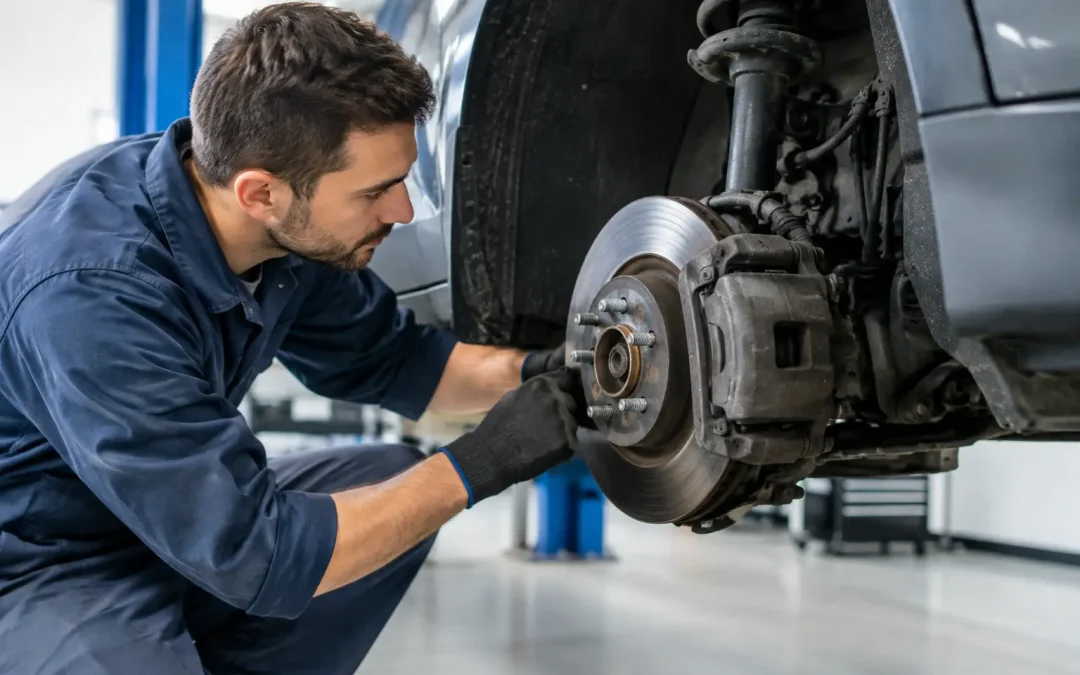
A soft pedal at the lights, a squeal pulling into the driveway, or a steering wheel that shudders on the highway can all be early signs that brake repairs are needed. Some brake noise is minor, but brakes are not a system to second-guess. They are the safety system you rely on every time traffic stops suddenly, a roo moves onto the road, or you are towing downhill.
The sensible approach is to have a change in braking feel checked early. A proper inspection can separate normal wear from a fault that needs attention now, giving you straight answers before a smaller job becomes a larger and more expensive repair.
The warning signs that deserve a brake inspection
Brake pads, rotors, fluid, hoses, calipers and the hydraulic system all work together. When one part is worn, contaminated, sticking or leaking, the vehicle may still stop, but it may no longer stop as safely or predictably as it should.
A high-pitched squeal can be caused by dust or moisture, particularly after rain or washing the car. If the noise is persistent, gets worse when braking, or comes with reduced stopping performance, it needs checking. A harsh grinding sound is more urgent. It can mean the friction material on the pad has worn away and metal is contacting the rotor. Continuing to drive can damage the rotor and increase the scope of the repair.
Vibration through the brake pedal or steering wheel when slowing down is another common concern. It is often linked to uneven rotor surfaces or excessive run-out, but diagnosis matters. Suspension or wheel issues can create similar symptoms, and replacing parts without finding the cause is not a proper fix.
Pay attention if the pedal feels spongy, travels further than normal, or sinks while you are holding pressure at a stop. This can point to old or contaminated brake fluid, air in the hydraulic system, a leak, or a component issue. A vehicle that pulls to one side under brakes, smells hot after a short drive, or has a brake warning light on should also be inspected promptly.
Why brake repairs are not just a pad replacement
It is easy to think of brakes as pads and rotors. Those are wear items, but replacing them alone does not always solve the underlying problem. A quality brake service looks at the full system and the way it has been working on your vehicle.
For example, pads that wear unevenly may be telling you a caliper is sticking or slide pins need attention. Rotors with heat marks can indicate repeated heavy braking, an incorrect pad and rotor combination, or a seized component. A brake fluid flush may be recommended because brake fluid absorbs moisture over time, which lowers its boiling point and can affect braking under hard use.
The right repair depends on the vehicle, its condition and how it is used. A commuter doing short trips around Albury-Wodonga has different demands from a loaded work ute or a 4×4 set up for touring. The aim is not to fit the most expensive parts. It is to diagnose accurately, use suitable quality components and repair what is actually needed.
What a proper brake check should cover
A thorough inspection starts with the concern you have noticed, then checks the condition and operation of the system. This normally includes pad thickness and wear pattern, rotor condition and measurement, caliper movement, brake hoses, fluid condition, wheel bearings where relevant, and any warning lights or stored fault codes.
The workshop should also road-test the vehicle when appropriate. A road test can help confirm a pull, vibration, noise or pedal concern that may not be obvious with the vehicle on a hoist. Once the cause is clear, you should receive an explanation of the recommended work, what can safely wait, and the likely cost before repairs begin.
That approach avoids unnecessary upselling. It also prevents a common problem: fitting new pads to damaged rotors or ignoring a sticking caliper, then having the same issue return soon after.
When can you drive, and when should you stop?
There is no single answer because the severity of the symptom matters. A brief squeal after overnight rain may not require urgent action, although it is worth mentioning at your next service. Persistent noise, a light vibration or pads approaching their wear limit should be booked in soon, before more parts are affected.
Do not put off an inspection if you have grinding, a brake warning light, obvious fluid loss, a severe pull, smoke or a burning smell from a wheel, or a pedal that feels unreliable. If braking performance has changed significantly, it is safer not to drive the vehicle until it has been assessed. Saving one trip to the workshop is not worth risking your vehicle, passengers or other road users.
The same applies before a long trip. If you are heading away with a caravan, boat or loaded trailer, have the brakes checked beforehand rather than hoping they will be right. Towing adds heat and load to the braking system, particularly on long descents and regional roads.
Brake upgrades for towing, touring and 4x4s
Standard brakes are designed around the vehicle as it left the factory. Once you add larger tyres, increase GVM, fit accessories or regularly tow, the braking demands can change considerably. The vehicle may take longer to stop, the pedal may feel less confident under load, and heat management becomes more important.
A brake upgrade can be worthwhile, but it needs to suit the vehicle and its intended use. Bigger components are not automatically better if they are mismatched, poorly installed or unsuitable for the wheel and suspension setup. The best result comes from looking at the whole package: vehicle weight, tyre size, towing load, driving conditions and the parts available for that model.
For a touring 4×4, the priority may be reliable braking across long distances with a loaded vehicle. For a trade ute, it may be consistent stopping performance with tools and equipment onboard every day. A specialist can explain the practical options without pushing upgrades that do not match how you use the vehicle.
How to make brake components last longer
Brakes wear. That is normal. However, a few habits can help avoid premature wear and give you more warning when something changes. Leave more following distance so you can brake progressively rather than sharply. When towing or descending a long hill, select a lower gear early to use engine braking instead of riding the brakes.
Keep up with scheduled servicing, especially brake fluid changes recommended for your vehicle. If the car has been parked for an extended period, used in dusty conditions, driven through water crossings, or worked hard while towing, mention it during the booking. That context helps a technician inspect the right areas.
It also pays to act on small changes. A faint noise, slight vibration or different pedal feel may be nothing serious, but it is cheaper and safer to find out while the repair is straightforward.
Questions drivers often ask about brake repairs
How often do brake pads need replacing?
There is no fixed kilometre interval. Pad life depends on the vehicle, driving conditions, load, traffic, towing and the pad material. Some vehicles may need pads well before 40,000 km, while others can go much further. Inspection is more reliable than guessing by kilometres alone.
Do rotors need replacing every time pads are changed?
Not always. Rotors should be measured and assessed for thickness, condition, heat damage and run-out. If they are within specification and in good condition, replacement may not be necessary. If they are worn or damaged, fitting new pads alone may compromise performance and pad life.
Why does the brake pedal feel different after a repair?
New pads and rotors need a bedding-in period, and the pedal can feel different as the new surfaces settle. However, a soft pedal, worsening travel, pulling or warning light is not something to ignore. Contact the workshop if the feel does not seem right.
Brake work should leave you confident, not wondering whether the issue has really been fixed. At Albury Brake and Clutch Centre, the focus is on finding the cause, fitting quality parts where needed and getting you back on the road with brakes that are done properly. If your vehicle is giving you a warning sign, booking an inspection now is the practical next step.