


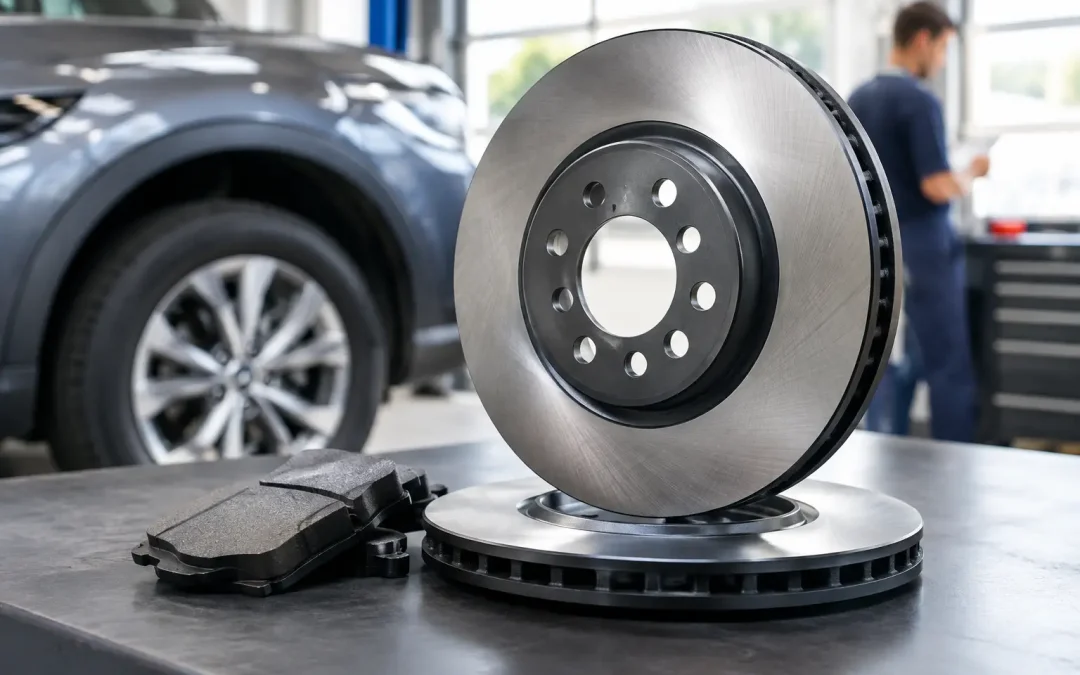
A brake rotor rarely gets attention until the steering wheel shudders, the pedal feels wrong, or a loaded vehicle takes longer to pull up than it should. This DBA rotor performance review looks at what drivers can realistically expect from DBA rotors, where they make a noticeable difference, and why correct fitment matters just as much as the part itself.
DBA Rotor Performance Review: What They Do Well
DBA is a well-known Australian brake rotor manufacturer with options ranging from direct-replacement rotors for everyday cars through to upgraded designs for hard-working 4WDs, towing vehicles and performance applications. Their appeal is not about making ordinary brakes feel like race brakes. It is about managing heat, maintaining consistent braking and providing a quality rotor that suits the way the vehicle is actually used.
For most drivers, the first improvement after fitting the right DBA rotor and quality brake pads is confidence. The pedal should feel more predictable, braking should remain more consistent through traffic or down long hills, and the vehicle should be less prone to vibration caused by worn or overheated discs.
That said, no rotor can fix a sticking caliper, contaminated pads, a collapsed brake hose or poor wheel bearing condition. Brakes need to be diagnosed as a complete system. Fitting good parts to an unresolved fault is an expensive way to end up back at the workshop.
Heat Management Is the Main Benefit
Every time you brake, the system turns vehicle speed into heat. Around town, standard replacement rotors are often perfectly adequate. But heat becomes a bigger issue when a vehicle regularly tows, carries tools, runs larger tyres, drives through hilly country or spends long periods on corrugated roads.
DBA’s upgraded rotor options are designed to handle that workload more effectively than a basic replacement disc. Features such as improved ventilation design and, on selected ranges, slotted faces help move heat and brake dust away from the contact area. This can reduce the tendency for braking performance to fade during repeated heavy stops.
It does not mean the rotor stays cool under any condition. A heavy caravan down a steep descent will still generate serious heat. The advantage is that a properly matched upgraded rotor can recover more consistently and is less likely to be pushed beyond its intended operating range.
Pedal Feel Depends on More Than the Rotor
Drivers often describe a new brake setup as feeling firmer or more positive. A rotor can contribute to that result, particularly when replacing a worn, scored or heat-affected disc. But pedal feel is also influenced by pad material, caliper operation, brake fluid condition and correct bleeding.
If a brake pedal is soft, sinks slowly, or changes after a few stops, do not assume rotors are the answer. That symptom needs proper inspection. Safety-critical repairs should never be based on a guess or a parts catalogue alone.
Reduced Shudder Starts With Correct Installation
Brake shudder is commonly blamed on ‘warped rotors’, but the cause is often more complicated. Uneven pad material transfer, excessive hub runout, dirt or corrosion between the hub and rotor, seized caliper slides, and incorrect wheel nut tightening can all create vibration under braking.
A quality DBA rotor needs a clean, flat mounting surface and correct installation procedures to perform as intended. The hub face should be properly cleaned, rotor runout checked where required, and wheel nuts tightened evenly to the vehicle specification. These details are not workshop fussiness. They are what prevent a good rotor from developing problems early.
Which DBA Rotor Type Suits Your Vehicle?
The right choice depends on vehicle weight, driving conditions and how much brake load it sees. There is no value in paying for a high-spec rotor if the vehicle only does light suburban driving, just as there is little sense fitting entry-level replacement parts to a heavily loaded touring 4WD.
For many passenger cars, DBA Street Series rotors are a sensible quality replacement option. They are designed for normal road use and suit drivers who want dependable braking without turning a routine service into an unnecessary upgrade.
For vehicles that work harder, including utes and 4WDs used for towing or long-distance touring, DBA 4000 Series rotors may be worth considering where available for the application. Their design is aimed at improved heat management under repeated braking. Matched with suitable pads, they can be a practical upgrade for drivers who have felt their standard brakes struggle when the vehicle is loaded.
Slotted rotors can also be useful in demanding conditions because the slots help clear dust and gases from the pad surface. The trade-off is that some slotted setups can produce more audible brake noise and may wear pads faster than a plain rotor. That is not necessarily a fault. It is simply part of choosing a setup designed for greater brake demand.
Drilled rotors require more care in selection. They can suit particular vehicle applications, but the rotor design, driving use and pad choice all matter. For a work ute, family SUV or towing vehicle, durability and thermal capacity are generally more important than appearance.
The Pad Choice Matters Just as Much
Rotors and pads work as a pair. Installing premium rotors with cheap, poorly matched pads can lead to noise, excess dust, uneven deposits or disappointing stopping performance. Conversely, an aggressive pad may be unnecessary on a daily driver and can create more noise and rotor wear than the owner expects.
A good workshop will ask practical questions before recommending parts. Does the vehicle tow? Is it loaded for work? Does it have larger tyres? Is it mainly used for short trips, highway kilometres, gravel roads or mountain driving? Those answers help determine whether the vehicle needs a standard replacement setup or a genuine brake upgrade.
For everyday driving, the aim is usually low noise, consistent cold performance and good service life. For towing and touring, heat stability becomes more important. A vehicle that does both may need a balanced pad compound that remains civilised around town but copes better with occasional heavy use.
Where DBA Rotors Make the Most Sense
DBA rotors are often a strong choice when the existing discs are due for replacement and the owner wants a recognised quality component rather than the cheapest available option. They make particular sense where braking demand is higher than standard, such as regular towing, commercial use, long descents or modified 4WDs.
Larger tyres and increased GVM can place more demand on the braking system. They add rotating mass and vehicle weight, meaning the brakes have more work to do. In these cases, simply replacing worn parts with the same basic specification may not deliver the confidence needed when the vehicle is fully loaded.
An upgrade should still be appropriate for the legal vehicle application and matched to the rest of the brake system. Rotor size, caliper clearance, pad shape and wheel fitment all need checking. Proper parts selection avoids surprises once the vehicle is on the hoist.
What a DBA Upgrade Will Not Fix
A rotor upgrade is not a cure for every braking complaint. If the vehicle pulls to one side, the fault may be a seized caliper or uneven pad contact. If there is a grinding noise, the pads may be worn through or a backing plate may be contacting the disc. If the brake warning light is on, the cause may be hydraulic, electronic or related to pad wear sensors.
Likewise, stopping distance can be limited by tyre condition and road surface. On a wet road, quality tyres and sensible following distance matter just as much as the brake hardware. Brakes should feel controlled and predictable, but they cannot overcome worn tyres or an overloaded vehicle.
Is the Upgrade Worth It?
For a commuter vehicle that receives regular servicing and carries normal loads, a quality direct-replacement DBA rotor and matched pad set is usually the practical answer. It offers dependable braking without paying for features the vehicle may never use.
For a ute or 4WD that tows a boat, caravan or work trailer, carries heavy gear, or runs larger tyres, an upgraded DBA rotor can be money well spent. The value is not in a dramatic first stop. It is in maintaining more consistent braking when heat builds and the vehicle is doing the job it was bought for.
At Albury Brake and Clutch Centre, the best starting point is a proper brake inspection rather than choosing parts from a photo. A specialist can measure rotor condition, check pad wear, inspect caliper movement and recommend a setup that suits the vehicle and its workload.
If your brakes are noisy, shuddering, pulling, or simply not giving you confidence when loaded, have them checked before the problem becomes more expensive. The right DBA rotor is a solid component, but its real performance comes from being correctly matched, carefully fitted and supported by a brake system that is in sound working order.