


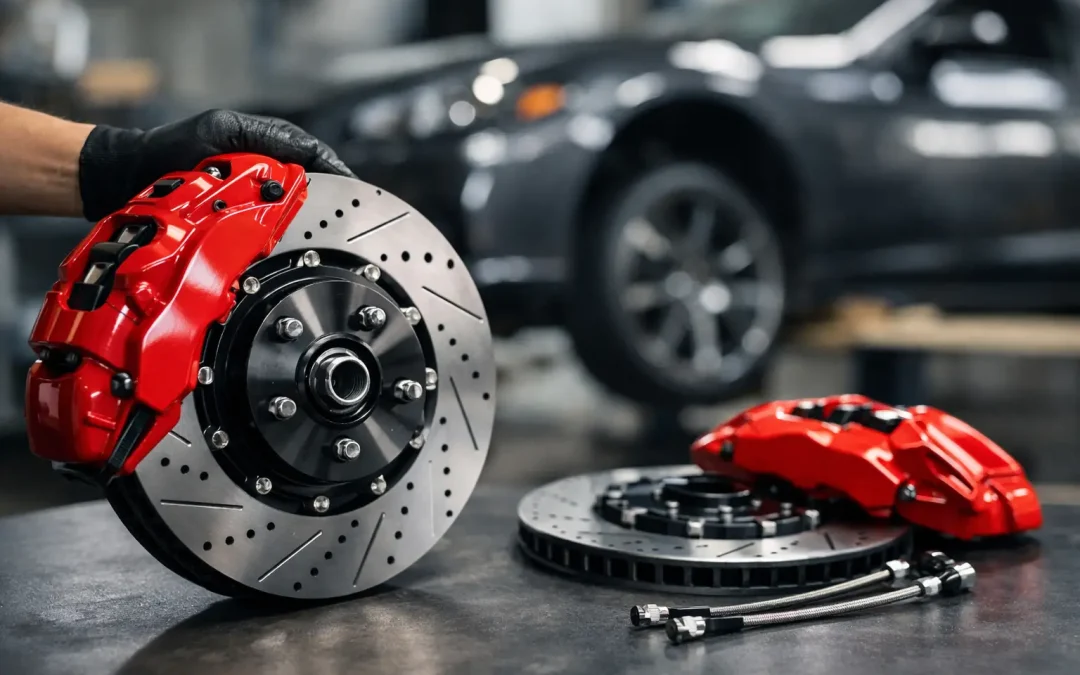
You usually notice weak brakes at the worst time – a quick stop in traffic, a steep downhill run, or a loaded-up weekend away when the pedal starts feeling softer than it should. That is exactly why a brembo brake upgrade review matters. For some drivers, Brembo is a worthwhile improvement in safety, feel and consistency. For others, it can be more brake than they actually need.
What a Brembo brake upgrade review should really look at
A proper review is not just about whether the calipers look good behind the wheels. It should come down to how the vehicle stops in real conditions, how the pedal feels day to day, how the brakes cope with heat, what the upgrade costs to fit and maintain, and whether the rest of the vehicle setup suits it.
Brembo has a strong reputation for a reason. The brand is widely used in performance cars and premium applications because the components are designed to handle repeated heavy braking without fading as quickly as many standard setups. That matters if you drive hard, tow regularly, carry weight, or spend time in hilly country where brakes do a lot of work.
But brand name alone is not the full story. The right upgrade depends on the vehicle, the intended use and the condition of the existing brake system. If the problem is worn pads, old fluid or poor-quality rotors, a full premium service may solve the issue without needing a big-ticket upgrade.
Brembo brake upgrade review: the real-world gains
The biggest improvement most drivers notice is consistency. A good Brembo setup often gives stronger stopping performance over repeated braking events, especially when heat starts building up. Standard brakes can feel fine on the first stop and then fall away once they are worked harder. Brembo systems are generally better at keeping that performance stable.
Pedal feel is another common win. When matched properly to the vehicle, a Brembo upgrade can feel firmer and more predictable. That gives the driver more confidence because the brake response is easier to judge. On the road, that often matters as much as outright stopping distance.
There is also the matter of control. Better caliper design, pad clamping force and rotor quality can make braking feel more even and settled, rather than grabby or vague. For everyday drivers, that can mean smoother stops in traffic. For 4×4 owners and towing drivers, it can mean a vehicle that feels less stressed under load.
Heat management is where Brembo often earns its keep. If you tow a trailer, drive through the hills, run bigger tyres, or have added weight with tools, camping gear or GVM upgrades, the brake system is under more strain. Better components help manage that heat, and heat is what causes many brake complaints in the first place.
Where the upgrade makes the most sense
If you are driving a performance car enthusiastically, the case is pretty straightforward. Repeated braking exposes the limits of standard components quickly, and a Brembo package can provide a meaningful step up.
For heavy 4x4s, the value depends on how the vehicle is used. A stock dual-cab that spends most of its time unloaded around town may not need a major upgrade. A touring ute with larger tyres, a canopy, drawers, recovery gear and towing duties is a different story. In that case, braking performance is not just about comfort – it is about restoring control that extra weight and rolling mass have taken away.
Family SUVs and daily drivers sit somewhere in the middle. If the existing brakes are under-specced for the job, or if the owner wants stronger, more confidence-inspiring braking, Brembo can be a good option. If the vehicle is used gently and the factory system is already well designed, the return on investment may be less obvious.
The trade-offs most reviews skip
A Brembo upgrade is not automatically the smartest use of money. Cost is the obvious factor. The initial outlay is higher than a standard brake refresh, and replacement parts can also cost more later on. That does not make it poor value, but it does mean the decision should be based on how the vehicle is actually used.
Wheel clearance can also catch people out. Larger calipers and rotors may require specific wheel sizes or offsets. If a kit does not fit properly, the upgrade becomes more complicated and more expensive than expected.
Then there is brake balance. Fitting bigger front brakes without considering the rear, tyre grip, suspension condition and overall setup can lead to mixed results. Good braking is a system, not just one part. Bigger is not always better if the vehicle is not matched to it properly.
Some drivers also expect a dramatic difference in every situation. That is not always how it works. In normal suburban driving, the gain may feel modest compared with the cost. The real benefit often shows up when the brakes are pushed harder, more often, or under more load.
Installation matters as much as the parts
This is the part plenty of online reviews gloss over. Even the best brake kit can disappoint if it is fitted badly, paired with poor fluid, bedded in incorrectly or installed on a vehicle with existing issues.
A proper brake upgrade should start with diagnosis. Is the current system genuinely inadequate, or is it suffering from wear, poor previous repairs, glazed pads, old fluid or heat damage? There is no point fitting premium components on top of unresolved faults.
The workshop also needs to consider the whole package – rotor size, pad compound, caliper setup, brake fluid, hoses, wheel fitment and the way the vehicle is used. A car that does school runs and motorway kilometres has different needs from a 4×4 towing a van through regional roads in summer.
That is why specialist advice matters. At Albury Brake and Clutch Centre, this is the sort of work that needs to be approached properly, not sold as a one-size-fits-all add-on. The best result comes from matching parts to the job and fitting them with long-term reliability in mind.
Is Brembo better than a premium standard replacement?
Sometimes yes, sometimes no. If your factory brakes are fundamentally undersized for the way the vehicle is used, Brembo can be a genuine improvement. If your current setup is basically sound but worn out, a quality replacement using well-matched premium components may get you where you need to be for less money.
That is especially true for everyday commuters. A fresh set of quality rotors and pads, correct machining where appropriate, proper fluid replacement and careful installation can transform brake feel and safety without stepping into a full upgrade package.
On the other hand, if you have already gone through decent replacement brakes and still feel fade, poor pedal confidence or inadequate stopping under load, that is where a Brembo upgrade starts making more sense.
Who should seriously consider it
Drivers who tow often, 4×4 owners carrying serious weight, performance car owners, and anyone who regularly deals with steep descents or repeated heavy braking are the strongest candidates. These are the situations where brake temperature, consistency and control matter most.
Drivers who mainly commute on flat roads with a lightly loaded vehicle should be more measured. A Brembo setup may still be desirable, but it is worth asking whether the same budget would deliver more practical value elsewhere if the current braking issue is really a maintenance problem.
The best decision usually comes from an honest inspection, not a catalogue. If the brakes are being pushed beyond their intended limits, an upgrade can be money well spent. If not, a properly done standard repair may be the better answer.
Final verdict on this Brembo brake upgrade review
Brembo earns its reputation. When fitted for the right reasons, on the right vehicle, the gains in pedal feel, heat control and braking consistency are real. It is not just a cosmetic upgrade, and for heavy-duty or performance use it can be a very worthwhile one.
But it is not magic, and it is not for everyone. The value depends on load, driving conditions, tyre size, vehicle setup and whether the current brake system is actually the weak point. Good advice matters here because the safest brake upgrade is the one that suits the vehicle and is fitted properly the first time.
If you are weighing up a Brembo setup, do not start with the badge. Start with how your vehicle is used, what the current brakes are doing wrong, and what result you actually need from the upgrade.