


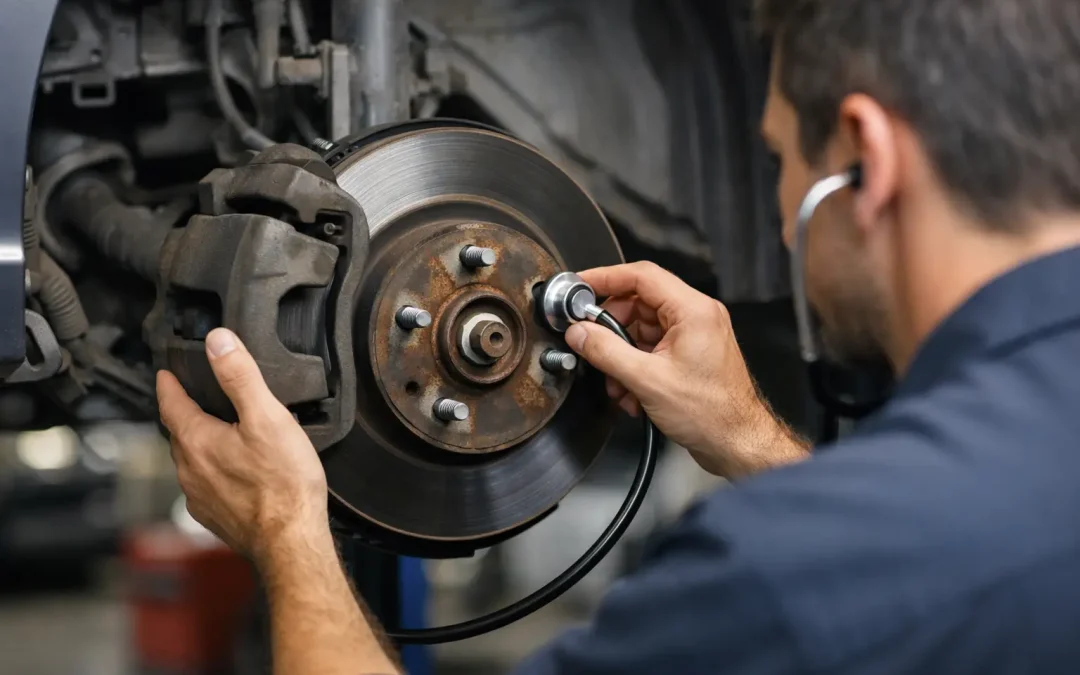
One of the most frustrating faults on any vehicle is a brake noise that comes and goes. Diagnosing intermittent brake noise is rarely as simple as replacing pads and hoping for the best, because the sound often depends on heat, speed, brake pressure, weather and even how long the car has been parked. If the noise only shows up sometimes, that does not automatically mean it is minor.
That is the part many drivers get caught on. A quick squeak leaving the driveway on a cold morning can be harmless surface rust clearing off the rotors. A chirp that appears only during light braking in traffic can point to pad vibration, glazing or hardware movement. A grinding noise that disappears after a few stops can still mean metal-to-metal wear if the pads are right at the end. The fact that a sound is intermittent does not make it safe to ignore.
Why diagnosing intermittent brake noise takes more than a quick look
Brake systems work under changing conditions. Temperature rises fast, components expand, moisture builds up overnight, and pad material behaves differently under light braking than it does under a firm stop. That is why a vehicle can sound perfectly normal in the workshop car park, then squeal on the road ten minutes later.
A proper diagnosis starts with pattern, not guesswork. When does it happen? Is it the first stop of the day, only after driving for twenty minutes, only in reverse, only downhill, or only with a light pedal? Those details matter because they narrow the fault before anything is taken apart.
It also helps to separate normal brake behaviour from a genuine problem. A brief scraping sound after rain is common because the rotors develop a light film of rust. That usually clears quickly. A repeated squeal, clunk, grind or shudder is different. If the sound keeps returning, there is usually a reason.
The most common causes of intermittent brake noise
The usual culprit is pad and rotor interaction. Brake pads can vibrate at certain speeds and pedal pressures, especially if the pad compound does not suit the vehicle’s use or the pad edges have glazed. That often creates a squeal that is sharp, high-pitched and inconsistent.
Hardware can also be responsible. Anti-rattle clips, shims and retaining components are small parts, but they do a big job. If they are worn, missing or not seated correctly, the pads can move slightly in the caliper and create a chirp or knock that only appears on rough roads or during gentle braking.
Rotor condition matters as well. Grooves, hard spots, uneven wear and excessive lip on the rotor edge can all create noise that comes and goes. In some cases the rotor is still thick enough to use but the surface is no longer healthy enough for quiet, stable braking.
Then there is brake dust, road grime and contamination. If grease, fluid or dirt gets onto the friction surface, noise can become unpredictable. The same goes for glazed pads caused by overheating. This is common on vehicles that spend a lot of time stop-starting, towing, descending hills or carrying extra load.
Wheel bearings, suspension components and backing plates can also confuse the picture. What sounds like a brake squeal is not always caused by the pads themselves. A slightly bent dust shield touching the rotor can make a light metallic scrape that changes as the vehicle corners. A bearing issue can sound like brake noise until tested properly.
Cold starts, wet weather and first-stop noises
Some intermittent noises are strongly tied to conditions. If the sound happens after the vehicle has been parked overnight, especially in damp weather, surface corrosion on the rotors is a likely cause. Most of the time that clears within the first few brake applications.
If it does not clear, or the noise gets worse as the brakes warm up, there may be more going on. Pads with moisture-related squeal, rotor surface issues or sticking caliper slides can all show themselves during that cold-start phase.
Reverse-only brake noise
A lot of drivers notice noise when backing out of a driveway but not when driving forward. That can happen because the pads shift slightly in the opposite direction, exposing wear in the hardware or uneven rotor condition. It can also be a sign that the pad edges are catching on a worn rotor lip.
It is not always serious, but it is worth checking if it becomes regular.
What to pay attention to before booking it in
If you are hearing brake noise on and off, a few observations can make diagnosis faster and more accurate. Try to notice whether the sound is a squeal, scrape, grind, click or thump. Also note when it happens – cold, hot, light braking, firm braking, reversing, turning, carrying a load or driving downhill.
You do not need to diagnose it yourself. Just pay attention to the pattern. That information helps a specialist reproduce the fault instead of replacing parts on a hunch.
It is also worth noticing what the brake pedal feels like. If the noise is paired with vibration, pulling to one side, longer stopping distance or a soft pedal, the issue moves from annoying to urgent. Noise on its own can still matter, but noise plus changed braking performance should be checked straight away.
How a workshop approaches diagnosing intermittent brake noise
The right process is methodical. First comes a conversation about the symptom. A good workshop will ask when the noise happens, how long it has been going on, whether any brake work has been done recently and whether the vehicle tows, carries tools, runs larger tyres or does regular highway kilometres.
After that comes inspection. Pad thickness, rotor condition, caliper operation, slide movement, hardware fitment and wear patterns all need to be checked. This is where specialist experience matters. Uneven wear on one pad edge, slight rotor scoring or signs of overheating can tell you more than a quick glance ever will.
A road test is often the turning point, especially for intermittent faults. If the noise only occurs under a specific set of conditions, the vehicle may need to be driven until those conditions are reproduced. That takes more care than a basic in-bay inspection, but it is often the difference between fixing the cause and just quietening it down for a week.
At a specialist workshop such as Albury Brake and Clutch Centre, that focus on proper diagnosis matters because brakes are not an area for trial-and-error repairs. The aim should be to identify why the noise is there, whether it affects safety, and what repair will last.
Why replacing pads alone is not always the answer
A lot of brake noise complaints end up with the same assumption: it just needs new pads. Sometimes that is true. Often it is only part of the job.
If the rotors are worn or heat-spotted, new pads may still squeal. If the hardware is loose, the sound can return quickly. If the caliper slides are sticking, one side may continue wearing unevenly. If the wrong pad compound is fitted for how the vehicle is used, especially on a heavy 4×4 or towing setup, noise and poor performance can keep coming back.
That is why honest advice matters. There is no value in fitting the cheapest part or doing the smallest repair if it means the problem returns and the vehicle is back off the road.
When intermittent brake noise becomes a safety issue
Some noises are more urgent than others. Grinding is the big one. If it sounds harsh and metallic, particularly under braking, the pads may be worn through. That can damage the rotors quickly and reduce braking performance.
A clunk when applying the brakes can mean excessive movement somewhere in the system. A scraping sound that stays constant rather than clearing may point to contact where there should not be any. If the car pulls, shudders or the pedal feel changes, do not wait for the next service interval.
For utes, SUVs and touring 4x4s, braking issues can show up sooner when the vehicle is loaded, towing or running bigger tyres. Extra weight places more demand on the whole system. An intermittent noise under those conditions is worth taking seriously because heat and load can turn a small issue into a bigger one.
The value of getting it checked early
Brake noise rarely fixes itself. At best, it stays the same until parts wear further. At worst, a minor noise becomes rotor damage, uneven braking or a more expensive repair.
Catching it early usually means more options. Sometimes the fix is as straightforward as correcting hardware fitment, machining or replacing worn rotors, fitting quality pads suited to the vehicle, or freeing up caliper movement before uneven wear sets in. Leave it too long and you are often replacing more parts than necessary.
If your brakes only make noise now and then, trust the pattern rather than waiting for it to become constant. Intermittent faults are still faults. The sensible move is to have the system checked properly, get straight answers about what is actually causing it, and deal with it before a small brake problem turns into a bigger one.