


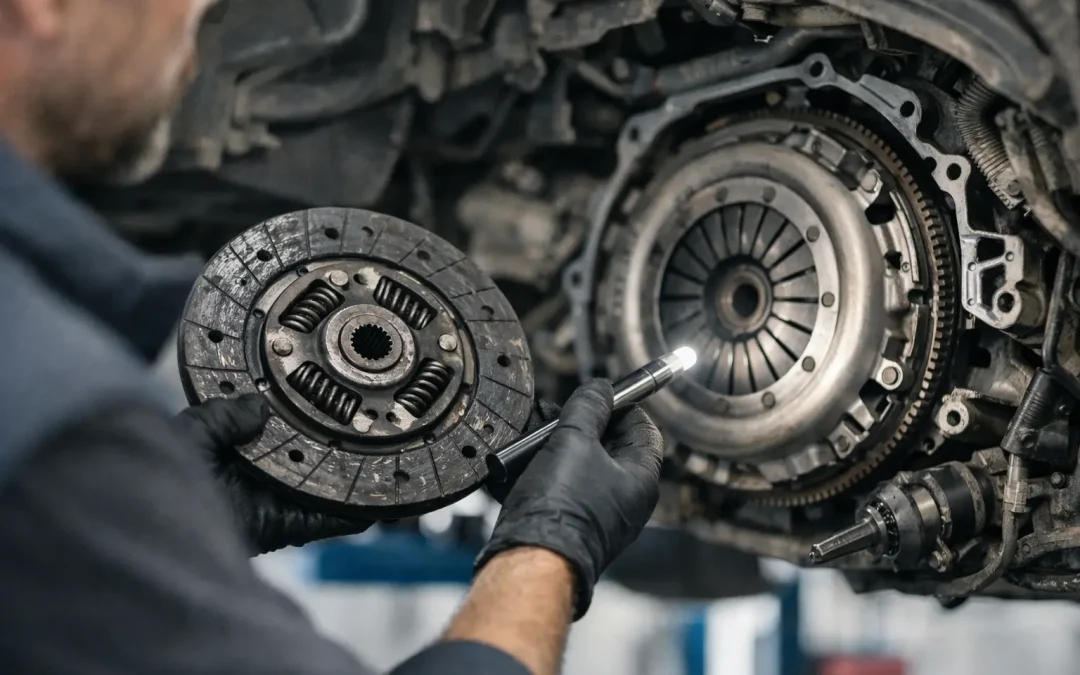
A clutch can feel mostly normal at the pedal yet still make selecting first or reverse a battle at the lights. That is often the first clue of clutch drag. Knowing how to diagnose clutch drag symptoms helps you explain the fault clearly, avoid unnecessary strain on the gearbox and decide whether the vehicle needs attention now rather than later.
Clutch drag means the clutch is not fully releasing when you press the pedal. Even with the pedal on the floor, some drive continues from the engine to the gearbox input shaft. The gearbox then has to fight that remaining rotation when you select a gear.
It is different from a slipping clutch. A slipping clutch struggles to transfer engine power when you accelerate. A dragging clutch struggles to disconnect that power when you want to change gear. The two faults can occasionally occur together, particularly on a badly worn or damaged clutch, but their symptoms are quite different.
The clutch drag symptoms drivers notice first
The most common complaint is difficult gear selection with the engine running, especially first gear and reverse. The same gears may select easily with the engine switched off. That difference is useful information because it points to the clutch not separating cleanly rather than an issue inside the gear selector alone.
Reverse is often the giveaway. Most manual gearboxes do not have synchromesh on reverse, so any continued input shaft rotation can produce a crunch or graunch as reverse is selected. Do not force the lever. Repeatedly forcing a gear can damage synchronisers, selector components and gear teeth, turning a clutch repair into a more expensive gearbox job.
Other signs can include a vehicle that creeps forward with first gear engaged and the clutch pedal fully depressed, despite the brakes being released. You may also notice hard changes when cold, a pedal engagement point that has moved suddenly, or a clutch pedal that feels soft, spongy, unusually low or inconsistent.
A slight gear resistance on a cold morning is not automatically clutch drag. Thick, cold gearbox oil can make shifting feel heavier for a short time. The concern is when the problem persists after the vehicle is warm, worsens over time, or is paired with creeping and reverse crunching.
A safe way to check for clutch drag
A few simple observations can help narrow down the problem. They are not a replacement for a workshop inspection, and they should be done on level ground away from traffic. If the vehicle is difficult to control, stop testing and arrange professional advice.
Start with the engine off. Press the clutch pedal fully and move through the gears. If the lever selects smoothly while the engine is off but becomes difficult with the engine running, clutch drag is more likely.
Next, with the handbrake firmly applied and your foot on the brake, start the engine in neutral. Press the clutch pedal all the way down, wait several seconds, then carefully select reverse. A pronounced crunch, or an inability to select reverse without forcing it, indicates the clutch may still be transmitting drive.
You can also observe the vehicle in first gear. With the clutch pedal fully depressed, the vehicle should not try to pull away. Any obvious creep is a strong warning sign. Do not use this as a reason to keep driving. It simply provides useful information for the technician.
Pay attention to the pedal as well. A pedal that slowly sinks towards the floor, feels springy, or needs pumping before gears select can point to a hydraulic clutch issue. On cable-operated systems, excessive pedal free play, a stiff pedal or a pedal that does not return properly may indicate a stretched, seized or poorly adjusted cable.
Why a clutch can drag
The cause is not always the clutch disc itself. Proper diagnosis matters because replacing parts on assumption can be costly and may not fix the problem.
Hydraulic faults
Many modern vehicles use a hydraulic master cylinder and slave cylinder to operate the clutch. Low fluid, contaminated fluid, an external leak or air in the system can reduce the clutch release travel. The pedal moves, but the release mechanism does not move far enough to separate the clutch completely.
A leaking master cylinder may leave little visible evidence, while a slave cylinder can leak externally or fail inside the bellhousing. Some vehicles use a concentric slave cylinder around the gearbox input shaft. When this component fails, gearbox removal is normally required, so it makes sense to inspect related clutch parts at the same time.
Cable, pedal and linkage problems
Older vehicles and some work utes use a cable-operated clutch. Cables can stretch, bind internally, fray or go out of adjustment. Wear at the pedal pivot, a damaged pedal bracket or a problem in the release fork can also reduce the movement reaching the clutch.
These faults can sometimes be repaired without replacing the complete clutch assembly. That is why a specialist will check the operation of the whole release system before recommending major work.
Worn or damaged clutch components
Inside the bellhousing, a warped clutch disc, damaged pressure plate, worn release bearing or seized spigot bearing can prevent clean release. Heat is a common contributor. Stop-start traffic, towing, riding the clutch on hills and repeated heavy loads can all raise clutch temperatures, particularly in 4x4s and trade vehicles.
Oil contamination from an engine rear main seal or gearbox input seal can also affect clutch operation. Contamination does not always cause drag on its own, but it can damage friction material and create inconsistent engagement. If a seal is leaking, replacing only the clutch without addressing the leak is poor value.
Incorrect parts or previous repair issues
A clutch can drag after recent repair work if the wrong components were fitted, the clutch disc was installed incorrectly, flywheel condition was overlooked, or the hydraulic system was not bled properly. This is not a job for shortcuts. Clutch systems rely on correct parts, measurements and installation procedures to work as intended.
Clutch drag or gearbox trouble?
Hard shifting does not always mean clutch drag. Worn gearbox synchronisers, incorrect or low gearbox oil, damaged shift cables, a worn gear lever bush or internal gearbox wear can create similar complaints.
The engine-off versus engine-running check is a useful separator. If a particular gear is difficult to select whether the engine is running or not, the issue may be in the shifter or gearbox. If several gears become difficult only when the engine runs and the clutch is depressed, the clutch release system becomes the stronger suspect.
A good diagnosis does not stop there. A technician will road test the vehicle where appropriate, inspect fluid condition and leaks, measure pedal and release travel, assess the clutch actuation system and check for gearbox-related faults. The goal is to identify the actual cause before approving repairs.
When you should stop driving
Do not keep driving a vehicle that crunches into gear, creeps with the clutch depressed or needs force to select gears. Apart from the risk of getting stranded, continued driving can damage the gearbox and make the vehicle unpredictable in traffic.
Arrange an inspection promptly if the clutch pedal suddenly goes soft, fluid level drops, there is a burning smell, reverse crunches consistently, or the vehicle cannot be put into gear safely. If the clutch will not disengage at all, do not attempt to limp it home by starting in gear. That can cause the vehicle to lurch unexpectedly.
What a proper clutch repair should include
The right repair depends on the fault. A hydraulic issue may need a master cylinder, slave cylinder, hose repair or a correct bleed procedure. A cable or linkage fault may need adjustment or replacement. Where the gearbox must come out, a complete clutch kit is often the sensible long-term option, typically including the clutch disc, pressure plate and release bearing.
The flywheel should be inspected at the same time. Depending on its type and condition, it may be machined, replaced or reused within specification. Seals, spigot bearings, release forks and clutch hydraulics should also be assessed while access is available. Spending a little more on the right related work can prevent paying for gearbox removal twice.
At Albury Brake and Clutch Centre, the focus is on finding the reason for the fault first, then fitting quality components suited to the vehicle and how it is used. That matters for a daily commuter, and even more for a ute that tows, carries tools or spends weekends off the blacktop.
If your manual is beginning to resist gear changes, take note of when it happens and whether it changes with the engine off. Those details give a technician a head start. More importantly, booking it in before the crunching becomes constant gives you the best chance of protecting the gearbox and getting the repair done properly.