


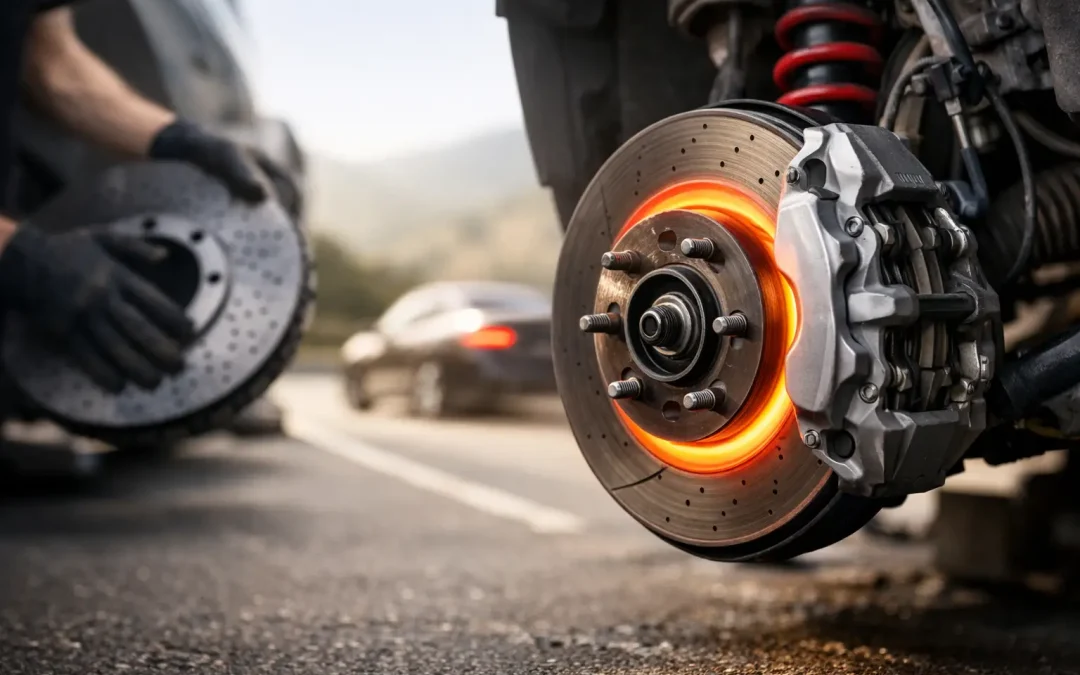
A brake fade solution is not simply fitting a new set of pads and hoping for the best. Brake fade happens when heat overwhelms part of the braking system, reducing its ability to slow the vehicle safely. The right repair starts by working out why that heat built up in the first place – particularly if you tow, drive a loaded 4×4, tackle long descents or spend plenty of time in stop-start traffic.
If your brakes have gone soft, required more pedal pressure than usual, smelt hot or felt less effective after hard use, take it seriously. Brakes are a safety-critical system. A proper inspection can identify whether the issue is related to pads, rotors, brake fluid, a sticking component or a braking setup that is not suited to how your vehicle is used.
What brake fade feels like
Brake fade is the loss of braking performance caused by excessive heat. It can appear after repeated firm braking, such as coming down a steep hill with a caravan behind you, travelling through the High Country, or hauling tools and materials in a loaded ute.
One common sign is a brake pedal that still feels reasonably firm, but the vehicle does not slow as confidently as it should. This can happen when overheated pads lose friction against the rotors. You may need to press harder, and the vehicle may take longer to pull up.
A low, soft or spongy pedal can point to a different heat-related issue. Brake fluid absorbs moisture over time, which lowers its boiling point. When old fluid gets hot enough, it can boil and form vapour in the hydraulic system. Vapour compresses, unlike brake fluid, so pedal travel increases and braking response becomes unpredictable.
There are other faults that can feel similar to brake fade. Worn pads, damaged rotors, a seized caliper, collapsed brake hose, poor-quality components or air in the system can all affect stopping performance. That is why a diagnosis based on the whole system matters more than replacing parts on a guess.
What to do if your brakes fade while driving
Stay calm and give yourself room. Ease off the accelerator, increase the gap to traffic ahead and use lower gears where appropriate to let engine braking help control speed. In a manual, select a lower gear smoothly. In an automatic, use the vehicle’s lower gear or manual mode if it is designed for that purpose.
Avoid pumping the pedal repeatedly or riding the brakes. Constant pedal use creates more heat and can make the problem worse. Do not rely on the handbrake as a replacement for the service brakes while moving, as it can upset the vehicle or lock the rear wheels.
Find a safe place to pull over as soon as practical. Let the brakes cool naturally. Do not pour water over hot rotors or wheels – rapid cooling can damage components. Once you are stopped, do not assume the issue has disappeared just because the pedal feels better after cooling. Arrange an inspection before returning to normal driving, especially if the fade was severe, the pedal went soft or a warning light appeared.
Brake fade solutions depend on the cause
The most effective brake fade solution matches the repair to the source of the heat. A specialist should inspect pad thickness and condition, rotor wear and run-out, caliper operation, brake hoses, fluid condition and the vehicle’s overall braking setup. The way the vehicle is driven also matters.
Replace glazed or unsuitable brake pads
When pads overheat, their surface can become glazed. This leaves a hard, shiny layer that reduces grip and may cause squeal or a harsh feel through the pedal. In some cases, the pads and rotors will both need replacement because the heat has affected the mating surfaces.
Pad material is not one-size-fits-all. A compound that works well for a light commuter may not be the best choice for a 4×4 carrying drawers, a canopy, recovery gear and a roof rack. Nor may it cope with regular towing. A suitable quality pad should provide dependable cold performance for everyday driving while handling the higher temperatures created by the vehicle’s real workload.
Machine or replace damaged rotors
Rotors absorb and shed a great deal of heat. Repeated overheating can create heat spots, cracking, scoring, warping or uneven thickness. These issues may show up as steering vibration or pedal pulsation under braking, but not always.
Rotors must be measured against the manufacturer’s minimum thickness and assessed for condition. Machining can be appropriate where there is enough material left and the rotor is otherwise sound. If it is below specification, badly heat-affected or damaged, replacement is the safer option. Fitting new pads to unsuitable rotors is false economy and can shorten the life of both parts.
Flush old brake fluid and repair hydraulic faults
Brake fluid should be changed at the recommended interval, not only when a problem appears. Fresh, correct-specification fluid helps maintain a higher boiling point and protects internal components from moisture-related corrosion.
A fluid flush is not a cure for every soft pedal. The system may also need checking for leaks, air entry, hose damage or a failing master cylinder. If a caliper is sticking, it can keep a pad dragging against the rotor and generate serious heat even when you are not braking. Replacing pads without fixing that underlying fault will only send the new parts down the same path.
Check calipers, slides and brake balance
A brake system works properly only when each component can move and apply pressure as intended. Seized caliper pistons, dry slide pins and uneven pad wear can leave one brake doing far more work than the others. The vehicle may pull to one side, smell hot after a short drive or wear through a pad far earlier than expected.
Correcting these faults may involve servicing or replacing calipers, renewing hardware, repairing hoses or addressing related issues in the hydraulic system. It is careful work, but it prevents heat from returning and restores balanced braking.
When a brake upgrade makes sense
For some vehicles, standard replacement components are entirely suitable. For others, especially heavily loaded 4x4s, tow vehicles and utes with larger tyres or increased GVM, the original braking package may be working close to its limit.
A well-planned brake upgrade can provide greater thermal capacity, better pedal consistency and stronger stopping confidence under load. Depending on the vehicle, that may involve larger rotors, upgraded calipers, suitable heavy-duty pads or a matched combination of components. Bigger is not automatically better, though. Parts must be compatible with the vehicle, professionally fitted and chosen for the vehicle’s actual use rather than marketing claims.
It is also worth checking the basics around the brakes. Correct tyre pressures, properly adjusted trailer brakes, sensible load distribution and selecting a lower gear before a descent all reduce the demand placed on the braking system. No brake upgrade can completely overcome a poorly loaded trailer or constant downhill braking.
Preventing brake fade before the next trip
The simplest prevention is regular brake servicing and early attention to warning signs. A squeal, vibration, pull under brakes, burning smell, longer stopping distance or brake warning light deserves investigation. Waiting until the vehicle is due for a general service can turn a manageable repair into damaged rotors, overheated fluid and more time off the road.
Before a towing holiday or a long touring trip, have the brakes checked with the expected load in mind. Tell the workshop if the vehicle has larger tyres, a GVM upgrade, a caravan, a work trailer or heavy accessories. That information helps determine whether the current setup is safe for the job.
At Albury Brake and Clutch Centre, the focus is on straight answers and repairs done properly – from everyday brake servicing through to heavy-duty 4×4 brake upgrades. If your brakes have faded, smelled hot or stopped feeling right, book an inspection before your next loaded run. A clear diagnosis now is the best way to protect your vehicle, your passengers and everyone sharing the road.