


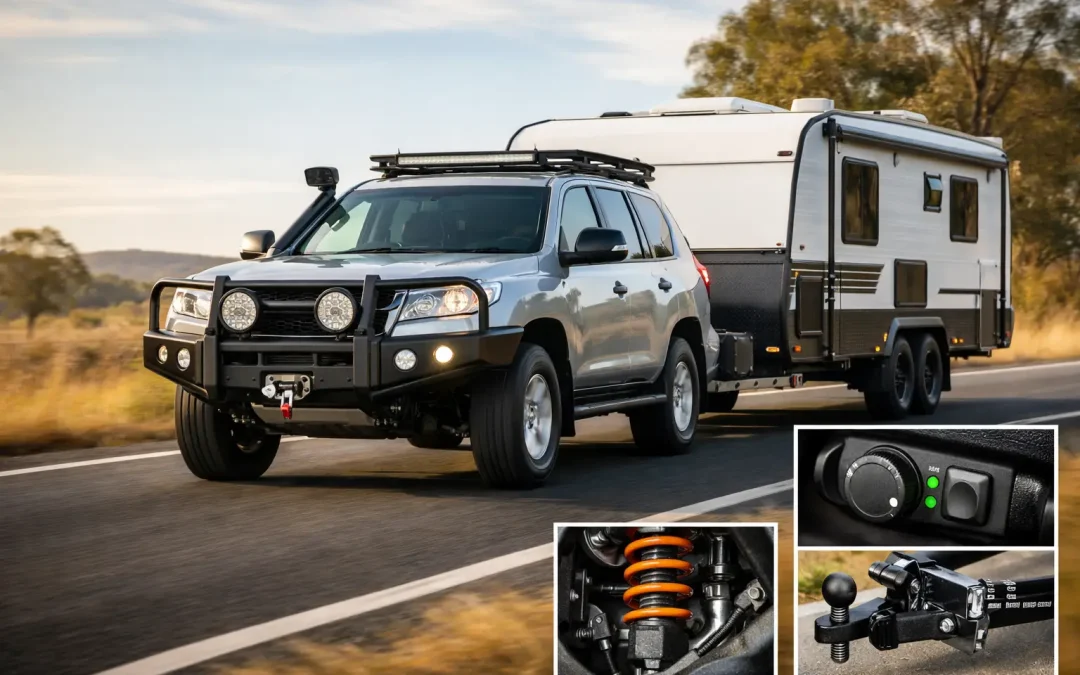
A loaded caravan can turn a capable 4WD into a very different vehicle. More weight means more heat in the brakes, more demand on the transmission and less room for error on steep descents, wet roads or sudden stops. The safest 4WD towing upgrades are not necessarily the biggest or most expensive parts. They are the upgrades that suit your actual vehicle, trailer weight and the way you use it.
For many local drivers, the right answer starts with an honest inspection rather than a shopping list. A touring ute with larger tyres, a canopy and a heavy caravan needs a different setup from a standard wagon towing a box trailer on weekends. Getting the basics right first is how you make towing safer and avoid spending money twice.
Start with weights, not accessories
Before fitting any towing upgrade, establish what the vehicle and trailer actually weigh when packed for a trip. That includes passengers, fuel, recovery gear, fridge, tools, water, roof loads and tow-ball download. A vehicle can be under its gross vehicle mass limit yet still exceed a rear axle rating or tow-ball limit once the caravan is connected.
Payload disappears quickly in a 4WD. A bull bar, winch, dual batteries, drawers, long-range tank and larger spare wheel all add weight before anyone gets in the cabin. Add a caravan with significant ball weight and the rear of the vehicle can be working far harder than expected.
This matters because upgrades do not automatically increase legal load ratings. Suspension, tyres and brakes must still operate within the manufacturer’s limits unless an approved engineering and certification process applies. A proper assessment identifies whether the issue is braking capacity, rear axle load, suspension control, tyre capacity or simply too much gear.
Brake upgrades are often the first sensible move
Brakes turn motion into heat. When towing, especially through the hills or on long descents, that heat builds quickly. If the pedal becomes soft, braking distances increase or there is a hot smell after a downhill run, the system is being pushed too hard.
A quality heavy-duty brake upgrade can improve confidence, but it must be matched to the vehicle. Depending on the application, this may involve larger rotors, upgraded calipers, high-quality pads and brake fluid suited to higher operating temperatures. Good components are only part of the job. Correct installation, rotor preparation, bedding-in and inspection of the entire hydraulic system are just as important.
Choose pads for towing, not just a sharp initial bite
Not every brake pad compound suits towing. Some pads feel strong on a quick drive around town but can become noisy, dusty or less consistent when repeatedly heated. Others are designed to remain stable under sustained load, which is more useful when a caravan is behind you.
The trade-off is that heavy-duty pads may have a different pedal feel, produce more dust or require suitable rotors to perform at their best. The aim is predictable braking, not a modification that feels impressive for five minutes and creates problems later.
Do not overlook brake fluid and hoses
Old brake fluid absorbs moisture over time, reducing its boiling point. Under hard towing conditions, that can contribute to pedal fade. A brake fluid flush using the correct specification is inexpensive compared with major brake work and should be part of the conversation where fluid age is unknown.
Flexible brake hoses, hard lines, master cylinder condition and caliper operation also need checking. Fitting better pads and rotors will not solve a sticking caliper or a hydraulic fault. Proper diagnosis comes first.
Trailer brakes must do their share
The tow vehicle should not be doing all the work. Electric trailer brakes need to be correctly adjusted and controlled so the caravan brakes smoothly with the 4WD. A poorly set controller can leave the trailer pushing the vehicle under braking, or it can apply too aggressively and lock trailer wheels.
A quality proportional brake controller is generally the best choice for regular caravan towing because it applies trailer braking in response to vehicle deceleration. It still needs to be adjusted for the loaded trailer and road conditions. The setting that works on dry bitumen may not be right on loose gravel or in the wet.
Check trailer brake condition before longer trips as well. Worn shoes or pads, damaged wiring, weak magnets, poor earth connections and seized components can all reduce braking performance. If the trailer is not stopping properly, no 4WD upgrade will fully compensate.
Suspension upgrades improve control, not legal capacity
A correctly selected suspension upgrade can make a heavily loaded 4WD more stable and controlled. Better springs and dampers can reduce rear-end sag, body movement and the tendency for a vehicle to feel unsettled over corrugations or undulating roads.
But suspension is frequently misunderstood. Stronger rear springs do not increase the vehicle’s rated payload, rear axle capacity or tow-ball limit. They may lift the vehicle and improve its stance while it remains overloaded. In some cases, excessively stiff rear springs can make an unloaded 4WD uncomfortable and reduce traction on rough surfaces.
The sensible approach is to select springs and shock absorbers for the weight the vehicle carries most of the time. If you only tow occasionally, a constant-load setup designed for a permanently heavy rear end may not be ideal. Air-assist bags can help fine-tune ride height in some applications, but they should not be used to hide an overload or replace correctly rated springs.
Tyres and wheel alignment matter more than many owners expect
Tyres are the final connection between your loaded rig and the road. They must have enough load capacity for the vehicle’s axle weights and be inflated for the load they are carrying. A tyre pressure that feels fine when the 4WD is empty may cause excessive heat and poor handling once the vehicle is loaded and towing.
Larger tyres can look the part and offer useful off-road clearance, but they also add rotating mass and can affect braking, gearing and steering response. If larger tyres are part of your setup, brake performance deserves even closer attention.
A wheel alignment is equally worthwhile after suspension work or when tyres show uneven wear. Correct alignment helps the vehicle track straight and reduces the steering corrections that become tiring on a long run. It is a small detail with a real effect on towing confidence.
Cooling and driveline upgrades protect the trip
Towing puts added strain on automatic transmissions, clutches, engines and differentials. A transmission temperature gauge or suitable cooler can be worthwhile for vehicles that regularly tow near their limits, particularly in hot conditions, on long climbs or when travelling with a loaded van.
Manual 4WD owners should pay attention to clutch condition before heading away. A clutch that slips under load will not improve on its own, and forcing it through a towing trip can lead to more expensive damage. The same applies to worn universal joints, driveline vibrations and leaking seals. These faults are easier and cheaper to address before they leave you on the side of the road.
The safest 4WD towing upgrades work as a package
There is no single part that makes a towing setup safe. Bigger brakes are valuable, but they cannot fix an overloaded rear axle. Heavy-duty suspension helps vehicle control, but it cannot make poor trailer brakes acceptable. A transmission cooler protects the driveline, but it does not correct a caravan with too much ball weight.
The best result comes from matching the whole setup: legal weights, capable tyres, healthy brakes, correctly adjusted trailer brakes, appropriate suspension and a driveline in good condition. It also means allowing more room to stop, using lower gears on descents and not relying on cruise control where terrain is constantly changing.
For 4WD owners around Albury-Wodonga, a brake and towing inspection before a major trip can provide straight answers about what needs attention now and what can wait. At Albury Brake and Clutch Centre, the focus is on diagnosing the vehicle properly and fitting quality parts that suit the job, without pressure to add upgrades that do not solve a real problem.
A safe towing setup should feel calm rather than dramatic. If the vehicle wanders, brakes poorly, sags badly or feels strained, treat that as useful feedback from the vehicle and have it checked before the next trip.