


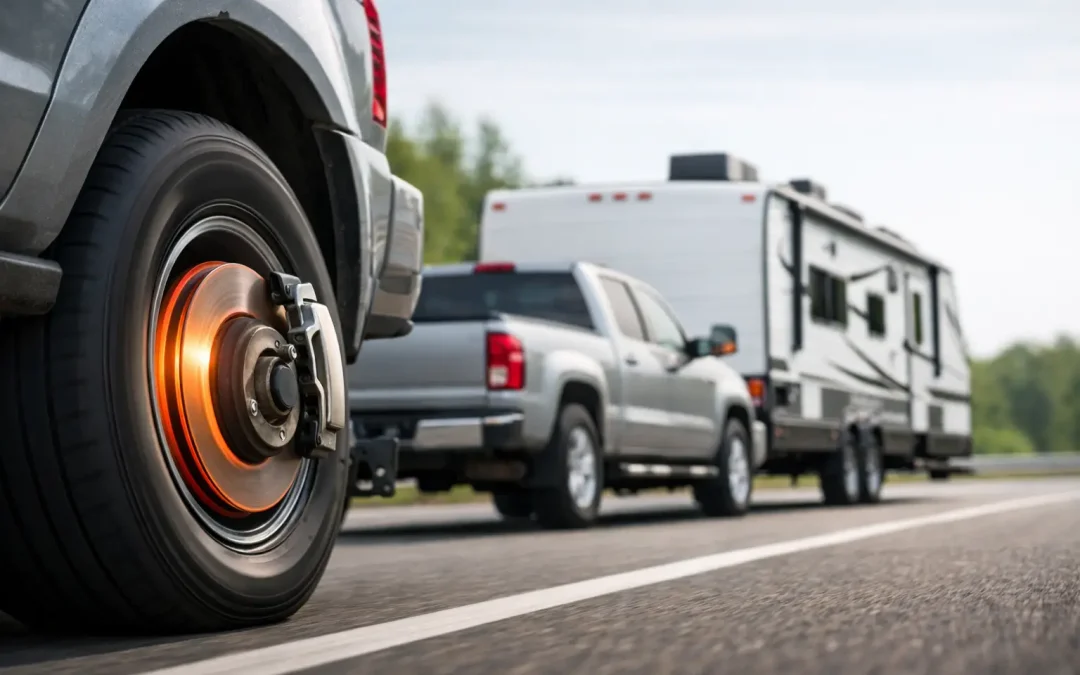
A loaded caravan on the Hume, a boat headed for the river, or a work trailer full of gear changes how your vehicle stops. So, does towing wear brakes faster? Usually, yes. Towing adds mass, increases stopping distances and puts more heat into the brake system. But how much faster your brakes wear depends on the vehicle, trailer, load, driving conditions and whether the setup is properly matched.
For most drivers, towing does not automatically mean replacing brake pads after every trip. It does mean brakes need more attention, particularly if you tow regularly, drive through hilly country, run larger tyres or carry heavy loads in the vehicle as well.
Why towing can wear brakes faster
Your vehicle brakes are designed to convert motion into heat. The heavier the combined vehicle and trailer weight, the more heat they must manage every time you slow down. Add a long downhill run, traffic, a headwind or a loaded ute, and that workload rises quickly.
Brake pads and rotors wear a little each time they create friction. With towing, you generally apply the brakes harder and for longer, so pad material is used more quickly. Rotors also operate at higher temperatures, which can lead to heat spots, cracking or distortion if the braking system is already marginal.
This is not only about the trailer’s weight. A trailer can affect weight transfer too. When braking, weight moves forward through the tow vehicle. If the tow ball weight, trailer loading or suspension setup is wrong, the vehicle can feel unsettled and its brakes may have to work harder than they should.
Heat is the real enemy
A brake system can cope with a firm stop now and then. Problems start when it cannot shed heat between repeated applications. Pads can glaze, brake fluid can lose performance as it gets hot, and rotors can develop hot spots. In severe cases, the pedal may feel soft or braking effort can increase – commonly called brake fade.
That is why a set of brakes that feels fine around town may not be up to regular towing. The issue is often not whether the vehicle can stop once. It is whether it can stop repeatedly, predictably and safely when fully loaded.
Does towing wear brakes faster on every vehicle?
It depends. A light box trailer behind a properly maintained 4×4 will have a very different effect from a large caravan behind a family SUV loaded with passengers, recovery gear and camping equipment.
Vehicles with larger brakes, suitable pad compounds and healthy brake fluid generally handle towing better. Trailers fitted with correctly adjusted electric or hydraulic brakes also take a meaningful share of the stopping work. If trailer brakes are poorly adjusted, disconnected or not operating as they should, the tow vehicle brakes are left doing far more than their fair share.
The same applies to the way you drive. Leaving a bigger gap, reading the road ahead and using lower gears on descents can make a major difference to brake temperature and wear. Riding the brakes down a hill, on the other hand, creates heat quickly and can shorten the life of pads and rotors.
The factors that make towing harder on your brakes
Regular towing wear is rarely caused by one issue alone. It is usually a combination of load, setup and conditions.
A vehicle operating close to its towing capacity or gross combination mass will naturally need more braking force. Larger tyres can also change effective gearing and reduce braking leverage, especially if the vehicle has not been set up for them. Added accessories such as bull bars, drawers, canopies, long-range tanks and roof loads all contribute to the total weight your brakes need to control.
Hilly routes place more demand on the system than flat highway driving. The Alpine and regional touring routes around Albury Wodonga can involve long descents where braking control matters far more than it does on a short suburban run. Wet roads, loose surfaces and strong crosswinds add another layer, because smooth, controlled braking becomes essential.
Trailer brake controllers deserve attention as well. A controller that is set too low leaves the vehicle doing most of the work. Set too high, it can cause the trailer wheels to grab or lock. The goal is a balanced setup where the trailer assists firmly without becoming unstable.
Warning signs to act on before the next towing trip
Brake wear does not always announce itself with a loud squeal. Some problems are subtle at first, especially when the vehicle is unladen during day-to-day driving. Pay attention if you notice any of the following:
- A brake pedal that feels soft, spongy or lower than usual.
- Shuddering through the pedal, steering wheel or vehicle when braking.
- A burning smell, smoke or excessive heat from a wheel after a descent.
- Pulling to one side under brakes or a trailer that pushes the vehicle.
- Squealing, grinding, scraping or a brake warning light.
- Longer stopping distances or the need to press the pedal harder than before.
Do not assume a vibration is simply part of towing or that a squeal will sort itself out. It may be worn pads, rotor issues, sticking callipers, old brake fluid, wheel bearing problems or a fault in the trailer braking system. Proper diagnosis matters because replacing parts without finding the cause can leave you with the same issue again.
How to reduce brake wear when towing
The best way to protect your brakes is to reduce unnecessary heat. Start with the basics: stay within your vehicle’s towing, payload and gross combination limits, and load the trailer correctly. Heavy items should be kept low and positioned to maintain safe tow ball weight rather than being stacked at the rear.
On long descents, select a lower gear early and let engine braking control your speed. Do not wait until the vehicle is building pace and then lean heavily on the brake pedal. Automatic vehicles often have manual or low-range gear selections that can help, while many modern 4x4s have downhill control features. Use them sensibly, but do not treat them as a substitute for sound brakes and good judgement.
Give yourself more room from the vehicle ahead. Towing demands a larger safety margin, even with trailer brakes fitted. Smooth, early braking is easier on pads and rotors than repeated late, hard stops.
It is also worth checking the trailer before every significant trip. Confirm the brakes activate, the breakaway system works where fitted, the wiring connection is secure and the tyres are in good condition. A trailer that is not braking properly can quickly expose weaknesses in the tow vehicle.
When a brake upgrade makes sense for towing
A brake upgrade is not necessary for every tow vehicle. If you only tow a light trailer occasionally and the existing system is in good condition, quality standard-specification components may be exactly what you need.
For regular caravan towing, heavy trade trailers, touring builds, increased GVM vehicles or 4x4s with larger tyres, an upgrade can be worthwhile. The right package may include larger rotors, more capable callipers, high-quality pads suited to towing, braided lines where appropriate, and fresh brake fluid. The aim is not a flashy modification. It is more consistent braking, better heat management and confidence when the vehicle is fully loaded.
The parts need to suit the vehicle and how it is used. An aggressive pad compound may offer strong bite but can create more dust, noise or rotor wear in everyday driving. A specialist assessment helps avoid spending money on components that do not match your real towing needs.
Service brakes before towing season
If your vehicle has had a hard towing season, book a brake inspection before the next big trip rather than waiting for a warning light or a grinding noise. A proper check should look beyond pad thickness. It should include rotor condition, calliper operation, brake fluid condition, hoses, wheel bearings where relevant, and the overall performance of the trailer braking setup.
At Albury Brake and Clutch Centre, the focus is on finding what is actually happening and recommending work that makes sense for your vehicle. Sometimes that is straightforward pads and rotors. Other times, it is correcting a sticking calliper, replacing aged fluid or discussing a towing-focused upgrade built to handle the load.
Towing should not leave you second-guessing whether the vehicle will pull up safely at the bottom of the next hill. Keep the load legal, use the gears, maintain the trailer brakes and have the vehicle checked by people who understand braking systems properly. That is the practical way to make every trip safer and get better life from the brakes you rely on.