


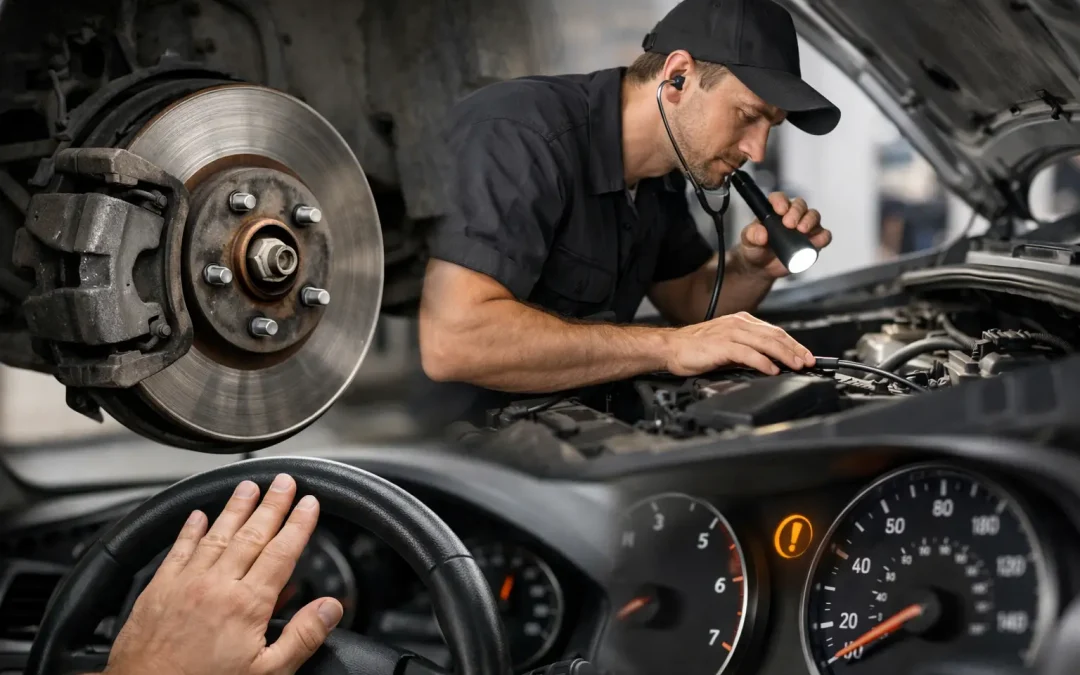
A squeak from your car can turn an ordinary drive across Albury-Wodonga into a worrying one, especially when it appears every time you slow down. But is squeaking always a brake problem? No. Brakes are a common cause, and they should never be ignored, but a noise near a wheel can also come from suspension, steering, a loose shield or even a stone caught where it should not be.
The useful question is not just whether the car squeaks. It is when it squeaks, where the sound seems to come from, and whether anything else has changed. That information helps separate a minor nuisance from a safety issue that needs attention straight away.
Is squeaking always a brake problem?
Not necessarily. A squeak that happens only when you press the brake pedal is more likely to involve the braking system. A squeak over bumps, while turning the steering wheel or when travelling at a steady speed points elsewhere.
Even then, sound can travel through a vehicle surprisingly well. A noise from behind a wheel may sound as though it is under the pedal or beneath the cabin. That is why proper diagnosis matters more than guessing from the noise alone.
Brake noise is not automatically proof that parts need replacing. Light surface rust after rain, morning dew or a vehicle sitting overnight can make brakes squeak briefly on the first few applications. That sound should usually clear after a short drive and gentle braking.
A persistent, worsening or harsh noise is different. It deserves an inspection before it becomes a larger repair.
When the brakes are the likely cause
Brake pads and rotors work under heat, pressure and road grime. Small changes in pad material, rotor condition or hardware can create noise without immediately changing how the pedal feels.
Worn pads or wear indicators
Many brake pads have a small metal wear indicator designed to touch the rotor and make a high-pitched squeal as the friction material gets low. It is an early warning, not something to put off until the next service. Continuing to drive can allow the pad material to wear away completely, damaging the rotors and reducing braking performance.
A metallic grinding noise is more urgent than a squeal. It can mean metal is contacting metal. Stop driving where it is safe to do so and arrange an assessment rather than hoping the noise will disappear.
Glazed pads or rotors
Repeated hard braking, riding the brake pedal downhill, towing heavy loads or driving with an overloaded vehicle can create enough heat to glaze the pad surface or rotor. Glazing reduces the ability of the pad to bite cleanly and can cause a sharp squeal, particularly as the vehicle comes to a stop.
This is common in 4x4s used for towing or touring, especially with larger tyres or increased GVM. Standard brakes may be working beyond what the vehicle’s new load and use demand. The right answer may be replacement parts, or it may be a brake upgrade designed for the vehicle and how it is actually used.
Dust, moisture and minor surface rust
Brake dust, fine gravel and moisture can all make noise. A brief squeak after washing the car or parking outside in wet weather is often harmless if it clears quickly and braking feels normal.
However, do not spray lubricant or household products around the brakes to silence a noise. Contaminating pads or rotors can seriously reduce braking performance. Brake components need to be inspected, cleaned and serviced with the correct products and procedures.
Loose or worn brake hardware
Pads are held in position by shims, clips and other hardware. If these components are worn, corroded, incorrectly fitted or missing, the pads can vibrate and squeak. A sticking caliper slide or piston can also keep a pad in contact with the rotor when it should release.
This may cause uneven pad wear, excess heat, a burning smell or the vehicle pulling to one side under braking. Those are not noises to monitor for a few weeks. They need prompt attention.
Other faults that can sound like brake squeal
The brakes get blamed because the sound is often heard near a wheel. In reality, several nearby parts can make similar noises.
A thin metal backing plate behind the rotor can bend and lightly rub. A small stone can lodge between the shield and rotor. Both can create a constant scraping or squeaking sound that changes with wheel speed, even when your foot is nowhere near the brake pedal.
Suspension bushes, ball joints and sway bar links can squeak as the vehicle moves over speed humps, driveways and rough roads. These sounds are often more noticeable at low speeds and may occur when the body of the vehicle rolls or bounces, rather than when braking.
Steering components can also make noise while turning into a parking space or negotiating a roundabout. On some vehicles, a dry or worn component may squeak only with the steering on full lock. That still calls for inspection, because steering and suspension faults affect control and tyre wear.
Wheel bearings tend to produce a hum, rumble or growl rather than a clean squeak, but every fault sounds slightly different. A noise that rises with road speed, changes when cornering, or is joined by vibration should not be dismissed.
Under the bonnet, an accessory belt can squeal on start-up or when the air conditioner is switched on. That is clearly not a brake issue, but it is another reason not to diagnose a vehicle from one sound alone.
Clues you can safely note before booking in
You do not need to pull wheels off or inspect brake parts yourself to provide useful information. On your next normal drive, pay attention to whether the squeak happens when the brake pedal is applied, when turning, over bumps, only in reverse, or continuously as the wheels rotate.
Also note whether the noise began after wet weather, a long trip, towing, off-road driving, tyre work or a recent brake repair. If it is safe to do so, notice whether braking feels normal or whether the vehicle pulls, shudders or needs more pedal pressure than usual.
These details give a technician a better starting point. They do not replace an inspection, but they can make diagnosis faster and more accurate.
When a squeak becomes a do-not-drive warning
A squeak on its own does not always mean you need a tow truck. A squeal that is brief, only occurs after rain and disappears after a few normal brake applications can often be checked at your next convenient booking.
Do not take that relaxed approach if the vehicle has a soft or spongy brake pedal, reduced braking response, a brake warning light, grinding, smoke, a burning smell, severe vibration, fluid leaks or a pull to one side. These signs can indicate a fault that compromises braking safety.
The same applies if the noise appears suddenly after a brake job and is accompanied by poor braking feel. New pads can make a little noise while bedding in, depending on the pad compound and rotor condition, but performance should not feel uncertain. Get it checked rather than accepting reassurance without a proper look.
What a proper brake noise inspection involves
A worthwhile inspection is more than a quick glance through the wheel spokes. The technician should road test the vehicle where appropriate, confirm the conditions that create the noise, and inspect the pads, rotors, calipers, hoses, mounting hardware and surrounding components.
Pad thickness alone is not the whole story. Rotor condition, heat marks, uneven wear, caliper movement and the condition of brake fluid can explain why a vehicle is noisy or not braking as it should. If the sound is not brake-related, the inspection should extend to likely suspension, steering and wheel-area causes rather than replacing brake parts on a hunch.
That approach protects your budget as well as your safety. Replacing pads without addressing a seized caliper, damaged rotor or loose hardware can leave the original problem unresolved and shorten the life of the new parts.
For vehicles that tow, carry tools for work or spend time on unsealed roads, it is worth discussing the load and driving conditions honestly. Quality parts and the correct brake setup cost less in the long run than repeatedly fitting components that are not suited to the job.
A squeak is your vehicle asking to be listened to, not necessarily telling you exactly what is wrong. If the sound persists or you are unsure about braking performance, Albury Brake and Clutch Centre can give you a straight answer, inspect the cause properly and recommend only the work the vehicle needs.