


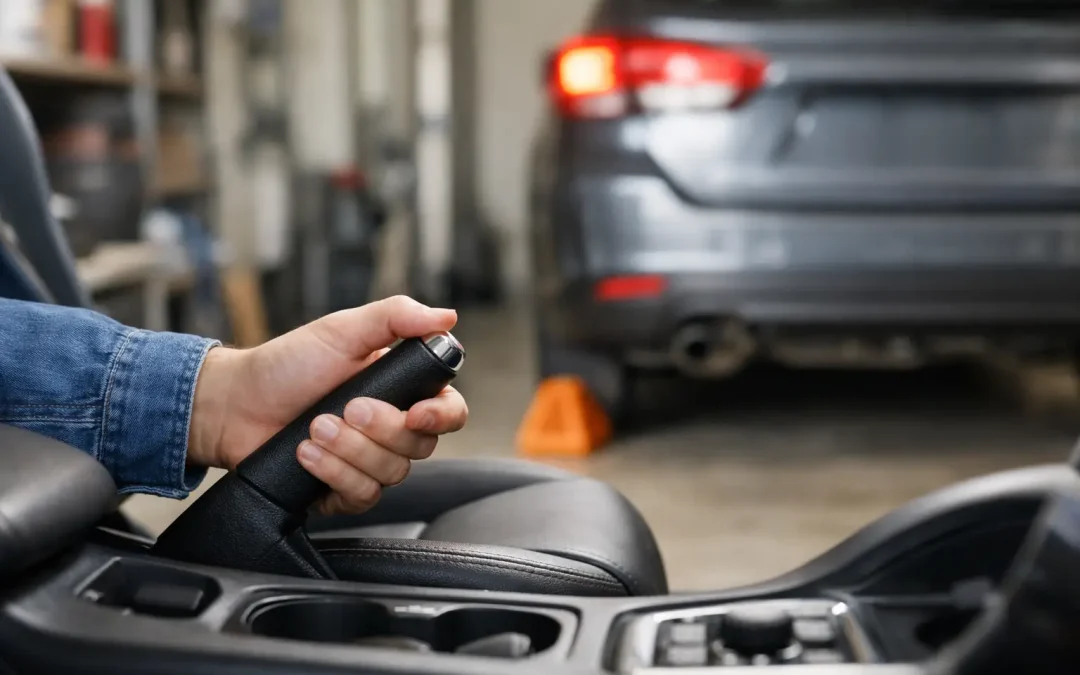
A parking brake that holds in the driveway but slips on a steep street is not doing its job. Whether your vehicle has a handbrake lever, foot-operated pedal or electronic switch, knowing how to test parking brake operation gives you an early warning before you are relying on it with a loaded ute, caravan or family car.
The check itself is straightforward, but it needs to be done in the right place and without taking unnecessary risks. A parking brake is a safety system, not something to test at speed or on a busy road.
What the parking brake should do
Your parking brake should hold the vehicle securely when parked, particularly on an incline. It is separate from the normal hydraulic service brakes used by the brake pedal, although the exact design varies between vehicles.
Many older and current vehicles use cables to apply the rear brakes through a handbrake lever or foot pedal. Some rear disc brake systems use small parking brake shoes inside the centre of the disc rotor, while others mechanically operate the rear caliper. Electronic parking brakes use motors and control modules, but still depend on brake components being in good condition.
That difference matters. A dashboard parking brake light confirms that the system has been commanded on. It does not prove the brake has enough holding force.
How to test a parking brake safely
Start on level, firm ground with plenty of clear space around the vehicle. Avoid gravel, wet grass, loose dirt and any area where another vehicle or person could be in the path if the brake does not hold.
With the engine running and your foot firmly on the normal brake pedal, apply the parking brake fully. A manual handbrake should feel positive as it comes on. It should not need to be pulled right to the end of its travel to work, nor should it feel unusually loose. On an electronic system, listen for normal actuator operation and check that the warning light appears.
Keep your foot on the brake pedal, select neutral on a manual vehicle or drive/reverse as appropriate on an automatic, then carefully release the foot brake. On level ground, the car should remain still. Do not use the accelerator to load up the parking brake or try to overpower it. This only adds risk and can create unnecessary wear.
The more meaningful test is on a mild, quiet incline. Position the vehicle where there is a safe run-off area and no traffic, apply the parking brake while holding the foot brake, then gently release the foot brake. The vehicle should stay put without rolling or creeping. Test it facing both uphill and downhill if it is safe to do so, as parking brake performance can vary depending on the brake design and direction of load.
If the vehicle moves, reapply the service brake immediately. Do not keep repeating the test or compensate by yanking the lever harder. A parking brake that cannot hold the vehicle on a reasonable slope needs inspection.
Manual handbrake and foot pedal checks
For a lever-type handbrake, pay attention to travel and feel. There is no universal number of clicks that suits every make and model, so avoid judging it solely by the sound of the ratchet. What matters is whether it applies firmly before reaching the limit of travel and holds the vehicle securely.
A handbrake lever that comes up very high, feels light, or suddenly needs more travel than it did last month may point to stretched or seized cables, worn parking brake shoes, rear brake wear or an adjustment issue. A foot-operated parking brake should similarly engage with a firm, controlled pedal movement and release cleanly.
Electronic parking brake checks
Electronic parking brakes need a slightly different approach. Apply the brake with the vehicle stationary and listen for the motors to operate. The warning light should illuminate, and the vehicle should remain held when the foot brake is released on a mild incline.
Warning messages, repeated motor noises, a flashing parking brake symbol, or a brake that will not release properly are all reasons to stop testing and arrange an inspection. Electronic systems can have faults in the actuator, wiring, switch, control module or rear brake assembly. Forcing the system or attempting to wind it back without the correct procedure can make a simple repair more expensive.
Warning signs not to ignore
A weak parking brake often gives clues before it fails a basic holding test. Common signs include a vehicle that rolls slightly after parking, a lever with excessive travel, a brake pedal that does not release fully, or a burning smell from the rear brakes after driving.
Also pay attention if the car pulls to one side when the parking brake is applied, if a rear wheel runs hot, or if the brake sticks after the vehicle has been parked for a few days. These symptoms can indicate a seized cable, sticking caliper mechanism, corroded parking brake shoes or damaged hardware.
For 4x4s, work utes and vehicles used for towing, the consequences can be greater. Extra weight, larger tyres, touring loads and regular hill starts all place more demand on the braking system. The parking brake should be checked as part of routine brake servicing, not only when it begins to slip.
Why a parking brake can lose holding power
Adjustment is one possible cause, but it is rarely the full story. Simply tightening a cable may mask worn shoes, seized mechanisms or brake components that need replacement. Proper diagnosis looks at the whole system.
On vehicles with rear drum brakes, the parking brake may share the same shoes used for normal braking. On many rear disc setups, separate small shoes sit inside the rotor hat and can wear, delaminate or collect corrosion. Other systems use a mechanical lever built into the rear caliper, which can seize if it is not moving freely.
Cables are another frequent problem, especially in regional conditions where water, mud, dust and road grime find their way underneath the vehicle. A cable can stretch, bind internally or seize in its outer sleeve. With electronic parking brakes, actuator faults and low battery voltage can also affect operation.
This is why a proper repair may involve more than an adjustment. The right fix depends on what has actually failed and whether the remaining parts are serviceable.
What not to do when testing it
Do not test a parking brake while the vehicle is moving. Applying it at speed can lock the rear wheels, damage components and cause a loss of control. It is also not a substitute for normal braking if the brake pedal feels soft, sinks to the floor or the brake warning light is on.
Avoid crawling underneath the vehicle at home to inspect cables or rear brakes unless it is properly supported with suitable equipment. A jack alone is never enough. Parking brake faults are often hidden inside drums, calipers or rotor assemblies, where a visual check from outside tells only part of the story.
It is also worth avoiding the old habit of leaving an electronic parking brake off because you are worried it may stick. If there is a fault, get it assessed. Regular, correct use helps reveal problems early, and the vehicle should be secured whenever it is parked.
When to book a professional inspection
Book the vehicle in if the parking brake fails the incline test, has changed noticeably in feel, sticks on, makes unusual noises or triggers a warning message. It is particularly sensible to have it checked before a towing trip, a long holiday drive or a roadworthy inspection.
At Albury Brake and Clutch Centre, a parking brake inspection means checking the cables, hardware, brake wear, adjustment and operation of the complete system – not just tightening something and sending you away. If parts are needed, the focus should be on quality components and a repair that continues to hold up after the first week.
A parking brake is easy to overlook because it may only be used when the car is stationary. Give it a quick, safe check now and then, and act on any change early. It is a small piece of maintenance that can prevent a very costly roll-away.