


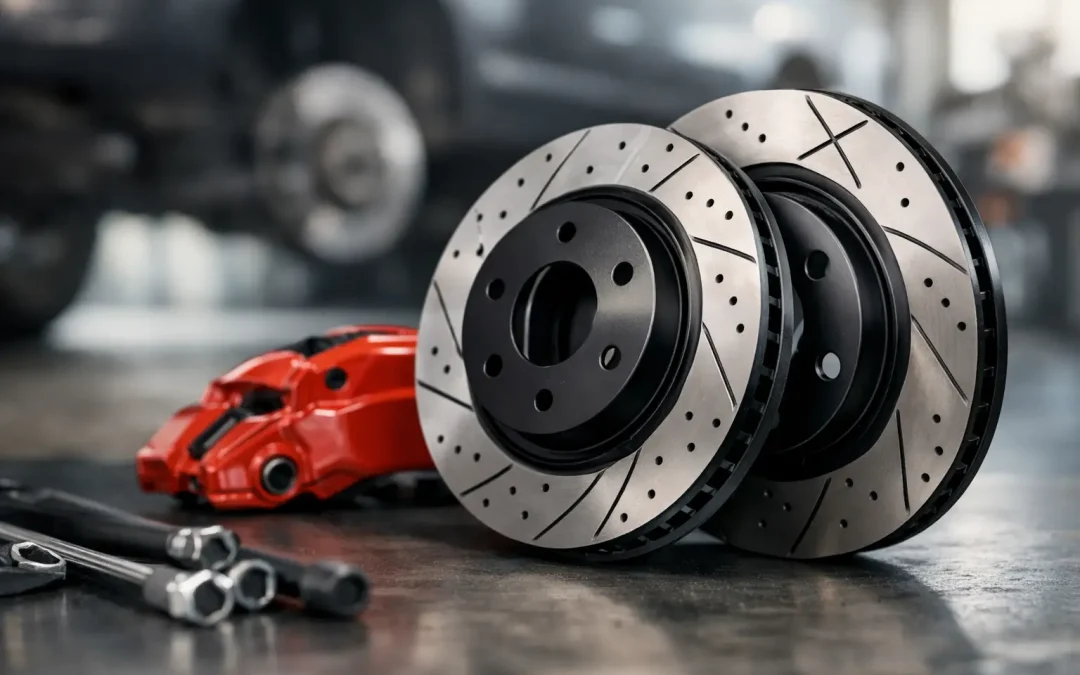
DBA T3 brake rotors are a popular upgrade for drivers who want more confidence from their brakes without fitting a full race setup. They are often chosen for 4x4s, utes, towing vehicles and daily drivers that work harder than average. But a quality rotor is only one part of the braking system. The right result comes from matching the rotors, pads, vehicle use and installation properly.
For drivers around Albury Wodonga who tow a van, carry tools, run larger tyres or spend time touring, brakes can cop far more heat and load than the standard vehicle setup was designed around. That does not automatically mean you need performance rotors. It does mean it is worth understanding what a DBA T3 rotor is designed to do and whether it suits the way you drive.
What makes DBA T3 brake rotors different?
The T3 refers to DBA’s distinctive tri-symmetrical slot design on the rotor face. Rather than being there purely for appearance, these slots are intended to help clear brake dust, water and gases away from the pad contact surface. This can help maintain a more consistent pedal feel when brakes are working hard.
The slots also provide a useful visual wear indicator. As the rotor wears, the pattern becomes less defined, giving a technician a quick reference point during an inspection. It is not a replacement for measuring rotor thickness, but it can help identify wear before it becomes a bigger issue.
Many DBA T3 options are supplied in the company’s higher-spec 4000 Series range. Depending on the exact rotor and vehicle application, these may use features such as high-carbon iron and Kangaroo Paw ventilation. Internal ventilation is particularly relevant for heavy vehicles and towing, as it helps move heat through the rotor more effectively than a basic solid or conventional vented design.
The important point is fitment. Not every T3 rotor has the same construction, and not every vehicle needs the same level of brake upgrade. A proper parts check matters before any components are ordered.
Where T3 rotors make the most sense
DBA T3 rotors can be a sensible choice where brakes regularly face higher temperatures. Towing is the obvious example. A loaded caravan, horse float or work trailer increases the effort required to slow down, particularly on long descents and stop-start roads. More heat in the brakes can lead to fade, where the pedal feel changes and braking performance drops off.
They can also suit 4x4s that have gained weight through accessories, touring gear, a canopy, drawers, recovery equipment or a GVM upgrade. Larger tyres can add another layer, as they increase rotational mass and can change the effective leverage the braking system needs to manage.
For a daily driver, the benefit may be less about outright stopping distance and more about consistency. If the vehicle sees freeway commuting, school runs, hilly roads and occasional towing, a well-matched slotted rotor and quality pad can offer reassuring, predictable braking.
That said, a rotor upgrade cannot compensate for a braking system with underlying faults. Sticking calipers, seized slide pins, contaminated fluid, worn hoses, poor-quality pads or incorrect wheel bearing adjustment can all cause braking problems. Fitting new rotors without finding the cause is false economy.
The trade-offs to consider
Slotted rotors are not the right answer for every vehicle or every budget. The slots can create a little more brake noise than a plain rotor, especially at low speed or with certain pad compounds. Some drivers notice a light swishing sound. This is generally normal, but it is worth knowing before choosing them.
Pad wear can also be slightly higher than with a smooth rotor because the slots continually refresh the pad surface. In return, the rotor can provide better bite and resist the glazed pad surface that sometimes develops after repeated hot braking. Whether that trade-off is worthwhile depends on how hard the vehicle is used.
There is also no value in installing an aggressive rotor on a lightly used vehicle with cheap pads. Brake components need to work as a set. A pad that is too hard, too soft or unsuitable for the rotor can produce noise, dust, uneven wear or disappointing performance.
For many standard passenger cars used mainly around town, a quality plain replacement rotor and the right pad may be the more practical and cost-effective choice. Straight answers matter here: the best brake repair is not always the most expensive one.
Rotor choice is only half the job
New DBA T3 brake rotors need correct preparation and installation to perform as intended. The hub face must be clean and true. Rust, scale or debris trapped between the hub and rotor can cause run-out, which may later feel like a brake shudder through the pedal or steering wheel.
The calipers must be inspected as well. A binding piston or seized slide pin can overheat one pad and rotor, quickly damaging new components. Brake fluid condition should also be checked, particularly on vehicles that tow or work hard. Old fluid absorbs moisture over time, lowering its boiling point and reducing resistance to heat.
The wheel nuts must be tightened correctly and evenly using a torque wrench. Uneven or excessive tightening can distort the rotor hat and contribute to pedal pulsation. It is a common issue, particularly where wheels have been fitted with an impact gun and no final torque check.
At Albury Brake and Clutch Centre, brake work starts with diagnosis rather than simply replacing parts. That approach helps identify why a rotor wore unevenly, why a vehicle pulls under brakes or why the pedal has changed. It also means the recommended parts can be matched to the vehicle and how it is actually used.
Choosing the right brake pads for T3 rotors
The pads you fit with T3 rotors affect nearly everything you feel from the brake pedal. A good pad choice balances cold bite, heat tolerance, noise, dust and rotor wear. There is no single compound that is best for every driver.
A family SUV that occasionally tows may suit a quality street or heavy-duty pad with strong cold performance and low noise. A loaded 4×4 used for touring may need a pad with greater heat capacity and better fade resistance. A trade ute doing frequent stop-start work may benefit from a durable pad that handles repeated braking without becoming harsh or noisy.
Avoid mixing old pads with new rotors unless they have been assessed and are genuinely suitable. Old pads can carry uneven wear patterns, contamination or glazing from the previous rotors. Starting with matched new pads and rotors gives the braking surfaces the best chance to bed in evenly.
Bedding in new rotors and pads
Bedding in is the controlled process of transferring a thin, even layer of pad material onto the rotor surface. It helps the pads and rotors work together properly. Skip it, and you increase the chance of poor initial feel, noise, glazing or uneven deposits that can later feel like rotor distortion.
Your installer should provide advice specific to the pad compound fitted. In general, avoid heavy braking immediately after the job unless necessary. Use a series of moderate stops to bring the brakes up to temperature, then allow them to cool with normal driving. Do not hold the vehicle stationary with a hard brake pedal after repeated heavy stops if the brakes are very hot, as pad material can transfer unevenly to the rotor.
If you notice a burning smell, smoke, severe noise, pulling, vibration or a soft pedal after brake work, have it checked promptly. Some light smell during the early bedding-in period can be normal, but anything persistent or concerning deserves an inspection.
When to have your brakes checked
Do not wait for a warning light before booking a brake inspection. Brake concerns often show up first as small changes: a longer stopping distance, squeal, grinding, steering shake under braking, a pedal that feels spongy, or a vehicle that drifts to one side.
If you have recently fitted larger tyres, increased your vehicle’s load, started towing more often or are planning a long trip, it is also sensible to assess whether the current brake setup is up to the task. A brake upgrade should be based on the vehicle’s condition and use, not guesswork.
DBA T3 rotors can be an excellent component in a properly planned brake job. Get the whole system checked, choose parts that suit the load you carry, and give yourself the confidence that when you need to stop, your vehicle is ready.