


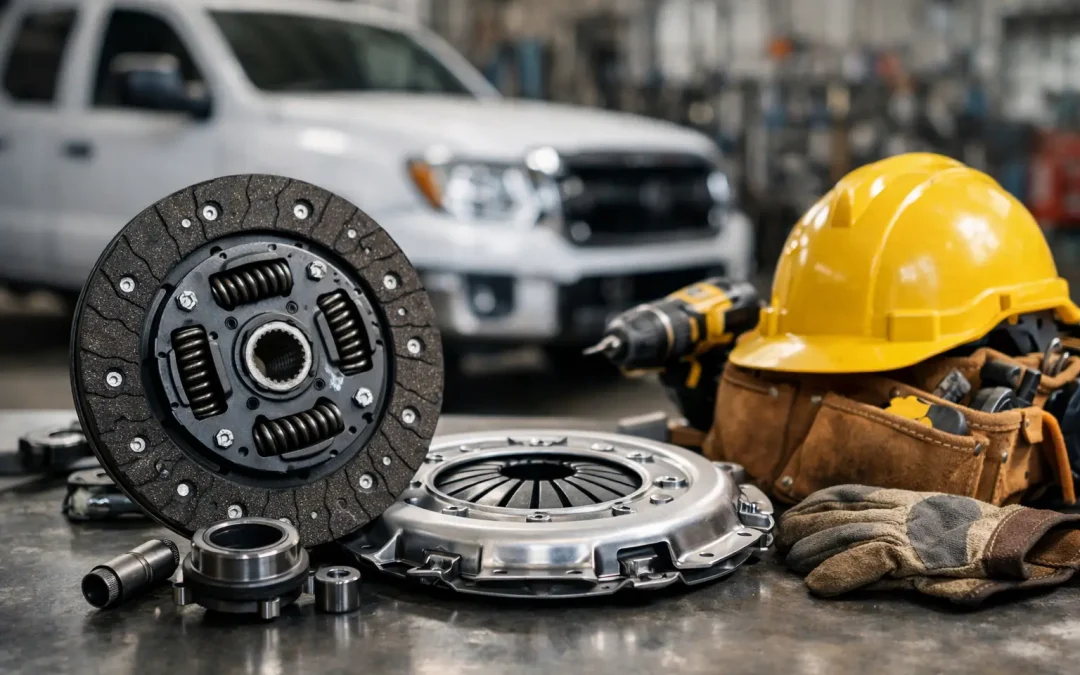
A clutch that starts slipping halfway through a loaded run is not just inconvenient. It can cost you a day’s work, leave tools stranded on site and turn a simple job into an expensive recovery. The best clutch options for tradies are not always the biggest or most aggressive kits on the shelf. They are the ones matched properly to the vehicle, the load it carries and the work it does every week.
For a work ute, van or 4×4, clutch choice comes down to more than engine power. Stop-start traffic, towing, payload, steep driveways, off-road access and the driver’s habits all affect how long a clutch will last. Getting straight answers before fitting a replacement can save money and avoid fitting a clutch that is wrong for the job.
Start with how the vehicle earns its keep
A standard replacement clutch can be the right call for many tradies. If your vehicle is largely unmodified, carries normal tools and materials, and spends most of its time on sealed roads, a quality original-equipment-specification kit is often the best balance of smooth operation, reliability and cost.
Quality matters here. A cheap clutch kit may look like a saving at the counter, but clutch replacement involves substantial labour. If a poor-quality pressure plate, release bearing or friction plate fails early, the gearbox needs to come out again. Fitting proven components from established brands such as Exedy, Aisin or Powerdrive gives the repair a far better chance of lasting.
The answer changes when the vehicle regularly tows a trailer, carries a full canopy setup, hauls heavy gear or has been modified for more torque. In those cases, a standard clutch may work initially but be pushed beyond its intended capacity. That is where a properly selected heavy-duty kit earns its place.
Best clutch options for tradies by workload
Standard replacement kits for normal daily work
For the electrician, plumber, sparky or service technician whose ute is loaded with tools but not constantly towing, a quality standard replacement kit is usually the sensible option. It should deliver a light, predictable pedal and smooth take-up in traffic, without the harsh engagement associated with some performance clutches.
This option suits vehicles that retain factory power and operate within their original payload and towing limits. It is also often the best choice where several staff members drive the vehicle. A clutch that is easy to use helps reduce poor take-off habits, which can shorten clutch life.
Heavy-duty organic kits for towing and loaded utes
Heavy-duty organic clutches are a common upgrade for tradies who work their vehicles harder than average. They use a higher-clamp-load pressure plate and a tougher friction material while generally retaining civilised road manners.
This is often the sweet spot for a dual-cab towing a work trailer, a 4×4 carrying a service body, or a vehicle regularly moving materials. The extra holding capacity helps prevent slip under load, particularly on hills and when reversing a trailer. The trade-off can be a firmer clutch pedal, although a well-matched kit should still be comfortable for daily driving.
A heavy-duty label alone is not a reason to upgrade. More clamping force is useful only when the vehicle needs it. Fit an overly aggressive clutch to a light-duty work vehicle and you may end up with a heavier pedal and less pleasant operation without a practical gain.
Heavy-duty towing clutches for 4x4s and high-GVM setups
A touring or trade 4×4 can carry far more weight than owners realise. Add a canopy, drawers, fridge, auxiliary batteries, recovery gear, roof load, tools and a trailer, and the drivetrain is working hard before the vehicle even reaches a worksite.
For these vehicles, clutch capacity needs to account for real-world loaded weight, tyre size and towing requirements. Larger tyres can increase the load placed on the clutch when taking off, while increased GVM setups and regular towing add heat. A purpose-built heavy-duty towing kit can provide the margin needed for dependable operation rather than operating at the limit every day.
This is also where diagnosis matters. If the clutch has failed early, simply installing a stronger kit may not solve the underlying problem. Oil contamination, a worn or damaged flywheel, hydraulic faults, incorrect adjustment or excessive drivetrain movement can all affect clutch performance and service life.
Performance clutches for modified work vehicles
Some tradies run modified diesel utes or 4x4s with engine tuning for towing torque. More torque is useful, but it can quickly exceed the capacity of a factory-style clutch. A heavy-duty or performance clutch designed for the actual torque output may be necessary.
There is a limit, though. Ceramic and puck-style clutches offer high torque capacity, but they can engage abruptly and are generally less forgiving in traffic or while manoeuvring a trailer. They are better suited to high-output applications where holding power is the priority, not every-day comfort.
For most working vehicles, an organic heavy-duty kit is the better compromise. It provides stronger holding power while remaining easier to drive and less punishing on the rest of the driveline.
Do not overlook the flywheel and hydraulic parts
A clutch is a system, not a single component. The disc, pressure plate, release bearing, flywheel and hydraulic components all need to work together. Replacing only the visibly worn part can create trouble later.
The flywheel needs careful inspection every time the gearbox is removed. Heat spotting, cracking, scoring and an uneven surface can cause shudder, poor engagement and premature wear. Depending on the vehicle and flywheel type, machining may be appropriate, or replacement may be the safer long-term option.
It is also wise to assess the clutch master cylinder, slave cylinder and release mechanism. A hydraulic leak can mimic clutch trouble, while a failing slave cylinder can leave a vehicle unable to select gears. On many vehicles, the slave cylinder is located inside the bellhousing. Replacing it while the gearbox is already out can prevent paying for the same labour twice.
Signs your current clutch is not coping
Clutches rarely fail without warning. Slip is the most obvious sign: engine revs rise but the vehicle does not accelerate as it should, often most noticeable under hard acceleration, uphill or while towing. A burning smell after taking off with a load is another warning sign.
Shudder when moving away, a difficult gear change, a pedal that feels different, rattling noises when pressing the clutch, or fluid loss around the hydraulic system also deserve inspection. These symptoms do not always mean the clutch itself has worn out. A proper assessment identifies the cause before parts are ordered.
If you keep driving a slipping clutch, heat can damage the flywheel and pressure plate as well as the friction disc. Acting early can sometimes reduce the overall repair cost and, more importantly, limit time off the road.
Choosing the right kit without wasting money
Before recommending a clutch, a specialist workshop should ask practical questions. What does the vehicle carry? Does it tow, and how often? Has the engine been tuned? Are larger tyres fitted? Is it used mainly in town, on the highway, on rural properties or off-road? These details matter more than choosing the toughest-looking kit.
A good recommendation should also be clear about the trade-offs. A standard kit may feel smoother and cost less, but have less reserve capacity. A heavy-duty organic kit is stronger under load but may have a firmer pedal. A performance setup may hold serious torque but can be less pleasant in stop-start work.
At Albury Brake and Clutch Centre, the focus is on diagnosing the complete clutch system and matching quality parts to how the vehicle is actually used. That means no pressure to fit an upgrade you do not need, and no shortcuts on components that are difficult to access once the gearbox is back in place.
The right clutch should let you get on with the job without thinking about it. If your vehicle is slipping, shuddering or struggling under load, have it checked before a small warning turns into a missed day’s work.