


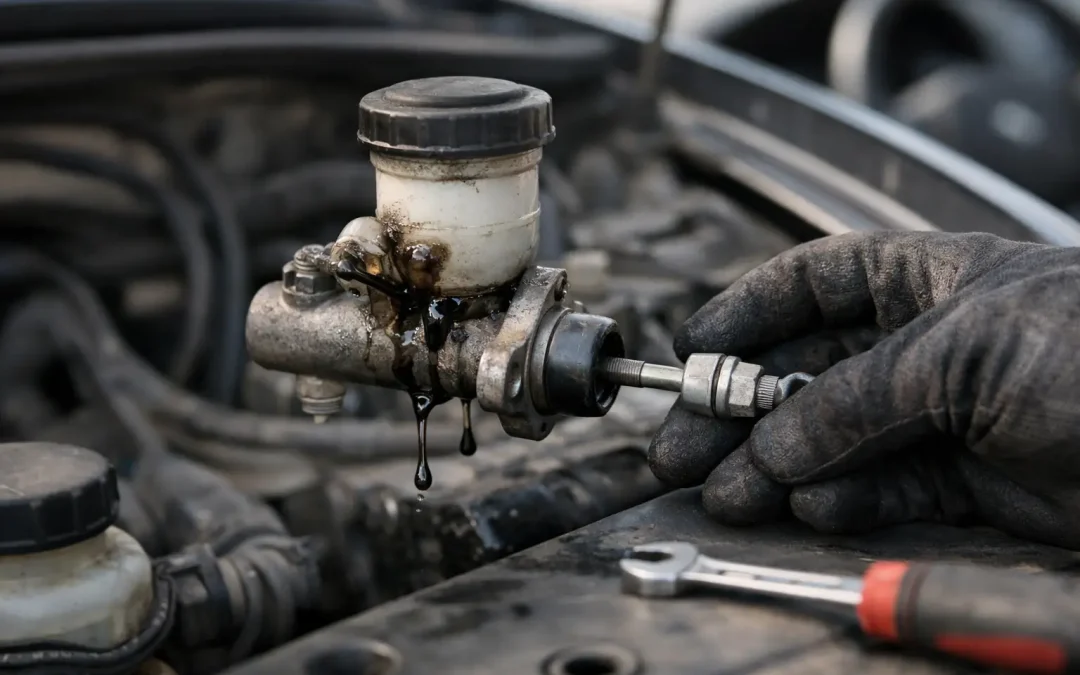
Your clutch pedal should feel consistent every time you press it. If it suddenly goes soft, starts sticking, or the gears become hard to select, there is a fair chance you are dealing with a hydraulic fault. If you are wondering how to identify clutch master cylinder failure, the key is knowing which symptoms point to the master cylinder itself and which could be caused by something else in the clutch system.
The clutch master cylinder is a small part with a big job. When you press the clutch pedal, it creates hydraulic pressure and sends fluid through the system so the clutch can disengage properly. If that pressure drops away because of an internal fault or a fluid leak, the clutch will not behave as it should. In some cases, the vehicle becomes difficult to drive. In others, it can leave you unable to select a gear at all.
How to identify clutch master cylinder failure early
Most clutch master cylinder faults do not appear all at once. They usually start with changes in pedal feel or gear engagement that get worse over time. Catching those signs early can save you from extra wear on the clutch and a bigger repair bill later.
A common early symptom is a soft or spongy clutch pedal. If the pedal feels lighter than usual, sinks lower than normal, or does not return cleanly after being pressed, hydraulic pressure may be escaping inside the master cylinder. That internal bypass is not always visible from the outside, which is why the issue can be easy to miss at first.
Another strong warning sign is difficulty selecting gears, especially reverse or first gear. If the clutch is not fully disengaging, the gearbox can resist shifts or feel notchy going into gear. Some drivers describe it as the car wanting to creep forward even with the clutch pedal on the floor.
You might also notice the clutch engagement point changing. If the bite point suddenly moves very low or feels inconsistent from one drive to the next, the hydraulic system may not be holding pressure properly. That does not automatically confirm master cylinder failure, but it is a sign worth taking seriously.
Common symptoms of a failing clutch master cylinder
The most obvious symptom is fluid loss. The clutch master cylinder uses hydraulic fluid, and if it starts leaking, the fluid level in the reservoir may drop. In some vehicles the clutch shares the brake fluid reservoir, which makes low fluid especially important to investigate properly. Ignoring it is not a good idea.
Leaks can show up around the firewall, near the clutch pedal, or in the engine bay around the cylinder itself. Sometimes fluid tracks down the pedal or leaves dampness on the carpet under the dash. Other times, there is no clear external leak because the seals are failing internally.
A pedal that sticks to the floor is another classic symptom. You press the clutch, and instead of springing back normally, it comes back slowly or needs to be lifted by foot. That can happen when the cylinder seals wear out or when air enters the hydraulic line.
You may also get intermittent symptoms. The clutch might work reasonably well when the vehicle is cold, then get worse in traffic or after a longer drive. Heat can expose weakness in old seals and make pressure loss more obvious.
What the pedal feel can tell you
Pedal feel matters because it gives clues before a complete failure happens. A soft pedal usually points to pressure loss. A pedal that gradually sinks while held down may suggest internal seal failure. A pedal that feels normal at first but becomes weak after repeated use can indicate a leak or air in the system.
That said, pedal feel alone is not enough for a proper diagnosis. The slave cylinder, hydraulic line, fluid condition and even clutch mechanical wear can create similar complaints. That is why a proper inspection matters instead of replacing parts based on guesswork.
What causes clutch master cylinder failure?
Age and seal wear are the most common causes. Over time, the internal rubber seals can harden, crack or wear down. Once that happens, the cylinder cannot maintain the pressure needed to operate the clutch consistently.
Contaminated or old hydraulic fluid can also shorten the life of the master cylinder. Fluid absorbs moisture over time, and that moisture can lead to corrosion inside the cylinder bore. Once the internal surfaces wear or pit, the seals struggle to do their job.
Sometimes the problem starts after related work has been done, particularly if the system was not bled properly or if an old cylinder was already close to failure. It is also worth remembering that if one hydraulic component is worn out, the other may not be far behind. In some vehicles, replacing only the master cylinder may fix the immediate issue. In others, the slave cylinder should be checked just as closely.
Clutch master cylinder failure or something else?
This is where people often get caught out. The symptoms of a failing clutch master cylinder can overlap with slave cylinder faults, air in the hydraulic system, low fluid, damaged lines, or a worn clutch itself.
A worn clutch plate usually causes slipping under load rather than a soft pedal. Engine revs rise, but road speed does not increase as it should. By contrast, a master cylinder problem is more likely to affect pedal feel and the ability to disengage the clutch cleanly.
A failing slave cylinder can create very similar symptoms to a master cylinder fault. Both are part of the same hydraulic system, and both can leak or lose pressure. The difference is in the inspection. Proper diagnosis means checking for leaks, testing pedal behaviour, inspecting fluid condition and confirming whether pressure is being generated and held where it should be.
Why proper diagnosis saves money
Clutch hydraulics are not a good area for trial-and-error repairs. Replacing the wrong part wastes time and money, and it does not solve the problem. Worse, if the vehicle keeps being driven while the fault gets worse, you may end up with additional clutch or gearbox wear simply because the clutch is not disengaging correctly.
At a specialist workshop, diagnosis should be straightforward and honest. The aim is to identify the actual fault, explain what is needed, and carry out a repair that lasts.
When is it unsafe to keep driving?
If the clutch pedal is occasionally soft but the vehicle still shifts, you may be tempted to put it off. That is understandable, but hydraulic faults tend to get worse rather than better. A small leak can quickly become a no-start or no-drive situation if you cannot get the vehicle into gear safely.
It is best to stop driving and book an inspection if the pedal goes to the floor, gears are hard to select, the vehicle creeps with the clutch depressed, or you can see fluid leaking. Those are not minor annoyances. They are signs the system may not be operating safely.
This matters even more if you tow, travel long distances, or drive a 4×4 loaded for work or touring. Extra load puts more demand on the vehicle, and the last place you want a clutch hydraulic failure is in traffic, on a highway, or well outside town.
What to expect during inspection and repair
A proper clutch hydraulic inspection should include checking the fluid level and condition, inspecting the master and slave cylinders for leaks, testing pedal operation, and confirming whether the system is holding pressure. If air has entered the system, bleeding may be part of the process, but bleeding alone is not a fix if the cylinder seals are worn.
If the master cylinder has failed, replacement is usually the right repair. In some cases, the slave cylinder should be replaced at the same time, particularly if both components show age or wear. It depends on the vehicle, the fault, and the condition of the rest of the system.
Using quality parts matters here. Cheap hydraulic components can create repeat failures, inconsistent pedal feel, or a short service life. For a repair this important, it makes sense to fit parts that are built to last and matched properly to the vehicle.
If you are in Albury-Wodonga and your clutch pedal does not feel right, a specialist workshop such as Albury Brake and Clutch Centre can tell you quickly whether the issue is the master cylinder, the slave cylinder, or something else entirely.
A practical way to think about the warning signs
If the clutch pedal feels different, do not ignore it. A soft pedal, trouble selecting gears, leaking fluid, or a pedal that sticks or sinks are all signs the hydraulic system needs attention. The master cylinder may be the cause, but the right answer comes from checking the full system properly rather than guessing.
The good news is that these faults are usually very manageable when caught early. The best move is to act before a minor hydraulic issue turns into a vehicle that cannot be driven at all.