


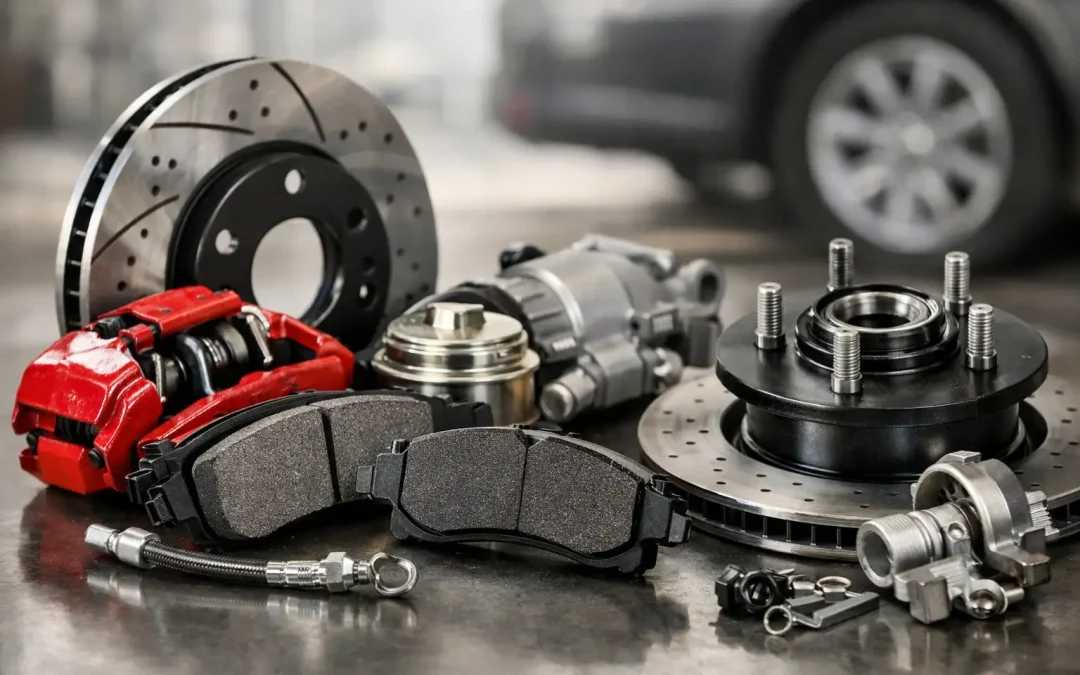
A brake pedal can still feel reasonably normal while critical brake parts are nearing the end of their service life. That is why a quick look through the wheel or waiting for a warning light is not always enough. Your vehicle’s braking system works as a group, and one worn or faulty component can affect stopping distance, pedal feel, tyre wear and vehicle control.
For everyday driving around Albury Wodonga, reliable brakes mean confidence in school traffic, wet roundabouts and highway travel. For 4x4s that tow, tour or run larger tyres, the demands are higher again. Knowing what each component does helps you spot problems early and make informed decisions when repairs are needed.
The brake parts that do the real work
Most people think of brake pads first, and for good reason. When you press the pedal, hydraulic pressure forces the pads against the brake rotors. The friction between those surfaces slows the wheel. Pads are designed to wear, but the rate depends on your vehicle, driving style, load and the type of roads you use.
The rotors, sometimes called brake discs, are just as important. They need a clean, even surface and enough material thickness to manage heat safely. A worn, scored, heat-spotted or warped rotor can cause shuddering, noise and uneven pad wear. Fitting new pads to badly worn rotors may save money initially, but it often leads to poor results and a shorter life from the new pads.
Calipers house the pads and apply the clamping force. A sticking caliper can leave one pad dragging on the rotor, creating excessive heat and a vehicle that pulls to one side under braking. Caliper slides, seals and pistons all need to move freely. These faults are not always obvious from the driver’s seat, which is why a proper inspection matters.
Brake fluid, hoses and metal lines do not get as much attention, but they are safety-critical. Brake fluid transfers pedal force through the system. Over time, it absorbs moisture, which lowers its boiling point and can contribute to corrosion inside hydraulic components. Old rubber hoses can also deteriorate internally or externally. A soft pedal, fluid leak or brake warning light needs prompt attention – it is not something to put off until the next service.
Your vehicle may also rely on components such as the master cylinder, brake booster, wheel cylinders, handbrake assembly, wheel bearings and ABS sensors. Modern braking systems are interconnected, so the right repair starts with identifying the actual cause rather than guessing at the most visible part.
When brake parts need attention
Brake wear does not follow a fixed kilometre interval. One driver may need pads sooner because they spend their week in stop-start traffic, while another may wear rotors faster due to regular towing or steep country roads. The best approach is to have the brakes checked during scheduled servicing and act on warning signs early.
Common signs worth taking seriously include a squeal, grinding noise, vibration through the pedal or steering wheel, a pulling sensation, a soft or unusually hard brake pedal, or a warning light. A burning smell after normal driving can point to a dragging brake. If your car takes longer to stop, do not keep driving it while you wait to see whether the issue settles down.
Noise alone does not always mean the same thing. Some pads can squeal because of dust, moisture or the pad compound, particularly on a cold morning. Grinding, however, can mean the friction material has worn away and metal is contacting the rotor. That can turn a straightforward pad replacement into a more expensive rotor and caliper repair.
A vibration under braking is another issue that deserves diagnosis. It may be related to rotor run-out, uneven rotor thickness, wheel bearing movement, suspension wear or even incorrect wheel fitment. Replacing parts without checking the system can leave the original problem behind.
Why quality matters more than the cheapest quote
Brake components are not all made to the same standard, and the cheapest option is rarely the best value if it wears quickly, creates noise or performs poorly under heat. Quality pads and rotors are made to work within the specifications of the vehicle and its intended use. That means predictable stopping performance, better heat control and less chance of premature wear when fitted correctly.
That does not mean every vehicle needs a high-performance brake package. A family SUV used for commuting has different needs from a work ute carrying tools every day. It depends on vehicle weight, driving conditions, load and how the vehicle is used.
For standard passenger vehicles, a quality OE-equivalent setup is often the sensible choice. It provides dependable performance without paying for features the vehicle will never use. For towing, touring, heavy loads or larger tyre and GVM upgrades, an upgraded setup may be justified. Larger tyres and extra weight increase the effort required to slow the vehicle, especially downhill or when towing a caravan.
A suitable upgrade is more than fitting aggressive-looking rotors. The pads, rotors, caliper capacity, brake fluid and vehicle setup need to work together. A specialist workshop can explain whether an upgrade will provide a genuine benefit or whether the existing system simply needs proper maintenance.
A proper brake inspection avoids unnecessary repairs
Good brake work is not about replacing every component at the first sign of wear. It is about measuring, checking and explaining what is needed now, what can safely wait and why.
A thorough assessment usually starts with a road test where appropriate, followed by an inspection of pad thickness, rotor condition and thickness, caliper operation, fluid condition, brake hoses, leaks and the handbrake system. If a warning light is present, diagnostic testing may be needed to check sensors and ABS-related faults.
Measurements matter. Brake rotors have a minimum safe thickness, and pads need enough friction material for safe operation. A technician should also look for uneven wear, as this can reveal a seized slide, sticking piston, damaged hose or other underlying problem. Simply fitting pads over the top of a fault is not a lasting repair.
Once the inspection is complete, you should receive straight answers about the condition of your brakes. There is a clear difference between parts that need immediate replacement, items to monitor at the next service and work that is not necessary. That clarity helps you plan costs without compromising safety.
Brake servicing is more than pads and rotors
A brake service may involve cleaning and lubricating caliper contact points, checking slide movement, inspecting hardware, measuring wear and testing the system after reassembly. Where required, the system may be bled to remove old fluid or air. Attention to these details helps prevent noise, uneven wear and poor pedal feel.
Correct installation is equally important. Wheel nuts need to be tightened to specification, rotors need clean mounting surfaces and brake components need to be fitted in the right orientation. Shortcuts can create vibration, damage threads or compromise the repair.
After new pads or rotors are fitted, they need a bedding-in period. This allows the pad material to transfer evenly onto the rotor surface. Your technician can advise on the appropriate procedure, but generally it means avoiding repeated heavy braking and towing immediately after the repair unless necessary.
Brake parts for 4x4s, towing and work vehicles
A heavily loaded 4×4 is not a standard passenger car. Add a bull bar, canopy, drawers, recovery gear, passengers and a caravan, and the braking system has much more energy to control. Long descents and hot conditions can push an undersized or worn system beyond its comfort zone.
Warning signs on these vehicles can include brake fade on hills, a burning smell after towing, frequent pad replacement or a pedal that changes after repeated braking. Better-quality pads, more capable rotors or a purpose-designed brake upgrade can improve heat management and confidence, but only when matched to the vehicle’s legal load rating and real-world use.
For trade vehicles, downtime is also a cost. Choosing reliable parts and dealing with small issues before they become major repairs can keep the vehicle on the road and avoid damage to rotors, calipers and tyres.
A practical approach when something feels wrong
If your brakes make a new noise, pull to one side, vibrate or feel different, book an inspection rather than buying parts based on an online guess. The fault may be simple, but brakes are not an area for trial and error.
At Albury Brake and Clutch Centre, the focus is on finding the cause, fitting quality components where required and explaining the work plainly. Safe braking should never rely on luck. If something does not feel right at the pedal, have it checked before your next long drive, towing trip or busy week on the road.