


A clutch replacement warranty should give you confidence after a major repair, not leave you guessing what happens if something feels wrong a week later. The catch is that warranties are not all the same. What is covered depends on the parts fitted, the workmanship provided and, most importantly, the cause of any later fault.
A clutch is not a simple bolt-on item. Replacing it involves separating the gearbox from the engine, inspecting related components and making sure the underlying reason for the original failure has been properly addressed. That is why a quality clutch repair starts with diagnosis, not just fitting a new kit.
What a clutch replacement warranty usually covers
Most clutch repair warranties have two parts: a warranty on the supplied parts and a warranty on the workshop’s workmanship. They work together, but they are not interchangeable.
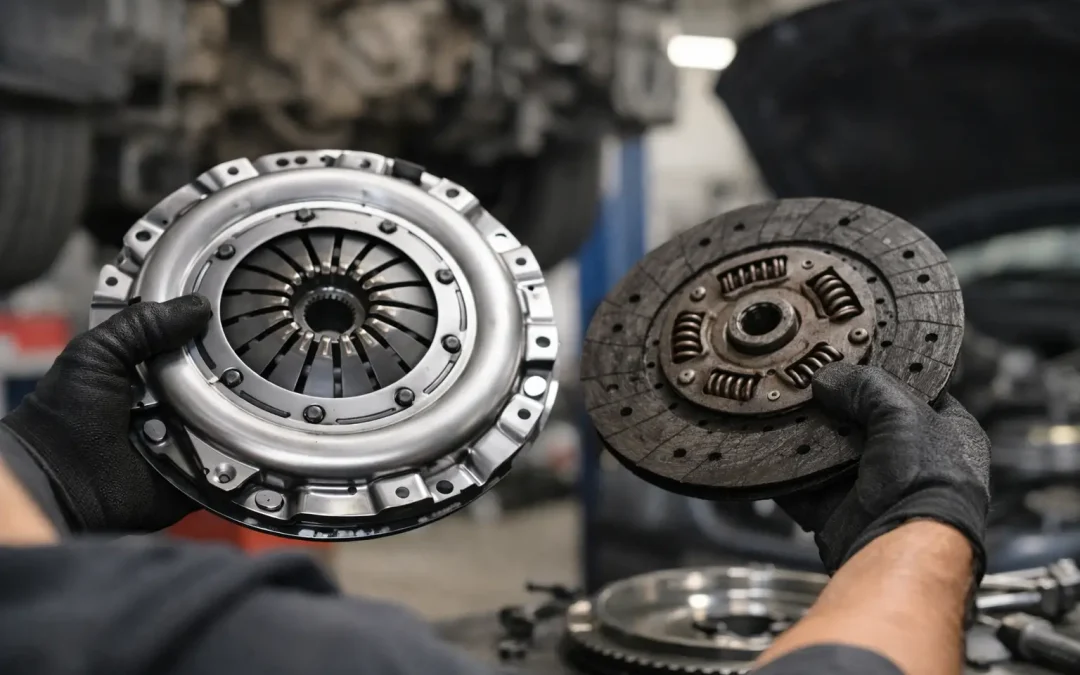
A parts warranty generally applies when a component is proven to have a manufacturing defect. Depending on the vehicle and kit, that could include the clutch pressure plate, clutch disc, release bearing, concentric slave cylinder or dual-mass flywheel where one has been supplied and fitted. The exact terms are set by the manufacturer or supplier, so the paperwork matters.
Workmanship cover relates to the installation itself. If a problem is caused by an error in fitting, an incorrectly installed component or something missed during the repair that should reasonably have been identified, the workshop should investigate it and put it right. A specialist workshop will stand behind work completed properly and explain the next step without sending you in circles.
It is also worth remembering that Australian Consumer Law consumer guarantees apply separately from any written warranty. A written warranty is not a way to remove your rights. It does, however, help to have a clear invoice showing the work performed, parts installed and any recommendations made at the time.
What a clutch replacement warranty does not automatically cover
Clutches are wear items. Like brake pads, tyres and batteries, their life is affected by how the vehicle is used. A warranty is not usually a promise that the clutch will last a fixed number of kilometres in every situation.
For example, repeated stop-start driving, holding the vehicle on a hill using the clutch, aggressive launches and regular heavy towing can shorten clutch life. So can a vehicle that is modified beyond the clutch’s intended load capacity. This does not mean a warranty is automatically void whenever you tow a caravan or drive a 4×4 off-road. It means the workshop needs to fit a clutch suited to the vehicle’s real workload and assess any failure on its actual cause.
Contamination is another common issue. If engine oil, gearbox oil or hydraulic fluid reaches the clutch friction surface after the repair, the clutch can shudder or slip. If that contamination comes from a new seal or related repair that has failed, it may be covered. If it comes from an unrelated leak that develops later, the clutch itself may not be the faulty part.
A clutch can also feel wrong because of another component outside the replacement kit. Hydraulic faults, worn engine or gearbox mounts, damaged driveline components, a failing master cylinder or an internal gearbox issue can all affect pedal feel, engagement or gear selection. A proper inspection separates these faults from a genuine clutch issue before anyone makes promises or replaces parts unnecessarily.
Why the original diagnosis matters
Many clutch problems have similar symptoms. A slipping clutch may be worn, but it can also be oil contaminated. Difficulty selecting gears may point to a clutch that is not fully releasing, yet the real cause could be a hydraulic issue or gearbox fault. A shudder on take-off might be clutch-related, or it could come from mounts, flywheel condition or driveline movement.
This is where cheap, rushed replacements can become expensive. If only the obvious worn part is changed and the cause is ignored, the new clutch can be damaged early. The customer is then left without their vehicle and facing a frustrating argument over whether the repair is covered.
At Albury Brake and Clutch Centre, the focus is on identifying what caused the issue before recommending a repair. That may involve checking the clutch hydraulics, flywheel, release system, seals, mounts and gearbox operation, not simply confirming that the pedal feels unusual. It is the best way to protect both the repair and the warranty behind it.
Questions to ask before approving a clutch replacement
You do not need to be a mechanic to make an informed decision. Before authorising the work, ask what has failed, what parts are being replaced and whether related components have been inspected. Straight answers at this stage prevent confusion later.
Ask whether the quoted clutch suits how you use the vehicle. A commuter hatchback, a tradie’s ute carrying tools every day and a 4×4 used for towing have different demands. A heavy-duty clutch can be worthwhile for towing or increased load, but it can also have a firmer pedal feel. The right choice is not always the heaviest clutch available. It is the one matched to the vehicle, engine output and use.
You should also ask what the written warranty covers, how long it applies and what paperwork you will receive. A clear invoice should identify the parts fitted and record any additional work recommended but declined. That record is useful if a related issue appears later.
How to protect your warranty after the repair
The first few hundred kilometres are a sensible time to drive smoothly and allow the clutch surfaces to bed in, particularly after a full clutch and flywheel repair. Avoid unnecessary hard launches, excessive slipping and towing beyond the vehicle’s capability while everything settles.
If the workshop gives you specific running-in advice, follow it. Different clutch materials and vehicle applications can have different requirements. This is especially relevant for performance, heavy-duty and 4×4 setups.
Keep your invoice in the vehicle records and return promptly if you notice a concern. Warning signs worth checking include a burning smell, slipping under acceleration, shuddering when taking off, a spongy or sticking pedal, fluid loss, unusual noises when pressing the clutch, or difficulty selecting gears. Do not keep forcing the vehicle into gear or continue towing if it is clearly slipping. Doing so can turn a smaller fault into damage to the flywheel, pressure plate or gearbox.
Early inspection is not about blaming the driver or avoiding a warranty claim. It gives the workshop the best chance to find the cause before further damage muddies the picture.
Parts quality makes a practical difference
A clutch repair is labour-intensive because of the access required. Saving a small amount on a poor-quality clutch kit can be false economy if the gearbox has to come out again sooner than expected. Quality brands and correct application matching matter, particularly for vehicles that tow, carry loads or work hard around the region.
That does not mean the most expensive option is automatically necessary. A good workshop will explain the available choices and why one kit is recommended over another. The aim should be reliable operation, a suitable pedal feel and dependable service life, not unnecessary upgrades.
The same applies to related parts. If a release bearing, slave cylinder, flywheel or rear main seal shows signs of trouble while the gearbox is already removed, replacing it may prevent a repeat labour bill. But it should be explained clearly, with no pressure and no vague add-ons.
If you think there is a problem after replacement
Contact the repairer first and describe exactly what is happening, when it occurs and whether there are any warning lights, smells or noises. Avoid having another workshop dismantle the clutch system before the original repairer has had a fair opportunity to inspect it, unless the vehicle is unsafe to drive or immediate action is necessary.
A reputable workshop will assess the concern rather than assume the clutch is at fault. Sometimes the result is straightforward – an adjustment, a hydraulic repair or a component issue covered by warranty. Other times, the diagnosis may show a separate fault that was not part of the original repair. Either way, clear findings and a direct explanation are what you should expect.
A clutch replacement is an investment in getting your vehicle back on the road safely and reliably. Choose a repairer who is prepared to diagnose the whole problem, fit quality components and explain the warranty in plain language before the work begins. That is the confidence worth looking for when every day without your vehicle matters.