


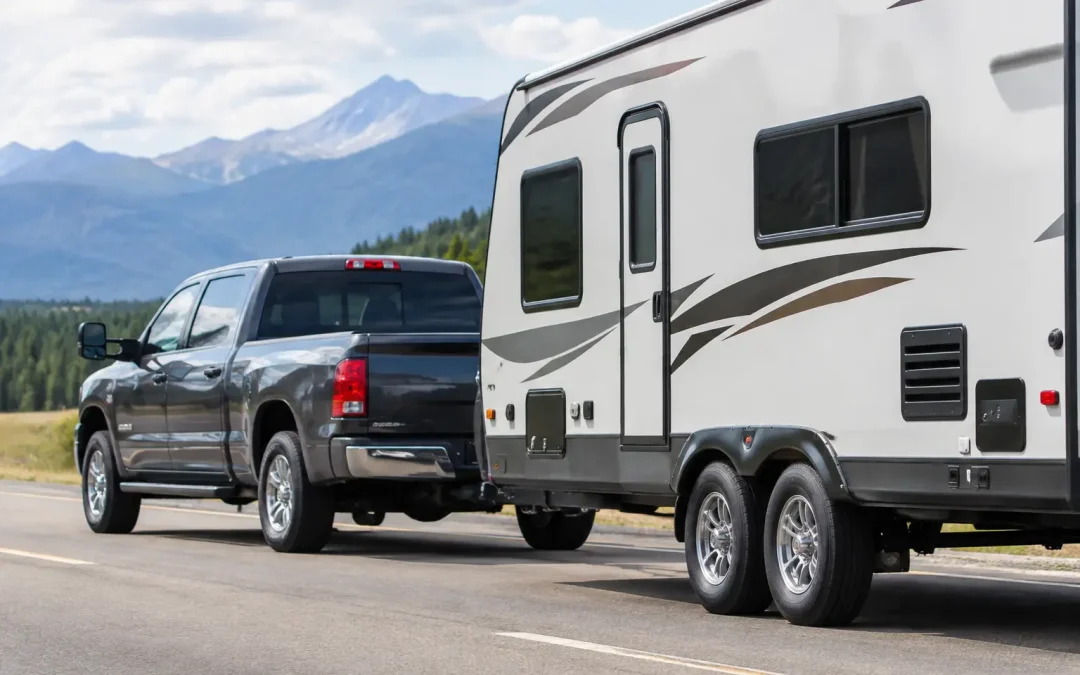
A loaded caravan pushing through a steep descent, a boat trailer braking hard at a busy intersection, or a work trailer behind a ute can quickly expose weak towing brakes. The vehicle may feel fine around town, yet towing adds weight, heat and stopping distance that standard braking systems were never asked to handle every day.
Good towing brakes are not about making a vehicle feel tough. They are about keeping the combination stable, predictable and controllable when conditions are less than ideal. That means looking at the trailer brakes, the brake controller and the tow vehicle’s own braking system as one complete setup.
Why towing changes the braking job
When you tow, your vehicle has more mass to slow down and more momentum trying to carry it forward. Even a well-balanced trailer increases stopping distance. On hills, in wet weather, on loose regional roads or in heavy traffic, the demand on brakes rises further.
Heat is the main enemy. Every stop turns speed into heat at the brake discs, pads, drums or trailer braking components. If the system cannot shed that heat effectively, braking performance can fade. A pedal may feel longer, the vehicle may pull, or the trailer may begin to push the tow vehicle rather than following cleanly behind it.
This is why a vehicle that is legally capable of towing a particular load is not automatically ideally equipped to do it regularly. Towing a light box trailer once in a while is very different from hauling a loaded camper, horse float, caravan or trade trailer over long distances.
Trailer brakes and tow vehicle brakes do different work
The trailer needs brakes appropriate to its weight and intended use. Across Australia, trailers with an aggregate trailer mass above 750 kg generally require brakes, while heavier trailers above 2 tonnes generally require a breakaway braking system. Registration and compliance requirements can vary, so it is worth confirming the rules that apply to your trailer and state or territory.
Trailer braking systems may be mechanical override, hydraulic override, electric, or electric-over-hydraulic. Each has its place. Override systems are common on lighter trailers and operate as the trailer pushes against the tow coupling under braking. Electric brakes are widely used on caravans and larger trailers because the driver can control their operation through an in-cabin brake controller.
The tow vehicle brakes still carry a major share of the work. A brake controller does not make worn pads, thin discs or old brake fluid acceptable. If your vehicle brakes are already near their limit, adding a heavy trailer will only make the problem more noticeable.
The role of a brake controller
An electric brake controller sends a controlled electrical signal to the trailer brakes when you press the pedal. The goal is for the trailer to slow with the vehicle, not lag behind and not grab too hard.
Controller settings matter. Too little gain and the trailer contributes very little, leaving the tow vehicle to do too much work. Too much gain and trailer wheels can lock, particularly on gravel or in the wet. A correctly installed and adjusted controller should provide smooth, confident braking without jerking or pushing.
If you have recently changed trailer loads, fitted larger tyres, upgraded the trailer brakes or moved from flat country to regular hill driving, the controller may need to be checked and adjusted again.
Warning signs your towing brakes need attention
Some brake issues only appear when a trailer is connected. Do not wait for a major trip if the vehicle behaves differently under load. A pulsing pedal, steering vibration, brake shudder, a burning smell or a brake warning light all deserve proper inspection.
Pay attention if the vehicle takes noticeably longer to stop, pulls to one side, feels unstable under braking, or requires much more controller gain than it used to. A trailer that bangs or surges against the tow vehicle can point to poor brake adjustment, worn coupling components or a fault in the trailer braking system.
For electric trailer brakes, inconsistent braking can come from worn magnets, damaged wiring, poor earth connections, corroded plugs or controller faults. For hydraulic systems, leaking lines, contaminated fluid, seized calipers and worn components can all reduce performance. The fault is not always obvious from a quick look in the driveway, which is why diagnosis matters.
When standard vehicle brakes may not be enough
Many late-model utes and 4x4s can tow impressive figures on paper. But bigger tyres, increased GVM, touring gear, drawers, canopy weight, roof loads and a caravan on the back can place a very different demand on the brakes than an empty showroom vehicle.
A quality brake upgrade can be worthwhile for drivers who tow regularly, carry heavy loads or spend time in hilly country. Depending on the vehicle and use, this may involve larger brake rotors, improved calipers, heavy-duty pads, upgraded brake lines or components designed to manage heat more effectively.
There are trade-offs. Performance-oriented pads may produce more dust or noise, and not every vehicle needs the biggest upgrade available. The right choice depends on vehicle weight, tyre size, trailer mass, how often you tow and the conditions you drive in. The aim is not to fit parts for the sake of it. It is to build a braking system that performs reliably for the job your vehicle actually does.
Brake fluid is part of the towing picture
Brake fluid absorbs moisture over time. As that moisture builds, its boiling point falls. Under repeated heavy braking, fluid that has deteriorated can contribute to a soft pedal or reduced braking confidence.
A brake fluid service is often overlooked because the vehicle may still stop normally during everyday driving. For vehicles used for towing or touring, keeping fluid in good condition is a straightforward part of maintaining safe, consistent braking performance.
A practical pre-trip brake check
Before a long trip, check that trailer lights and the brake controller connection are working, then confirm the controller activates the trailer brakes as expected. Inspect the plug, wiring and safety breakaway system for obvious damage, loose connections or corrosion.
Have a look at tyre condition and pressures on both the vehicle and trailer too. Brakes cannot do their job properly if tyres are worn, underinflated or unsuitable for the load. Make sure the trailer is loaded evenly, with appropriate ball weight. An overloaded rear end or poor weight distribution can affect steering, braking and stability.
During the first few kilometres, test the brakes gently in a safe area. Listen for unusual noises and notice whether the trailer follows smoothly. If something feels wrong, stop and deal with it before getting onto the highway.
Proper diagnosis beats guesswork
Brake problems are safety-critical, and towing setups add another layer of complexity. Replacing pads because they look worn may not solve brake fade. Turning up a controller may not fix a wiring issue. Fitting larger components without considering tyre size, vehicle load and trailer setup may not deliver the result you expect.
A proper inspection looks at the condition of the vehicle brakes, brake fluid, hydraulic system, trailer brakes, wiring, controller operation and the way the whole combination is used. It also gives you straight answers about what needs attention now, what can be monitored and what upgrades are genuinely worthwhile.
For Albury Wodonga drivers who tow for work, weekends or extended touring, Albury Brake and Clutch Centre can assess the braking system as a complete package, not just one worn part. Quality components and careful workmanship matter when your vehicle is carrying the load.
Before the next caravan trip, boat launch or work run, give the brakes the same attention you give tyres, towing weights and load security. A properly set-up system makes every stop calmer, safer and easier on both the vehicle and trailer.