


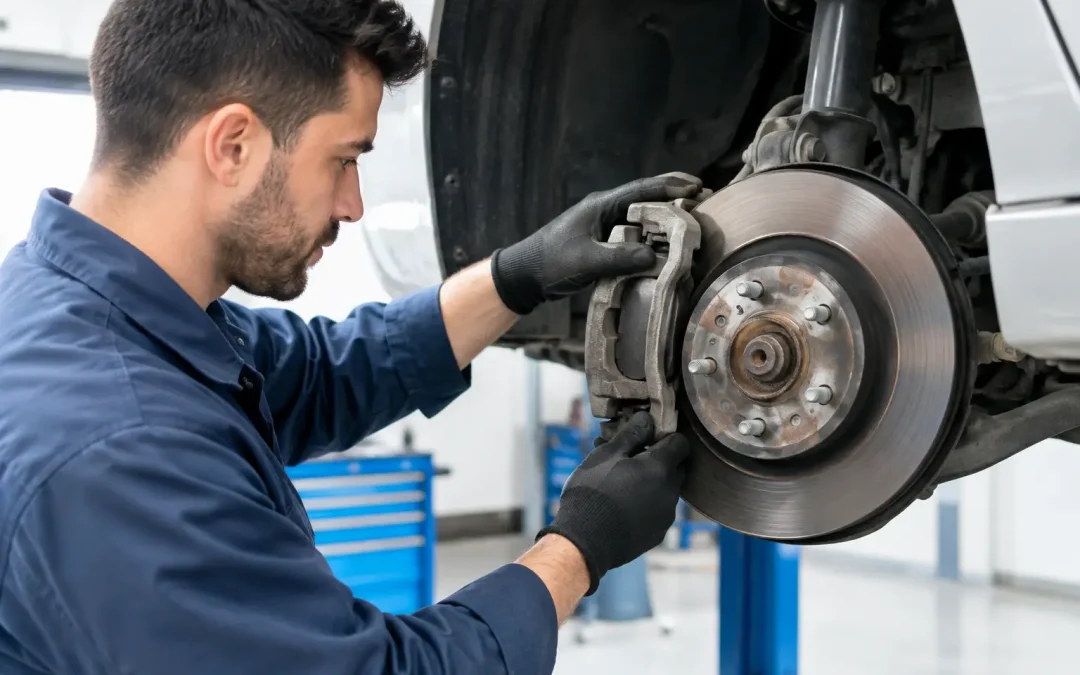
A vehicle off the road costs more than a repair bill. For trade customers, it can mean missed jobs, delayed deliveries, staff standing around and customers left waiting. A reliable trade brake repair workshop helps prevent that pressure by finding the real fault quickly, explaining what is required and carrying out safety-critical work properly.
Brakes and clutches do not leave much room for guesswork. A noise may be a worn pad, but it could also point to a seized caliper, damaged rotor, worn suspension component or an issue with the hydraulic system. Replacing parts without proper diagnosis can waste time and money, then leave the original problem unresolved.
What trade customers need from a brake repair workshop
Trade vehicles work hard. Utes, vans, 4x4s and light commercial vehicles often carry tools, materials, ladders or towing loads that place extra demand on brakes, tyres, suspension and driveline components. Even a vehicle that looks tidy can develop wear faster when it spends its week stopping and starting, carrying weight or travelling between regional jobs.
For a trade customer, the right workshop is not simply the one that can fit a set of brake pads. It is one that understands downtime, checks the whole braking system and gives a straight answer about what needs attention now, what can be monitored and what is not necessary.
That starts with listening to the driver. A vibration through the pedal, steering shake under braking, a pulling sensation, squealing, a soft pedal or a warning light all tell part of the story. So does the type of work the vehicle does. A ute used for local quoting and light tools has different requirements from one towing a trailer every day or carrying a fully fitted service body.
A proper inspection should consider pad and rotor condition, caliper operation, brake fluid, flexible hoses, wheel bearings where relevant, parking brake operation and any fault codes or warning lights. On a clutch concern, the workshop should assess the clutch operation, hydraulics, flywheel condition and related driveline components rather than assuming a clutch replacement is the only answer.
Fast turnaround should not mean rushed repairs
Getting a work vehicle back quickly matters. But there is a difference between efficient work and cutting corners. A rushed brake job may overlook seized slide pins, uneven rotor wear, contaminated fluid or a caliper that is not releasing correctly. Those faults can shorten the life of new parts and bring the vehicle back into the workshop sooner than it should be.
The best approach is organised diagnosis, clear approval before extra work is carried out and access to quality components suited to the vehicle. Stock availability also makes a real difference. When common brake, clutch and driveline parts are on hand, there is less waiting for a basic repair to proceed.
There are times when the fastest option is not the cheapest option on the day. Reusing a rotor or fitting the lowest-cost parts might appear to save money, but it can be poor value if braking performance suffers or the vehicle needs another repair shortly after. The right choice depends on the vehicle, its workload, the quality of the existing components and the owner’s plans for it.
Quality parts need to suit the job
Brake parts are not all built for the same purpose. A daily commuter may be well served by quality standard replacement components. A loaded ute, tow vehicle or 4×4 with larger tyres may benefit from a more suitable pad compound, improved rotors or a brake upgrade designed to handle additional heat and load.
This is where specialist advice matters. Bigger brakes are not automatically the answer, and performance parts are not always necessary. The goal is dependable, predictable stopping performance for the way the vehicle is actually used.
For trade fleets and owner-operators, consistency is valuable too. Using reputable components from established brands helps make future servicing more straightforward and reduces the risk of fitting mismatched or poor-quality parts. It also gives drivers confidence that the vehicle will behave properly when it is loaded, towing or travelling on wet roads.
Brake fluid is often overlooked
Brake fluid absorbs moisture over time. As water content rises, its boiling point falls and internal brake components can be more vulnerable to corrosion. Under heavy braking, old fluid can contribute to a soft pedal or reduced braking confidence.
A brake fluid flush is not an upsell when it is due or when testing shows the fluid is degraded. It is routine maintenance that protects a safety-critical system. The same principle applies to checking hoses, calipers and parking brake mechanisms while the vehicle is in for brake work.
Warning signs that should not wait
Some brake issues develop gradually, while others need prompt attention. If a driver reports a change in braking feel, it is worth acting before a minor fault becomes a bigger repair or a safety risk.
Common signs include:
- Grinding or harsh metal-on-metal noise when braking
- A brake pedal that feels soft, spongy or travels further than usual
- Pulling to one side under braking
- Steering wheel vibration or pedal pulsation when slowing down
- A brake, ABS or traction-control warning light
- A burning smell, hot wheel or noticeable loss of braking performance
A clutch issue can be just as disruptive. Difficulty selecting gears, clutch slip under load, shudder when taking off, a noisy pedal or a clutch pedal that stays down should be checked early. Continuing to drive may turn a manageable hydraulic repair into a more involved clutch and flywheel job.
Why accurate diagnosis saves trade customers money
The obvious symptom is not always the cause. A squeal may come from pad material, but it can also be caused by hardware, rotor condition or movement in another component. Vibration under braking may be linked to rotor runout, uneven pad deposits, wheel bearing play or suspension wear. A vehicle that pulls may have a brake issue, but tyre condition and alignment can also play a part.
Replacing parts based on assumptions is rarely economical. Accurate diagnosis means testing, measuring and inspecting before recommending repairs. It also means being honest when the repair is less involved than expected.
At Albury Brake and Clutch Centre, the focus is on specialist brake and clutch work done properly, with clear communication before work goes ahead. For busy trade customers, that means fewer surprises and better confidence in the vehicle heading back to work.
Planned servicing keeps vehicles earning
Waiting until brakes grind or a clutch fails is rarely the best plan for a work vehicle. Scheduled inspections can identify uneven wear, fluid deterioration and developing faults before they cause an unscheduled day off the road.
The right service interval depends on kilometres, load, towing, terrain and driving conditions. A vehicle doing short trips around town may wear brakes differently from one regularly travelling highways with a trailer. Rather than relying only on a fixed schedule, ask for the condition of key components to be explained at each service.
Keeping a simple record of brake work, clutch repairs and fluid changes also helps when managing several vehicles. It makes upcoming maintenance easier to plan and gives a clearer picture of running costs over time.
For any trade vehicle, the sensible next step is simple: do not ignore a change in braking or clutch feel. Get it checked while the repair is still straightforward, and keep the vehicle safe, reliable and ready for the next job.