


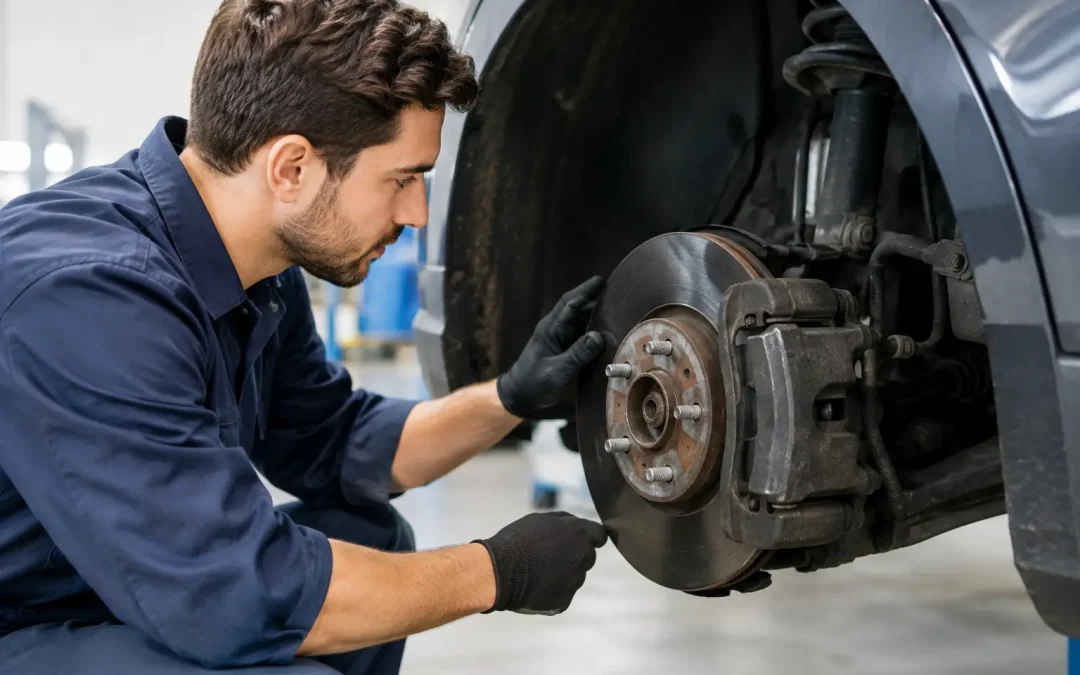
A sharp squeal when you pull up at the lights can be harmless, but it should never be dismissed without context. Brake squeal causes range from light surface rust after a wet night to worn components that need attention now. The difference comes down to when the noise happens, how long it lasts and whether anything else feels different through the pedal or steering wheel.
Brakes are a safety-critical system. If the noise is new, persistent or paired with poor stopping performance, a proper inspection is the sensible next step. Guessing can turn a relatively straightforward repair into damaged discs, calipers and a much larger bill.
Common brake squeal causes
Moisture and surface rust
After rain, washing the car or a cold, damp morning, a thin layer of surface rust can form on the brake discs. The first few brake applications scrape it away, sometimes creating a light squeal or scraping sound in the process.
This is usually normal if it disappears after a short drive and the brakes otherwise feel firm and responsive. If the noise remains after several stops, or the vehicle has been parked for weeks, it is worth having the brakes checked rather than assuming it is only rust.
Brake pad material and normal vibration
Brake pads work by clamping against the disc, and that contact can create vibration. Some pad compounds are more likely to make noise than others, particularly performance-oriented pads, heavy-duty 4×4 pads or harder compounds designed to cope with heat and load.
A brief squeal at low speed can occur even with quality pads in good condition. That does not automatically mean the brakes are unsafe. However, correct pad selection, properly fitted anti-rattle hardware and suitable shims all matter. A pad that suits a heavily loaded touring ute may not be the quietest choice for short suburban trips, and vice versa.
Worn pads and wear indicators
Many brake pads have a small metal wear indicator. Once the pad material becomes low, this tab contacts the disc and produces a high-pitched squeal to alert the driver. It is designed to get your attention before the pad wears down completely.
Treat this noise as a booking prompt, not something to put off until the next service. Driving beyond the wear indicator can allow the pad backing plate to contact the disc. At that point, the repair may involve pads and discs rather than pads alone.
Glazed pads or discs
Glazing occurs when brake surfaces become excessively hot and the pad material hardens or becomes polished. It can happen after repeated hard braking, towing downhill, carrying heavy loads, or bedding in new brakes incorrectly. The result may be squealing, reduced bite or a brake pedal that feels less confidence-inspiring than usual.
Glazing is particularly relevant for 4x4s fitted with larger tyres, increased GVM setups, campers or caravans. The vehicle has more mass to slow down, and standard brake components can be pushed beyond what they were designed to handle. In some cases, replacing worn parts is enough. In others, a brake upgrade better suited to the vehicle’s actual workload is the more durable fix.
Dust, stones and debris
Road dust, brake dust or a small stone caught near the backing plate can make an annoying squeal or scraping noise. Gravel roads and regional driving can make this more likely. The sound may change with wheel speed or disappear when braking.
Debris is often a simple fix, but it still needs to be identified correctly. A constant metallic scraping noise could also indicate a worn pad, loose hardware or disc damage. It is not a good idea to spray lubricants through the wheel or onto the brake assembly. Anything that contaminates the pad or disc can reduce braking performance.
Disc wear, damage or uneven surfaces
Brake discs wear over time. Grooves, heavy corrosion, heat spots and an uneven braking surface can all contribute to noise. A disc that is below its minimum thickness cannot safely absorb and shed heat as intended, especially under towing or repeated braking loads.
Not every noisy disc needs replacing, and not every replacement disc needs to be upgraded. The right answer depends on its condition, thickness, the matching pad material and how the vehicle is used. A specialist inspection measures the components rather than relying on appearance alone.
Sticking calipers or worn brake hardware
A caliper that does not release properly can keep a pad lightly dragging on the disc. This creates heat, premature wear and sometimes a squeal. You may also notice a hot smell after driving, the vehicle pulling to one side, reduced fuel economy or one wheel producing far more brake dust than the others.
Worn clips, shims, guide pins and other fitting hardware can also allow pads to move in ways they should not. Replacing pads without addressing the underlying hardware issue may quieten the noise temporarily, but it will not always solve the cause.
When brake squeal needs urgent attention
Noise alone does not always tell the whole story. What matters most is whether it comes with a change in braking behaviour. Do not keep driving and hope it settles if you notice grinding, a soft or spongy pedal, vibration through the pedal, pulling under brakes, a brake warning light, burning smells or a clear increase in stopping distance.
Grinding is particularly serious. It can mean there is little or no friction material left on the pads. Continuing to drive can quickly damage the discs and reduce control when you need to stop.
If the squeal only happens for the first stop of the day and disappears, book it in at your convenience if it becomes more frequent. If it is constant, harsh or accompanied by any of the warning signs above, arrange an inspection as soon as possible and avoid unnecessary driving.
What a proper brake inspection should check
A good diagnosis is more than looking through the wheel spokes and recommending pads. The wheels need to come off so the technician can assess pad thickness, disc condition and measurements, caliper operation, hoses, fluid condition and the clips and hardware that keep everything located correctly.
The inspection should also consider the way you use the vehicle. A family SUV doing school runs has different braking demands from a work ute towing tools all week, or a 4×4 heading away with a loaded caravan. This is where straightforward advice matters: fit the components the vehicle needs, not simply the most expensive option on the shelf.
At Albury Brake and Clutch Centre, the focus is on finding the actual source of the noise and explaining the repair in plain language. If the brakes are safe and the sound is a normal characteristic of the pad material, you should be told that. If worn or heat-damaged parts need replacement, you should know why before work begins.
Can you stop brake squeal yourself?
You can safely check a few basics. Note whether the squeal occurs only when braking, whether it is worse after rain, and whether it changes when the vehicle is loaded or towing. This information helps narrow down the cause.
Beyond that, brake work is not a place for shortcuts. Pads, discs and hardware must be fitted cleanly, correctly and to specification. Incorrect grease placement, contaminated friction surfaces or poorly secured components can create noise and compromise safety. If you are not experienced with brake repairs, leave diagnosis and repairs to a qualified workshop.
A squeal is your vehicle asking to be heard. Get it checked early, ask for straight answers, and you can protect both your stopping performance and your repair budget.