


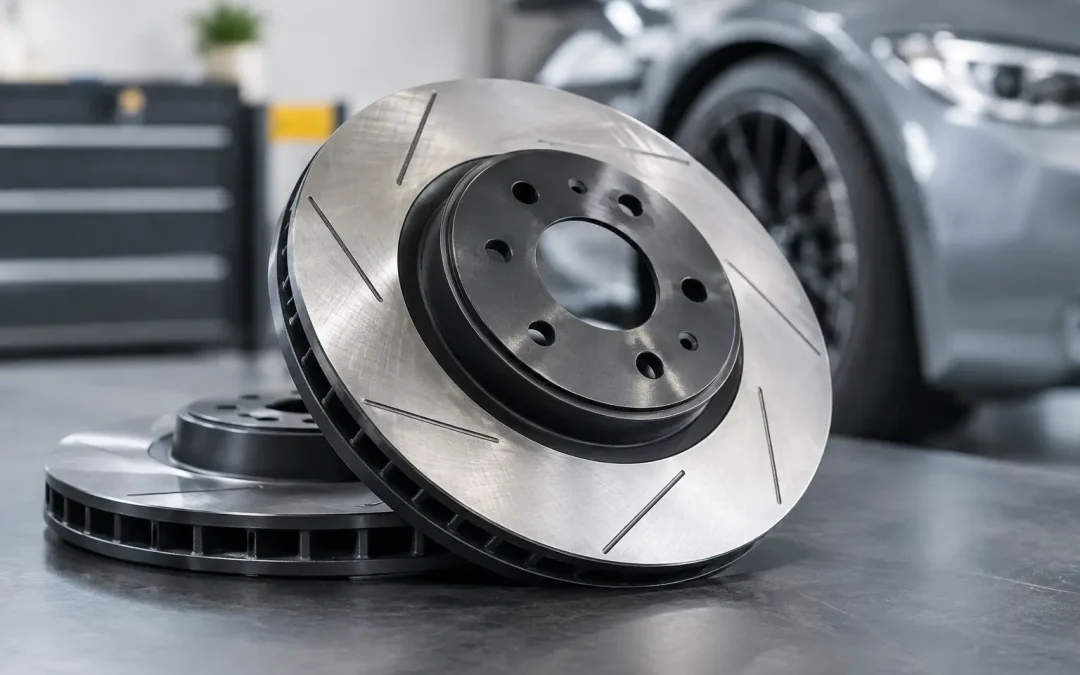
A brake pedal that feels fine on the school run can tell a different story with a caravan on the back, a loaded ute coming down a range, or a 4×4 carrying touring gear. DBA T3 4000 brake rotors are designed for drivers who put more heat and load through their brakes than a standard replacement rotor is expected to handle. They can be an excellent upgrade, but only when they suit the vehicle, the work it does and the rest of the brake system.
DBA T3 4000 brake rotors: what makes them different?
DBA’s T3 4000 Series sits above a basic plain replacement rotor. Depending on the vehicle application, these rotors use high-carbon alloyed iron and DBA’s Kangaroo Paw ventilation design, which increases the internal surface area available to move heat away. The face also features DBA’s distinctive T3 slot pattern, made up of precise curved slots rather than random drilled holes.
The goal is not to make a vehicle stop harder by itself. Brake performance comes from the complete system: rotor, pad compound, caliper condition, brake fluid, tyres and the driver’s use of the vehicle. What a quality rotor can do is manage heat more consistently, support better pad behaviour and resist the distortion that can lead to pedal pulsation or steering-wheel shudder.
The T3 slot pattern helps clear brake dust and gases from the pad surface while refreshing the pad face. In demanding use, that can give the driver a more consistent pedal feel than a plain rotor that is repeatedly heated hard. Some T3 4000 versions also include heat-indicating paint markings, giving a workshop useful evidence of how much temperature the brakes have actually seen.
That matters because brake complaints are often blamed on rotors alone. Sometimes the issue is heat. Other times it is a sticking caliper, worn suspension component, incorrect wheel nut tension, contaminated pads or old brake fluid. Fitting premium rotors without finding the cause is not a proper repair.
When a T3 4000 upgrade makes sense
For plenty of normal commuter cars, a quality standard rotor and suitable pad are all that is needed. There is no benefit in paying for an upgrade simply because it sounds performance-focused. The right choice depends on how the vehicle is used.
DBA T3 4000 brake rotors are particularly worth considering for vehicles that tow regularly, carry tools or equipment, run larger tyres, have increased GVM, tackle long descents or spend time on corrugated and dusty roads. They also make sense for drivers who have experienced brake fade, recurring rotor shudder or rapid wear with lesser-quality components.
A common example is a late-model 4×4 used as both a daily driver and touring vehicle. Around town, it may never place exceptional demands on the brakes. Add a canopy, drawers, roof load, family, recovery gear and a caravan, though, and the braking system has far more mass to control. The rotors must deal with repeated heat cycles, particularly on hilly roads or when slowing from highway speeds.
For that type of work, the T3 4000 Series can provide a sensible durability and heat-management upgrade. It is not a licence to overload the vehicle or ignore safe towing practice. It simply gives the braking system a better foundation when it is being asked to do more.
The trade-offs to understand before fitting them
Slotted rotors are not the perfect answer for every vehicle. Their slots can create a faint brushing or whirring noise during braking, especially at low speed. Most drivers consider it minor, but anyone wanting the quietest possible operation in a light passenger car may prefer a plain rotor.
Pad wear can also be slightly higher than with a smooth-face rotor because the slots continually clean the pad surface. This is not necessarily a problem when good pads are selected and the brakes are serviced properly, but it is a real trade-off. Rotor choice should never be made in isolation from pad choice.
Cost is another consideration. A T3 4000 rotor costs more than an entry-level replacement, so it needs to deliver value for the way you drive. If your vehicle only sees gentle urban use and has no history of brake issues, a standard quality rotor may be the more practical choice. Honest advice means saying that rather than fitting an upgrade you do not need.
Pads, fluid and calipers matter just as much
A new rotor cannot compensate for unsuitable brake pads. The pad compound needs to match the vehicle’s work. A towing or touring 4×4 may benefit from a pad designed for higher temperatures and heavier loads, while an everyday family vehicle might need a low-dust, low-noise compound with reliable cold performance.
Fitting aggressive pads to a vehicle that spends its life in traffic can create unnecessary noise, dust and rotor wear. On the other hand, a soft standard pad may not cope well with repeated towing descents. There is no single best pad across every application.
Brake fluid deserves the same attention. Fluid absorbs moisture over time, which lowers its boiling point. Under heavy braking, old fluid can boil and create a long or spongy pedal. If rotors and pads are being upgraded because a vehicle works hard, checking the fluid condition is part of doing the job properly.
The calipers must also be inspected. Seized slide pins, sticking pistons and damaged hoses can cause uneven pad wear and localised overheating. That can ruin a new rotor quickly. A proper brake service checks the hardware, cleans and lubricates the correct contact points, measures wear and confirms that the system is operating evenly from side to side.
Why rotor shudder needs a proper diagnosis
Drivers often describe a vibration through the steering wheel when braking as “warped rotors”. While excessive heat can affect rotors, the underlying issue is often uneven pad material transfer on the rotor surface. This can feel very similar to a distorted rotor and may be caused by bedding issues, overheating, a caliper fault or pad material that does not suit the job.
Wheel bearing play, worn suspension bushes and poor hub surface preparation can also contribute to brake vibration. Even a small amount of rust, dirt or corrosion between the rotor and hub can create run-out once the rotor is fitted. Wheel nuts tightened unevenly or with an impact gun can add further stress.
That is why a rotor replacement should include cleaning the hub face, measuring run-out where required and tightening wheel nuts to the manufacturer’s specification. These are not extras. They are the details that help a quality brake job last.
Getting the most from T3 4000 rotors
New rotors and pads need a controlled bedding-in process. The exact method depends on the pad manufacturer, but the principle is straightforward: use a series of moderate stops to transfer an even layer of pad material onto the rotor face, then allow the brakes to cool. Avoid repeated hard stops or holding the pedal firmly at a standstill immediately after heavy braking while everything is hot.
For the first few hundred kilometres, pay attention to pedal feel, noise and any vibration. A brief bedding period is normal. Grinding, a severe pull to one side, smoke, a burning smell that persists, or a warning light is not normal and should be checked straight away.
It also pays to be realistic about the rest of the vehicle. Good brakes work alongside good tyres, correctly operating suspension and sensible loading. For a touring 4×4 or work ute, that means staying within legal weights, using appropriate trailer brakes and selecting lower gears on long descents rather than relying solely on the pedal.
Is the upgrade right for your vehicle?
The best question is not whether DBA T3 4000 rotors are better than standard rotors. It is whether they are better for your vehicle’s actual workload. For hard-working 4x4s, towing vehicles and drivers who need more consistent heat control, they are often a worthwhile choice. For lighter-duty vehicles, a quality standard rotor package may provide the best balance of cost, noise and service life.
At Albury Brake and Clutch Centre, the focus is on matching the parts to the problem, not selling the most expensive option. If your brakes are shuddering, fading, squealing or simply working harder than they used to, a proper inspection gives you straight answers and a repair plan built to last.
Brakes are one area where guesswork is not worth the risk. Choose components that suit the job, have the whole system checked, and you can head out knowing the vehicle is ready for the load ahead.