


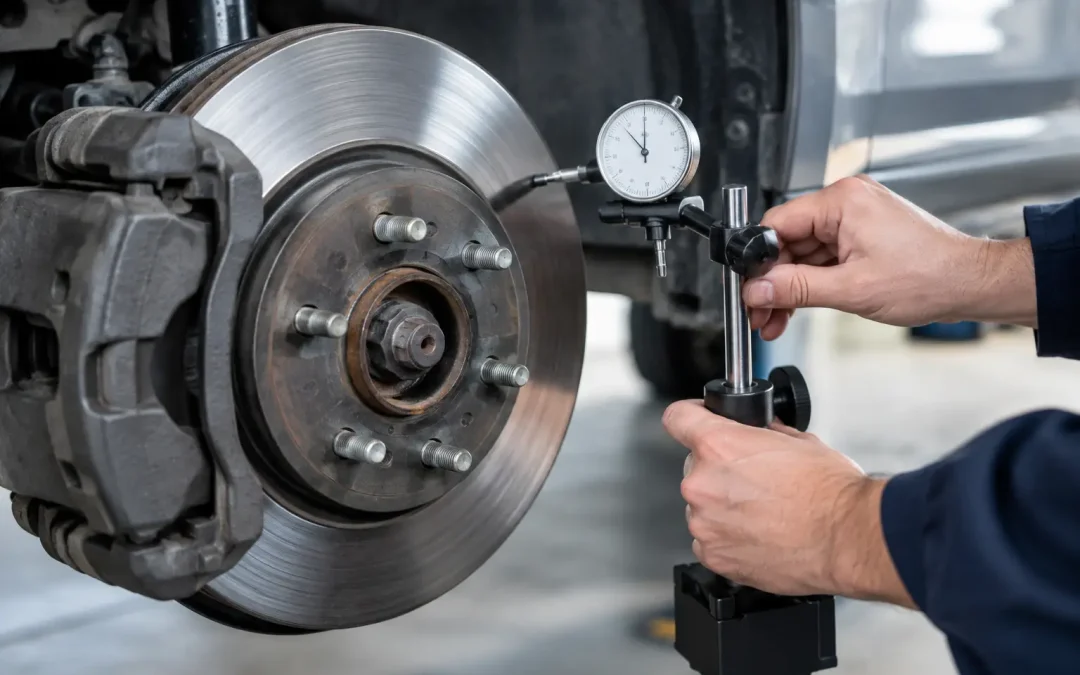
A steering wheel that shudders under brakes is easy to dismiss as “warped discs”. In practice, the cause is often more specific. This Wodonga brake disc runout guide explains what runout means, why it matters, and why a proper measurement is the difference between replacing parts once and chasing the same problem again.
Brake vibration is not just annoying. It can affect braking confidence, accelerate wear in pads and discs, and mask other faults in the hub, wheel bearing or suspension. For vehicles used around town, on the Hume, or loaded up for towing and touring, getting the diagnosis right matters.
What brake disc runout actually means
Brake disc runout is the amount a brake disc moves side to side as it rotates. A very small amount of movement is normal and manufacturers set a maximum allowable figure, usually measured in fractions of a millimetre. Once the disc exceeds that limit, the brake pads do not contact it evenly each time the wheel turns.
That uneven contact can create a pulsing feeling through the brake pedal or a shake through the steering wheel during braking. It is often most noticeable at higher road speeds or when braking down a long hill, because heat makes the issue more obvious.
Runout is not always the same thing as a bent or “warped” disc. Discs can be affected by heat, but a more common issue is disc thickness variation. This is where tiny differences in disc thickness develop over time, often after the pads have repeatedly contacted a disc that is not running true. The driver feels the result as a brake shudder, but the original cause may be runout at the hub face, incorrect wheel nut tightening, or a worn bearing.
Signs you should have checked
A vibration through the steering wheel under braking commonly points to an issue at the front brakes, although it is not a rule. A pulse through the pedal, a movement felt through the seat, or a vehicle that seems to brake smoothly at low speed but shakes at highway speed can also indicate a problem.
Other symptoms can include uneven pad wear, hot spots on the disc surface, squealing after a recent brake job, or a brake issue that returns soon after new discs and pads have been fitted. If the vehicle pulls sharply to one side, has a soft pedal, makes a grinding noise, or shows a brake warning light, it should be inspected promptly. Those symptoms can indicate faults beyond runout and should not be left to see if they settle down.
For 4x4s, utes and tow vehicles, brake shudder deserves particular attention. Extra vehicle mass, bigger tyres, a caravan or a loaded trailer all place more heat into the braking system. A minor issue that might only be irritating in an unladen commuter can become more noticeable and more costly under regular heavy use.
Wodonga brake disc runout guide: finding the real cause
A proper runout check is not done by looking through the wheel spokes or relying on a road test alone. The disc needs to be measured with a dial indicator while the wheel is removed and the disc is secured correctly against the hub. The gauge reads the lateral movement as the disc is rotated.
Before the reading means anything, the technician needs to check the mounting surfaces. Rust, scale, dirt, old material from a damaged disc, or a small burr on the hub face can hold the disc slightly off-centre. It does not take much contamination to create enough runout to cause trouble later.
The disc itself is then checked for condition and minimum thickness. If it is still serviceable, the cause may be corrected by thoroughly cleaning the hub face, indexing the disc in a different position on the hub where suitable, or addressing the underlying mounting issue. If the disc is worn, heat-spotted, below specification or has excessive runout, replacement is usually the sensible option.
The wheel bearing and hub also need attention. Bearing play can let the disc move as the vehicle rolls, producing symptoms that new discs alone will not fix. A damaged hub, even if less common, can create repeat runout. This is why fitting a new set of discs without checking the surfaces and supporting components can be a false economy.
Why new discs can shudder again
New parts are only as good as the preparation and fitting behind them. A quality brake disc mounted to a dirty hub can run out from day one. The first few hundred kilometres may feel fine, then uneven pad deposits or thickness variation can begin to build and the vibration returns.
Wheel nut tension is another factor. Nuts tightened unevenly or excessively with an impact gun can distort the disc and hub assembly enough to cause a problem. Wheels should be tightened in the correct sequence and to the vehicle manufacturer’s specified torque. This is especially relevant after tyre work, roadside wheel changes, or accessory wheel fitment.
Pad choice and bedding-in also matter. Brake pads need to suit the vehicle and how it is used. A family SUV doing school runs has different needs from a 4×4 that regularly tows a camper through hilly country. After fitting new pads and discs, controlled bedding-in helps create an even transfer layer between the pad and disc. Repeated hard stops when the brakes are brand new, or holding the brake pedal firmly after a heavy stop while the discs are very hot, can contribute to uneven material transfer.
That does not mean every brake shudder is caused by driver behaviour. It means the repair needs to consider the whole system: component quality, mounting condition, installation method and vehicle use.
What a proper repair should include
The right repair starts with confirming the complaint on a road test where safe to do so, then inspecting the braking system rather than assuming the discs are at fault. Pads, discs, calipers, slides, hoses, wheel bearings and suspension components can all influence how the vehicle feels under brakes.
At the disc and hub, the important work is careful preparation and accurate measurement. The hub face needs to be cleaned properly, the disc measured after installation, and wheel hardware tightened correctly. If a caliper is binding or its slide pins are seized, fitting discs alone will not provide a lasting result. The same applies where bearing play or a worn suspension component is allowing unwanted movement.
Quality parts are worth considering, particularly for vehicles that tow, carry tools, travel long distances or run larger tyres. The best option still depends on the vehicle, its load and how it is driven. A brake upgrade should be matched to the vehicle’s actual job, not chosen simply because it is the biggest kit available.
When to book a brake inspection
Book an inspection if the steering wheel shakes during braking, the pedal pulses, new brakes do not feel right, or a previous shudder has returned. Avoid putting it off before a towing trip or a run through the hills. Brake issues rarely improve through continued use, and leaving them longer can turn a straightforward correction into replacement of more components.
At Albury Brake and Clutch Centre, the focus is on measuring the fault, explaining the cause in plain language, and fitting the repair that makes sense for your vehicle. No pressure and no parts replaced for the sake of it.
If your brakes have started to shake, treat that feeling as useful information from the vehicle. A careful inspection now can restore smooth, predictable braking and help keep your next trip safer.