


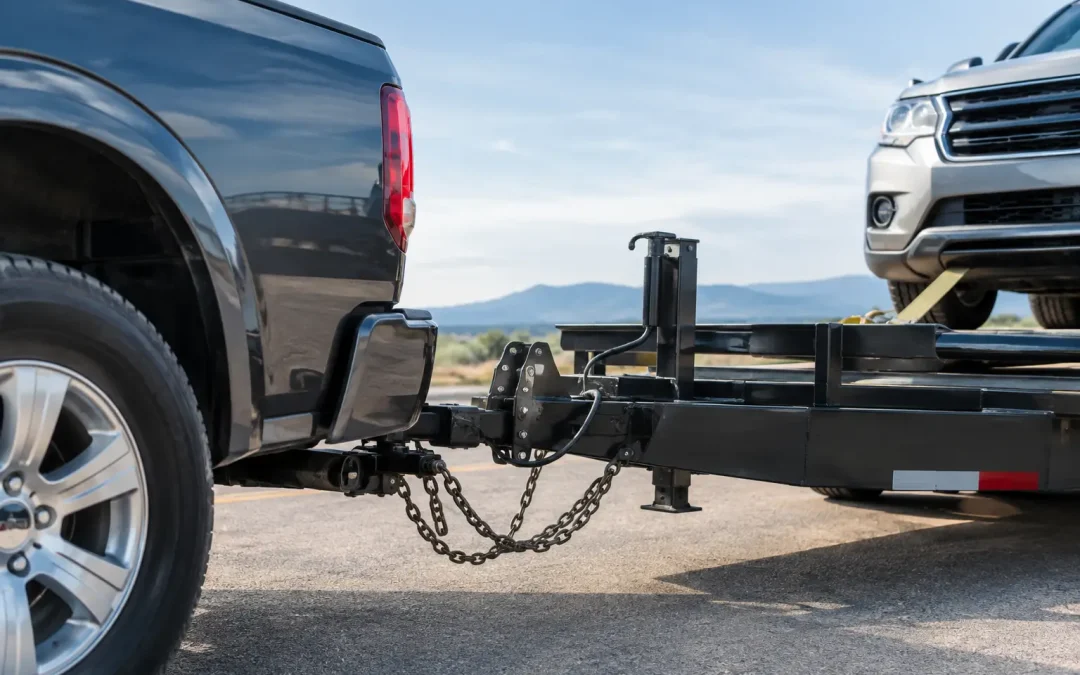
A caravan pushing a ute down a wet hill is not the time to find out the brakes were never set correctly. A proper towing brake setup is more than fitting a brake controller and plugging in a trailer. The tow vehicle, trailer brakes, wiring, load and legal weights all need to work as one system.
For everyday trips, a poorly matched setup may only feel rough or grabby. Under hard braking, on loose regional roads or with a loaded van behind you, it can affect stopping distance, stability and control. Getting it checked properly is one of the most practical safety jobs you can do before a towing season, a big trip or a change in trailer.
What a safe towing brake setup includes
The trailer brakes are only one part of the picture. Your vehicle’s brakes must still stop the combined weight safely, while the trailer brakes reduce the load trying to push the vehicle forward. If either side is neglected, the result is an unstable and stressful tow.
The right setup starts with the vehicle’s approved towing capacity, gross combination mass (GCM), gross vehicle mass (GVM), trailer ATM and tow ball download. These figures are not suggestions. A brake upgrade can improve brake performance and durability, particularly on a touring 4×4 with larger tyres or extra weight, but it does not automatically raise the vehicle’s legal towing or weight limits.
Trailer brake requirements depend on the trailer’s ATM and the registration rules that apply where it is registered and used. Rather than relying on a mate’s advice or an old forum post, confirm the requirements for your trailer and make sure its braking system is maintained to suit the job.
A sound towing setup commonly involves:
- brakes on the tow vehicle that have enough pad material, rotor thickness and fluid condition for the load
- trailer brakes in good mechanical condition, correctly adjusted and matched to the trailer weight
- a compatible in-cab brake controller where electric trailer brakes are used
- correctly wired trailer plugs, sockets and earth connections
- a functioning breakaway system where required
- a properly rated towbar, coupling, chains and tyres.
These items overlap. For example, a controller can be adjusted perfectly, but it cannot compensate for contaminated trailer brake linings, a weak earth or overheated vehicle brakes.
Start with the tow vehicle brakes
Towing exposes brake weaknesses that may not be obvious when the vehicle is empty. Pads that are getting low, rotors that are worn or heat-spotted, old brake fluid and sticking calipers can all become more noticeable with a caravan, horse float, boat or work trailer attached.
Watch for a spongy pedal, vibration through the pedal or steering wheel, pulling to one side, a burning smell after a descent, or a brake warning light. None of these are faults to ignore before hitching up. Even if the vehicle stops acceptably around town, the brakes may struggle once there is an extra tonne or two behind it.
For many 4×4 owners, standard brakes are adequate when the vehicle is within its factory weights and used normally. The decision changes when the vehicle has larger tyres, a GVM upgrade, touring gear, a canopy full of tools or regular heavy towing duties. Larger tyres increase the leverage against the brakes, and added mass creates more heat on long descents.
In those cases, a heavy-duty brake upgrade may be worthwhile. The right choice depends on how the vehicle is used. Bigger rotors and calipers can offer more thermal capacity, while quality pads may improve feel and resistance to fade. There is always a trade-off: some performance-oriented pads can create more dust, noise or rotor wear. The answer is not simply the biggest kit available – it is a setup suited to the vehicle, tyres and real towing load.
Setting an electric brake controller correctly
Electric trailer brakes need a controller that applies the trailer brakes in proportion to braking demand. A controller that is set too low leaves the tow vehicle doing too much work. Set too high, the trailer brakes can grab or lock, especially on gravel or wet roads.
Controller instructions vary by model, but the basic process is similar. With the trailer loaded as it will be for travel, begin at a low setting on a quiet, level road. Build speed gradually, then use the manual override according to the controller manufacturer’s instructions. Increase the gain in small steps until the trailer brakes make a firm contribution without locking the wheels.
That setting is a starting point, not a permanent answer. A lightly loaded trailer and a fully loaded trailer need different brake force. Road surface, rain, steep terrain and tyre condition also change what is appropriate. It is sensible to reassess the setting when you significantly change the load or head into hill country.
Some newer proportional controllers respond to the vehicle’s rate of deceleration and can feel more natural than basic time-delay units. Both can work well when installed and calibrated properly. The key is clean wiring, a stable earth and testing the system before every major trip.
Do not use the controller to hide a fault
If the trailer pulls hard to one side, shudders under braking, locks one wheel or feels as though it is not braking at all, turning the controller up or down is not a repair. The problem could be worn magnets, damaged drums, seized components, poor wiring, a faulty plug or uneven adjustment.
A brake test should be calm and predictable. If it is not, stop and have the fault diagnosed before travelling further.
Wiring, plugs and breakaway systems matter
Trailer wiring lives a hard life. It gets exposed to rain, dust, vibration, road grime and the occasional stretched lead during a tight turn. A plug that looks fine can still have corrosion, loose terminals or a poor earth inside it. Intermittent brake operation is particularly dangerous because it can appear to work in the driveway, then fail over corrugations or on a rough road.
Check that the plug locks in securely, the cable is not dragging or pinched, and the pins are clean and tight. Test the lights as well as the brakes. Poor connections can create confusing faults, including dim lights, erratic controller readings and brakes that apply weakly.
Where a breakaway system is required, inspect it as part of normal trailer maintenance. The battery must hold charge, the switch and cable must be secure, and the system must activate the trailer brakes if the trailer separates from the vehicle. The breakaway cable should be attached correctly to the tow vehicle, not looped around safety chains where it may not operate as intended.
Load distribution affects braking control
A well-maintained brake system can still feel unsafe if the trailer is loaded badly. Too little tow ball weight can make a trailer sway. Too much can overload the rear of the tow vehicle, reduce steering control and place extra demand on rear tyres and brakes.
Keep heavy items low and close to the trailer axle group where practical, then confirm the actual loaded weights rather than estimating. Water tanks, fuel, tools, recovery gear, fridges and batteries add up quickly. Also check tyre pressures on both vehicle and trailer when cold, using pressures suitable for the load and tyre manufacturer guidance.
Weight distribution hitches can help in some combinations, but they are not a cure for excessive ball weight, an overloaded vehicle or poor trailer loading. They must be compatible with the towbar, vehicle and trailer arrangement. If you are unsure, get clear advice before fitting one.
A pre-trip brake check is worth five minutes
Before leaving, connect the trailer, confirm the lights work and make sure the controller recognises the trailer. Check the coupling, chains, breakaway cable and tyre condition. On the first few kilometres, pay attention to how the combination pulls up. It should brake in a straight line without a shove, surge, grab or excessive pedal travel.
On a long descent, select a lower gear early and let engine braking do its share. Riding the brakes builds heat quickly, and heat is what causes fade. Leave more room than you would when driving unladen, especially in wet conditions or on roads with loose gravel.
If your tow vehicle is working harder than it should, or the trailer brakes are inconsistent, Albury Brake and Clutch Centre can assess the brake condition, controller operation and the towing demands placed on your vehicle. Straight answers before a trip are far better than discovering a problem on the side of the road.
A towing setup should feel controlled, predictable and boring – exactly what you want when the load is heavy and the road is not.