


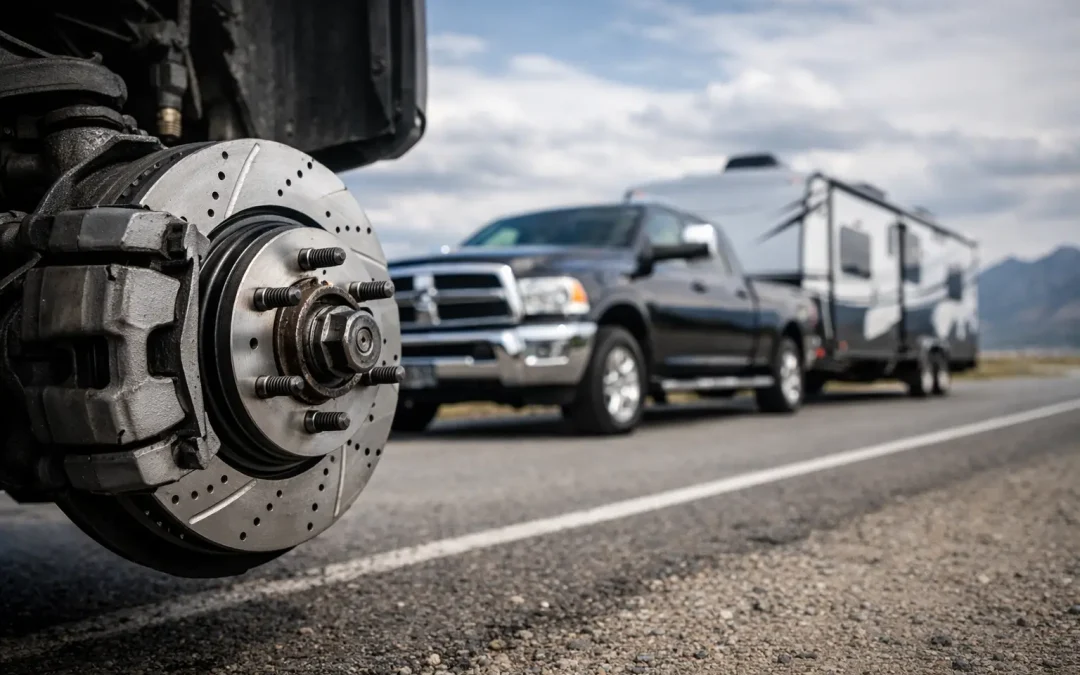
Hooking up a caravan or loaded trailer changes your vehicle more than most drivers expect. If you are searching for the best brakes for towing, the answer is not one brand or one part number. It comes down to your vehicle, trailer weight, tyre size, how often you tow, and whether your current setup is simply worn out or genuinely undersized for the job.
That matters because towing puts far more heat and load into the braking system. A vehicle that feels fine around town can start to feel vague, heavy or slow to pull up once there is a few extra tonnes behind it. You might notice a longer stopping distance, a soft pedal on hills, brake fade after repeated braking, or that uneasy feeling that the vehicle is doing more work than it should.
What makes the best brakes for towing?
The best brakes for towing are the ones that manage heat properly, match the way the vehicle is used, and are fitted as part of a balanced system. Bigger rotors alone do not fix everything. More aggressive pads are not always better. And if the brake fluid is old or the trailer brakes are poorly adjusted, even quality components can still leave you with disappointing performance.
For most towing vehicles, the biggest issue is heat. Brakes turn motion into heat, and towing creates much more of it. Once temperatures climb, stopping performance can drop away quickly. That is why heavy-duty towing brake setups usually focus on better thermal capacity through quality rotors, suitable pad compounds, good fluid, and in some cases upgraded calipers.
The right setup also needs to suit the vehicle’s role. A daily-driven family SUV that tows a camper a few weekends a year needs something different from a 4×4 with larger tyres, a GVM upgrade and a full touring load. There is no point fitting race-style pads that squeal, dust badly and work poorly when cold if the vehicle mostly does school runs and the odd holiday trip.
Why standard brakes can struggle when towing
Factory brakes are designed as a compromise. They need to cover general driving, comfort, cost and noise, and they are usually tested within the vehicle’s original intended use. Once you add a caravan, horse float, tool trailer or larger aftermarket wheels and tyres, you can push past what the standard setup handles comfortably.
Larger tyres are a common problem. They increase rotational mass and reduce braking leverage, so the vehicle often needs more effort to stop. Add extra accessories, passengers, gear and tow ball download, and the braking system has to work much harder than it did from the factory.
That does not always mean the vehicle needs a full brake upgrade. Sometimes the brakes are simply overdue for proper service. Worn pads, heat-spotted rotors, poor-quality parts, contaminated fluid or sticking calipers can all make a towing vehicle feel worse than it should.
Brake pads for towing – where many setups go right or wrong
Pad choice makes a noticeable difference. For towing, you generally want a pad compound that handles heat well, stays consistent under load, and still behaves properly in normal driving. That usually means moving away from cheap budget pads and choosing a quality heavy-duty or 4×4-specific compound.
A softer pad might feel strong at first but can fade quickly once it gets hot. A harder, heat-stable pad may offer better consistency on long descents or repeated braking, but if it is too aggressive for the rotor or the vehicle, it can increase wear and noise. This is where proper matching matters.
For drivers towing regularly, especially with 4x4s and utes, quality pads from proven brake brands are often one of the smartest upgrades. Not because they are flashy, but because they perform more consistently when the vehicle is loaded.
Rotors matter just as much
Rotors are not just a surface for the pads to clamp onto. They are a major part of how the system absorbs and sheds heat. For towing applications, better quality rotors can improve braking feel and reduce the chance of vibration, cracking or rapid wear under heavy use.
That does not mean every vehicle needs oversized drilled and slotted rotors. In some cases, a quality standard-size rotor paired with the right pad is exactly what the vehicle needs. In others, especially where the vehicle tows often or runs larger tyres, an upgraded rotor with more thermal capacity can make a real difference.
What matters most is build quality, correct fitment and how the rotor works with the rest of the system. A poor-quality rotor will not suddenly become suitable for towing just because it looks more aggressive.
The best brakes for towing are part of a full system
This is the part many people miss. Braking performance is never just about pads and rotors. If you want the best brakes for towing, the whole system needs to be checked.
Brake fluid is a good example. Old fluid absorbs moisture over time, which lowers its boiling point. Under towing loads, that can lead to a soft pedal or reduced performance when the system gets hot. Fresh, quality brake fluid is a simple but important part of any towing-focused brake service.
Calipers also need to be working properly. If a caliper is sticking or not applying evenly, braking will be compromised no matter how good the pads and rotors are. Hoses, master cylinder condition and ABS function all matter too.
Then there are the trailer brakes. Electric brakes that are badly adjusted, a controller that is not set correctly, or worn trailer braking components can make the tow vehicle work far harder than it should. In many cases, the problem is not just at the vehicle end.
When a brake upgrade is worth it
A proper brake upgrade is usually worth considering if your vehicle regularly tows near its practical working limits, if it has larger tyres, if it carries constant extra weight, or if you have already fitted quality standard replacement parts and still feel the braking is underdone.
Common signs include brake fade on hills, longer stopping distances, repeated rotor problems, heavy pedal effort, or a general lack of confidence when towing. That last one matters. A vehicle should feel controlled and predictable, not like it is always one hard stop away from being overwhelmed.
For many 4×4 and towing setups, the right upgrade can involve larger rotors, improved calipers and high-quality towing-suitable pads. But it should be selected based on real use, not guesswork. Bigger is not automatically better if wheel clearance, balance and everyday drivability are ignored.
What to look for in a towing brake setup
If you are weighing up options, focus less on marketing claims and more on suitability. Ask whether the parts are designed for towing or heavy-duty 4×4 use, whether they are known to manage heat well, and whether the system is being recommended based on the actual vehicle setup.
A sensible brake recommendation should take into account the tow load, vehicle modifications, tyre size, driving conditions and how often the vehicle tows. A ute used for local trailer work has different needs from a touring wagon crossing hilly country with a full van behind it.
It should also come with straight advice about trade-offs. Some pads create more dust. Some upgraded setups can feel firmer. Some options cost more up front but last better under heavy use. Honest workshop advice is not about selling the most expensive kit. It is about fitting what the vehicle actually needs.
Cheap brake parts often cost more when towing
When a vehicle is doing serious towing work, low-cost brake parts can become false economy pretty quickly. Cheap pads can wear fast or fade early. Low-grade rotors may not cope well with heat. Poor fitment can lead to noise, shudder or uneven braking.
That usually means replacing parts again sooner, and more importantly, it means living with weaker performance in a safety-critical system. For a vehicle that tows family, tools, stock feed, machinery or holiday gear, that is not a risk worth taking.
This is where a specialist workshop earns its keep. Proper diagnosis can tell you whether the answer is a quality standard brake refresh, a heavy-duty pad and rotor package, or a more serious upgrade for towing and larger tyres. At Albury Brake and Clutch Centre, that is the difference between changing parts and solving the problem properly.
The right answer is the one that suits your vehicle
There is no single best brake for every towing vehicle. The best setup is the one that gives you consistent stopping power, handles heat, suits how you drive, and holds up over time. Sometimes that means a straightforward service with quality components. Sometimes it means a heavy-duty upgrade built around the real demands of towing.
If your brakes feel ordinary once the trailer is on, do not wait for them to get worse. A proper check now can save money, reduce wear and give you far more confidence the next time you head down a long hill with weight behind you.