


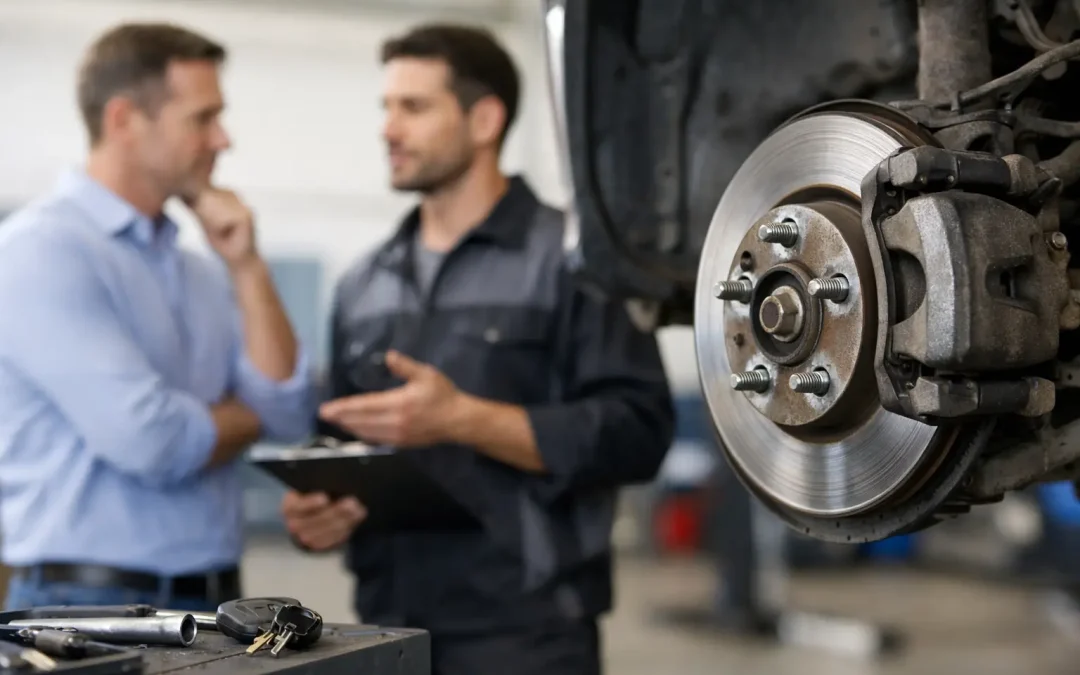
A brake pedal that feels soft, a steering wheel shake or a grinding noise at the lights can turn a normal drive into a worrying one. Asking the right questions before brake repairs helps you understand what is happening, what work is genuinely needed and what you are paying for. You do not need to be a mechanic to get straight answers – but you should never feel pressured to approve safety-critical work you do not understand.
Brake systems wear differently depending on the vehicle, how it is driven and what it carries. A family SUV doing school runs has different demands to a work ute towing a trailer or a 4×4 set up for touring. A proper inspection is the starting point for every repair.
1. What has caused the problem?
Start with the diagnosis, not the quote. Ask the workshop what they found and what points to that conclusion. For example, worn brake pads may be a straightforward maintenance item, while a grinding noise could mean the pad material is gone and the brake discs have also been damaged.
A good explanation should be clear: which end of the vehicle is affected, which parts are worn or faulty, and whether the issue is urgent. Brake warning signs can also come from causes beyond pads and discs, including a seized caliper, leaking hydraulic component, damaged hose, worn wheel bearing or an ABS fault.
If the vehicle pulls when braking, ask whether the cause has been checked rather than assuming it only needs pads. Replacing parts without finding the reason for uneven wear can mean the same problem returns early.
2. Is the repair needed now, or can it be planned?
Not every brake issue has the same urgency. Some repairs need attention before the vehicle is driven again. Others can be planned for a suitable time, provided the workshop gives you a realistic timeframe and explains the risk of waiting.
Ask plainly: “Is this safe to drive until my booking?” and “What could happen if I leave it for another few weeks?” A responsible workshop will give a direct answer without using scare tactics.
Metal-on-metal grinding, a brake warning light, a pedal that sinks towards the floor, burning smells, fluid leaks or seriously reduced braking performance should be treated as urgent. In those situations, driving the vehicle can put you, your passengers and other road users at risk. It can also turn a smaller repair into a more expensive one.
3. Do the brake pads and discs both need replacing?
This is one of the most useful questions before brake repairs because the answer depends on measurements and condition, not a blanket rule. Brake pads and discs often wear together, but not always at the same rate.
Discs may be reusable if they are within the manufacturer’s minimum thickness, run true and have an acceptable surface. However, fitting new pads to badly scored, heat-spotted or undersize discs is false economy. The new pads may bed in poorly, make noise or wear unevenly.
Ask the workshop to explain the disc condition and whether machining is suitable. Machining can be an option on some vehicles, but only where enough material remains after machining and the disc is otherwise sound. In many cases, replacement is the safer long-term choice.
It is also worth asking whether both sides of the same axle will be repaired. Pads and discs are normally replaced in axle pairs so braking remains balanced from left to right.
4. Which parts will be fitted, and why?
Brake parts are not all made to the same standard. The cheapest option is rarely the best value when it comes to stopping a vehicle safely and reliably. Ask what brand and specification of pads, discs and other components are being quoted, especially if you drive a heavier vehicle, tow regularly or cover plenty of kilometres.
The right parts depend on how the vehicle is used. Everyday commuting may suit a quality original-equipment style pad, while a 4×4 carrying touring gear, larger tyres or towing a caravan may benefit from a brake upgrade designed to manage greater heat and load.
A specialist workshop should be able to explain the trade-off. Some performance-focused pads offer stronger bite under heat but may create more dust or noise. Other compounds prioritise low noise and clean wheels but may not be the best choice for hard towing. There is no single “best” brake pad for every driver.
Ask whether the quote includes new hardware, shims, sensors or caliper service items where required. These smaller components can make a real difference to noise prevention, even pad wear and the life of the repair.
5. Has the full braking system been inspected?
Pads and discs are only part of the braking system. A proper inspection should look at calipers, slides, hoses, brake fluid, parking brake operation and, where relevant, ABS components. On many vehicles, poor caliper movement is a common reason for one pad wearing much faster than the other.
Ask whether the brake fluid has been tested. Brake fluid absorbs moisture over time, lowering its boiling point and contributing to internal corrosion. Under repeated heavy braking – such as descending hills with a loaded trailer – old fluid can affect pedal feel and braking performance.
This does not mean every brake job automatically needs a fluid flush. It means the recommendation should be based on the fluid condition, service schedule and the type of work being carried out. Clear reasons matter.
6. What does the quoted price include?
A written quote should make it easy to see what you are approving. Ask whether it includes parts, labour, machining if applicable, brake fluid, consumables, disposal charges and GST. If additional work might be needed after dismantling, ask how you will be contacted and whether approval will be requested before anything extra is done.
Brake repairs can occasionally reveal hidden issues. A caliper may be seized once removed, a disc may be below minimum thickness, or a sensor may break due to corrosion during removal. These are not always predictable at the first inspection. What matters is that the workshop communicates before adding cost.
Price should not be the only decision point. A lower quote may exclude components that should be renewed, use a lower-grade part or leave the underlying cause unresolved. The better question is whether the quoted repair will restore safe, dependable braking and reduce the chance of an early return visit.
7. What warranty and aftercare apply?
Ask what warranty applies to the parts and workmanship, and what it covers. Keep your invoice, as it records the work completed and the components fitted. If you notice a concern after the repair, such as a new noise, vibration or warning light, contact the workshop early rather than waiting for it to worsen.
It is also reasonable to ask what to expect during bedding-in. New pads and discs commonly need a short bedding period to establish an even contact surface. During this time, avoid repeated heavy braking where possible, unless traffic conditions require it. Your workshop can give advice specific to the parts fitted and your vehicle.
When a brake upgrade is worth discussing
Standard brakes are designed around the vehicle’s original weight, tyre size and intended use. If your ute or 4×4 now carries a canopy, tools, recovery gear, larger tyres or a regular towing load, the original setup may be working harder than it was designed to.
That does not automatically mean an upgrade is necessary. But if you have recurring brake fade, rapid pad wear, vibration after towing or a lack of confidence when loaded, it is worth discussing your real-world use with a brake specialist. The answer may be a quality standard replacement, a different pad compound, improved discs or a complete upgrade. Proper diagnosis comes first.
For drivers across Albury Wodonga, Albury Brake and Clutch Centre can inspect the system, explain the findings in plain language and recommend a repair that suits the vehicle and the way it works. No pressure, just the information needed to make a sound decision.
Brakes are one area where waiting for a problem to become obvious can cost more and compromise safety. If something feels different, sounds wrong or does not inspire confidence, arrange an inspection and ask for the straight answers before approving any repair.