


A caravan that feels stable on the flat can still expose a brake problem on the first descent out of town. That is why the top brake checks before towing should happen before the hitch is connected and the load is on board, not after the pedal goes soft or the trailer starts pushing the vehicle downhill.
Towing adds substantial weight, heat and stopping distance to any trip. A brake system that is acceptable for everyday commuting may not have enough reserve for a loaded caravan, horse float, work trailer or boat. A proper pre-trip check gives you straight answers about what is safe to tow now and what needs attention first.
Top brake checks before towing a loaded trailer
1. Check brake pedal feel before you leave
Start the vehicle and press the brake pedal firmly. It should feel positive and consistent, not spongy, excessively low or as though it slowly sinks while you hold pressure. A soft pedal can point to old brake fluid, air in the hydraulic system, a leak or another fault that needs proper diagnosis.
Also pay attention to changes. If the pedal has recently become lower, harder, softer or less responsive, do not assume it will be fine once the trailer is attached. Towing magnifies small issues because the brakes have more work to do and less margin for error.
2. Inspect pads, rotors and calipers properly
Brake pads do not need to be completely worn out to be unsuitable for towing. Thin pads build heat faster, while worn or uneven rotors can cause vibration, noise and reduced braking performance under load. A squeal, grinding sound, steering wheel shudder or pulsing pedal is a reason to have the system checked before the trip.
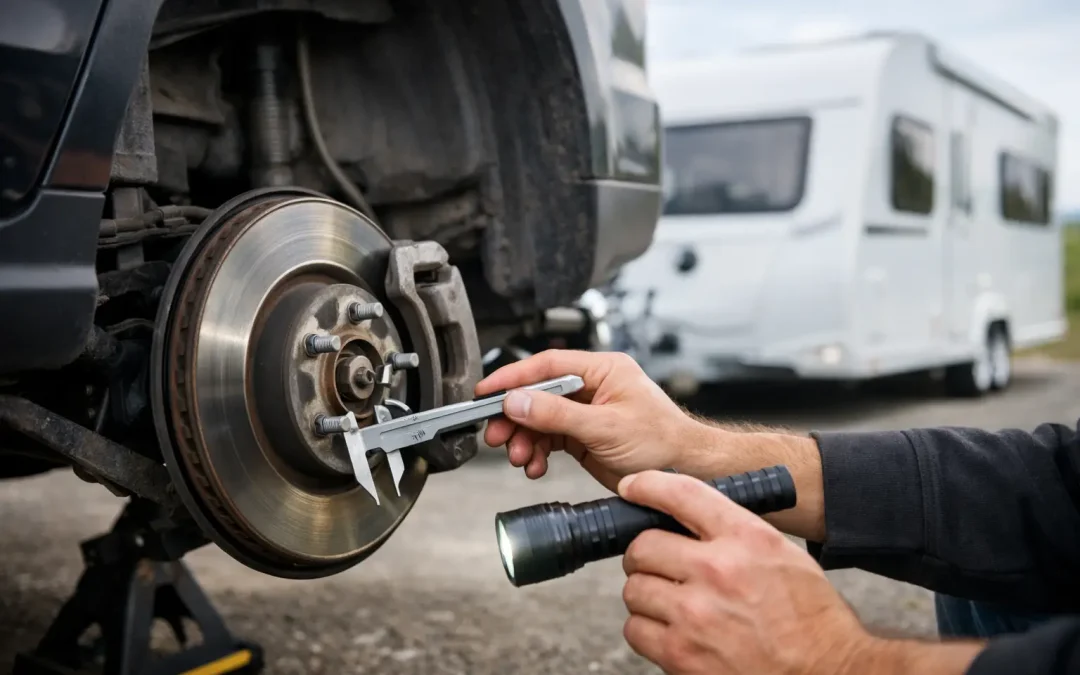
Look for obvious signs around each wheel, such as damaged components, fluid leaks or a rotor that appears heavily scored or discoloured. But a visual check through the wheel spokes does not tell the whole story. Inner pads, caliper slide condition and rotor thickness often need the wheel removed for an accurate inspection.
For regular towing, quality pads and rotors suited to the vehicle and its use matter. The cheapest option is not always the best value when you are carrying the family, gear and a loaded trailer down a long hill.
3. Check brake fluid condition and leaks
Brake fluid absorbs moisture over time. As its boiling point drops, hard braking and long descents can create heat that leads to brake fade or a changing pedal feel. The fluid reservoir should sit between its marked levels, but topping it up is not a repair if the level has fallen.
Low fluid may indicate worn pads, but it can also signal a leak. Check for dampness around brake lines, hoses, calipers and the master cylinder area. Any suspected leak is a stop-and-repair issue, not something to monitor until after the holiday.
Brake fluid should be tested and replaced to the manufacturer’s service requirements, or earlier where testing shows it is degraded. This is a relatively modest maintenance job that can make a real difference to dependable braking under tow.
4. Make sure the parking brake holds
The parking brake is not a substitute for service brakes, but it is vital when hitching, unhitching and parking on uneven ground. With the trailer disconnected, test it on a safe incline where practical. It should hold the vehicle securely without needing to be pulled to the end of its travel.
If the lever or electronic parking brake is weak, intermittent or showing a warning light, have it assessed. A caravan can place extra strain on the vehicle when parked, especially if the ground is loose, wet or sloping. Chocks are sensible additional protection, but they do not replace a working parking brake.
5. Test the trailer brakes and brake controller
If your trailer has electric brakes, the brake controller needs to communicate with them correctly. Check the plug and socket for corrosion, damage, loose pins or poor fitment. A connection that works in the driveway can cut in and out over bumps if it is worn or contaminated.
With the trailer connected, use the controller’s manual override at very low speed in a safe area. You should feel the trailer braking without a harsh lock-up or no noticeable effect. The right controller setting depends on trailer weight, brake condition, road surface and how the load is distributed. There is no single number that suits every rig.
Set the gain conservatively, test it, then make small adjustments. Too little trailer braking lets the trailer push the tow vehicle. Too much can lock trailer wheels, particularly on gravel or wet roads. If the controller display shows a fault, or braking feels inconsistent, have the wiring and trailer brake system checked before travelling.
6. Confirm the breakaway system is charged and working
A trailer fitted with electric brakes may require a breakaway system. This applies the trailer brakes if it separates from the tow vehicle. Check the breakaway battery is charged, its wiring is secure and the switch operates as intended. Do not rely on the charge line from the vehicle alone unless the system has been checked and is known to be charging properly.
The breakaway cable should be attached to a suitable point on the tow vehicle, not simply looped around the tow ball. It needs enough length for normal cornering, without dragging on the ground or becoming tangled. This small detail can matter enormously in the unlikely event of a coupling failure.
7. Check tyre condition because tyres are part of braking
Brakes can only work as well as the tyres can grip. Check the vehicle and trailer tyres for adequate tread, correct pressures, cracking, bulges, punctures and uneven wear. A tyre that is underinflated may overheat and feel unstable; an overinflated tyre can reduce its contact patch and make the ride less controlled.
Use the tyre pressures recommended for the actual load, not simply the pressures used for solo driving. The placard, tyre manufacturer guidance and trailer specifications all matter. Do not forget the spare tyres. A flat spare or one that is badly perished is no help on the side of the road.
8. Weigh the load and keep it within limits
A brake check is incomplete if the vehicle or trailer is overloaded. Your tow vehicle’s towing capacity, towball download, gross vehicle mass, gross combination mass and axle ratings must all be respected. Larger tyres, aftermarket accessories, passengers, water tanks, recovery gear and touring equipment can add up faster than most people expect.
Load the trailer with heavy items low and close to the axle area, following the trailer manufacturer’s guidance. Too little or too much towball weight can make a trailer unstable, and no brake upgrade can fully compensate for poor loading. If the rig feels unsettled, sways, dives under braking or requires constant correction, pull over somewhere safe and reassess rather than pressing on.
When a standard brake setup may not be enough
For many vehicles, a well-maintained factory brake system is suitable within the manufacturer’s limits. But regular towing, steep country roads, bigger tyres, increased GVM, heavy canopies and touring loads can change the equation. The brakes may still pass a basic inspection while lacking the heat capacity and pedal confidence needed for the way the vehicle is actually being used.
A brake upgrade is not automatically the answer. It depends on the vehicle, legal requirements, intended trailer weight and whether the existing system is in good condition. The first step is accurate diagnosis: measure component wear, assess the whole setup and identify whether maintenance, repairs or a purpose-built upgrade makes practical sense.
At Albury Brake and Clutch Centre, towing brake inspections focus on the details that affect real-world stopping performance, from pads and rotors through to trailer brake operation. You will get a clear explanation of what is worn, what can wait and what should be fixed before you tow.
Give yourself time before departure
Do these checks early enough to deal with any repairs properly. Brake parts, trailer wiring faults and controller issues should not be rushed the afternoon before a long weekend. After repairs or adjustments, allow time for a careful low-speed test drive with the trailer connected.
A quiet car park or other suitable safe area is the place to confirm the pedal feels right, the controller is balanced and the trailer tracks predictably. When the road drops away, the best feeling is not hoping the brakes will cope. It is knowing they have been checked and are ready for the load behind you.