


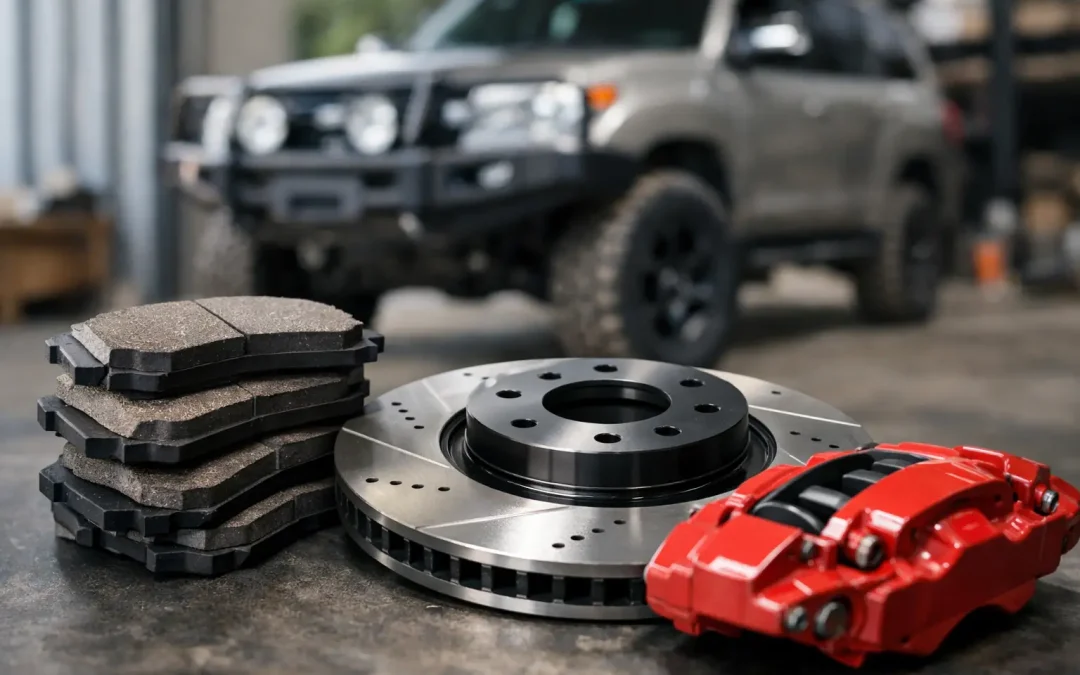
That first steep descent with a loaded 4WD tells you a lot about your brakes. If the pedal starts to feel different, stopping distances creep out, or the vehicle feels less settled under braking, standard pads may no longer suit the job. That is where upgraded brake pads 4WD owners fit for towing, touring or carrying extra weight can make a real difference.
Not every 4WD needs a brake upgrade, and not every brake complaint is fixed by changing pads. But when a vehicle has larger tyres, added accessories, more payload or regular towing duties, the original braking setup is often working much harder than it was designed to. In those cases, choosing the right pad compound is not about chasing performance for its own sake. It is about control, consistency and safety.
When upgraded brake pads for 4WDs make sense
A factory brake pad is built to suit a broad range of drivers and conditions. That works well for a standard vehicle doing ordinary road kilometres. The picture changes when the vehicle gains a bull bar, winch, canopy, drawer system, long-range tank or caravan on the back. Every extra kilo asks more of the brakes.
You may not notice the issue in day-to-day traffic at first. The signs often show up when the brakes get hot – on long downhill runs, in stop-start towing conditions, or on rough regional roads where braking needs to be steady and predictable. If your 4WD feels fine around town but less confident when loaded, the pads could be part of the problem.
That said, pads are only one part of the system. Worn rotors, poor quality fluid, sticking calipers or rear brakes that are not doing their share can all affect stopping performance. Proper diagnosis matters. There is no point fitting better pads if the rest of the brake system is below standard.
What upgraded brake pads 4WD drivers actually gain
The main benefit is not always shorter stopping distance from one hard brake application. More often, it is better performance over repeated braking events. A good heavy-duty pad handles heat more effectively, which helps reduce fade and keeps pedal feel more consistent.
That matters in the real world. Towing a camper through hilly country, descending a range road with a loaded tray, or dealing with traffic after hours on the highway can all generate more heat than standard pads do. Once the pad compound gets outside its comfort zone, braking performance drops away. A quality upgrade can widen that operating window.
There is also the question of feel. Some upgraded pads offer a firmer, more confident bite from the top of the pedal. Others are designed for smoother, progressive braking, which some drivers prefer for towing and family use. Neither is automatically better. It depends on how the vehicle is used and what the driver wants from it.
Bigger tyres, more weight and towing change the equation
Many 4WD owners focus on suspension first, which is understandable. But once tyre size and vehicle mass increase, braking should be part of the same conversation. Larger tyres can effectively reduce braking leverage, while added weight raises the workload every time the pedal is pressed.
Towing adds another layer. Even with trailer brakes working properly, the tow vehicle still carries more responsibility during braking than many drivers realise. Heat builds quickly, especially on long descents or when the setup is near its legal limits. If your 4WD spends a lot of time towing, brake pad choice becomes more important than it is on a lightly used standard vehicle.
This is why a one-size-fits-all answer rarely works. The right pad for a daily-driven dual cab with occasional camping gear may not suit a wagon set up for constant touring. The right choice depends on weight, tyre size, driving conditions and how often the vehicle is pushed beyond normal suburban use.
Not all upgraded pads are the same
This is where plenty of confusion starts. An upgraded pad is not simply a “better” version of the original. Different compounds are designed around different priorities, and each comes with trade-offs.
Some pads are built for higher temperature stability. These are useful for towing and heavily loaded vehicles because they maintain more consistent braking as heat rises. Some offer stronger initial bite, which can improve driver confidence but may also feel more abrupt if the rest of the setup is not matched well. Others focus on lower dust and quieter operation, which suits many road-driven vehicles but may not give the same benefit under sustained heavy load.
There can also be compromises in noise, rotor wear and cold performance. A pad that works brilliantly once warm may not be the best choice for a vehicle that mostly does school runs and short trips. On the other hand, a comfort-focused pad may stay quiet and clean but lose composure under repeated heavy braking.
That is why honest advice matters. The best brake pad is not the most expensive one on the shelf. It is the one that suits the vehicle and the way it is actually driven.
Why the rest of the brake system still matters
Brake pads get a lot of attention, but they cannot do the whole job alone. If rotors are worn, glazed or heat-marked, even a good pad may not perform as it should. The same goes for old fluid, seized slide pins or uneven braking across the axle.
For some 4WDs, especially those towing regularly or running increased GVM, a full brake upgrade is worth considering rather than pads alone. That can include higher quality rotors, braided lines in suitable applications, or larger brake hardware where available. In other cases, a proper service with the right pads and good components throughout the system is enough.
A specialist workshop will usually look at the complete braking package before recommending parts. That approach saves guesswork and avoids spending money in the wrong place.
Signs your current pads are not coping
Drivers often assume brake pads are either worn out or fine. In reality, a pad can still have material left and still be the wrong fit for the job. If you notice fading on long descents, a burning smell after towing, increased stopping effort when loaded, or a generally unsettled feel under brakes, the setup may be at its limit.
Uneven wear, squeal, shudder or excessive dust can also point to problems, although those symptoms are not always caused by the pad itself. Sometimes the issue is installation quality, rotor condition or a caliper fault.
If the vehicle has changed significantly since new – bigger tyres, more accessories, more towing, more payload – it is worth reviewing whether the current brake parts still suit the workload.
Choosing upgraded brake pads 4WD owners can rely on
The safest approach is to start with how the vehicle is used, not with a brand name or marketing claim. A 4WD that tows every second weekend needs a different conversation from one that spends most of its life unladen on sealed roads.
Be clear about the real job. Is it carrying tools every day? Touring fully loaded? Pulling a caravan across regional highways? Tackling steep descents with camping gear on board? Once those details are on the table, pad selection becomes far more accurate.
Quality matters as well. In a safety-critical system, cheap parts can cost more in the long run through poor performance, faster wear or repeated repairs. Good components from proven brands, fitted properly and matched to the vehicle, generally deliver better value than chasing the lowest price.
This is also where a specialist can save you time. At Albury Brake and Clutch Centre, for example, the focus is on diagnosing the full braking setup properly and recommending parts that suit the vehicle’s actual workload, not just what happens to be available.
A better result comes from matching parts to purpose
There is no magic brake pad that suits every 4WD. The right upgrade is the one that makes the vehicle safer and more predictable in the conditions it actually sees. For some drivers, that means improved fade resistance while towing. For others, it means steadier braking with larger tyres and extra accessories. And for some, it means finding out that the real issue sits elsewhere in the system.
If your 4WD is working harder than it did from the factory, your brakes should be assessed the same way. A sensible pad upgrade, backed by proper inspection and quality fitting, can make the vehicle feel more controlled when it matters most. When you are carrying family, gear or a trailer, that extra confidence is worth getting right.