


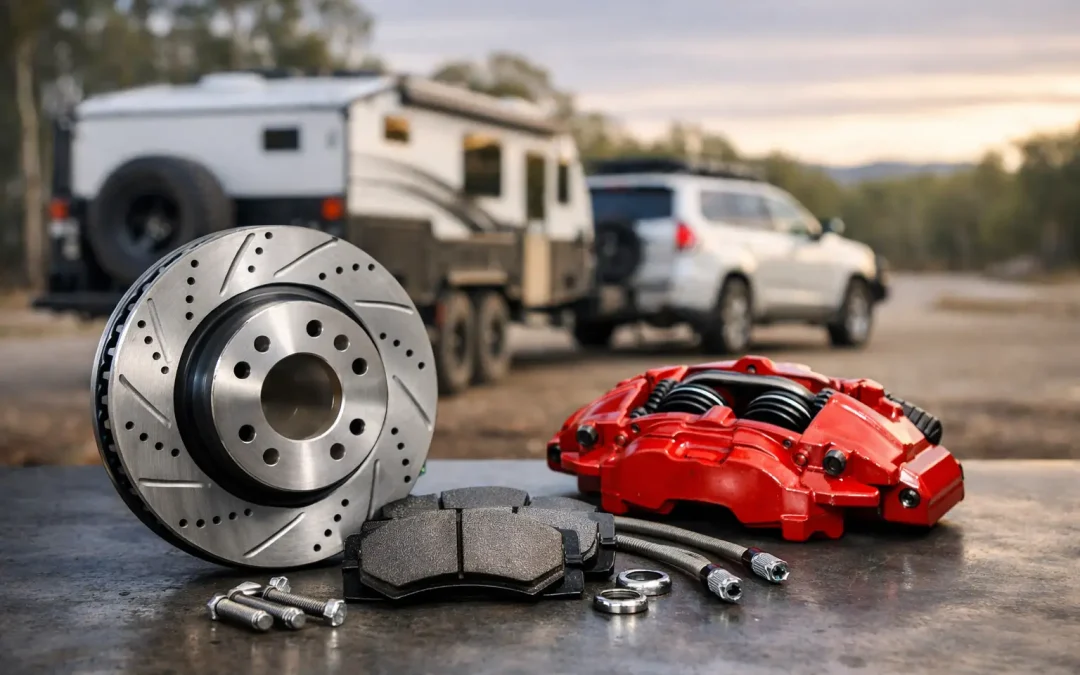
A proper 4wd brake kit review starts where most owners feel the problem first – halfway down a hill with a van on the back, a loaded tray, or bigger tyres that have changed how the vehicle stops. That is usually when standard brakes start to feel ordinary. The pedal gets longer, the vehicle feels heavier than it used to, and confidence drops away well before the road levels out.
That does not automatically mean you need the biggest brake package on the market. It means you need to look at how the vehicle is actually being used, what has changed from factory, and whether the current setup is still doing the job safely.
What a 4WD brake kit is really fixing
A brake kit is not just about making a 4WD stop harder in one emergency stop. In real-world driving, especially for touring and towing, the bigger issue is heat. Brakes turn speed into heat, and once temperatures climb too far, performance falls away. That is brake fade, and it matters more in a loaded 4WD than it does in a lightly driven daily commuter.
If your ute or wagon now carries accessories, tools, camping gear, a canopy, drawers, long-range tank or a caravan, the braking demand has changed. Add oversized tyres and the job gets harder again. Larger rolling diameter can reduce effective braking leverage, so the vehicle may feel slower to pull up even when the system is in good condition.
A worthwhile brake kit addresses that extra demand with better heat management, more clamping force, improved pad material, or a combination of all three. The trick is matching the upgrade to the job, not chasing a parts catalogue headline.
4WD brake kit review – what actually matters
When people compare kits, they often jump straight to rotor size and caliper appearance. Both matter, but they are not the whole story.
Rotor size and design
A larger rotor gives the brake system more leverage and more thermal capacity. That can improve braking under load and help the system recover better from repeated stops. Slotted rotors can help keep the pad surface cleaner and improve consistency, particularly in heavier use. Drilled rotors look the part, but on hard-working 4WDs they are not always the best option for durability.
The question is not whether bigger is always better. It is whether the rotor size suits your wheel clearance, your load, and the sort of driving you actually do.
Caliper quality
A multi-piston caliper can spread pressure more evenly across the pad and improve feel, but only if it is well designed and properly matched to the vehicle. More pistons do not guarantee better braking. Poor fitment, incorrect balance, or low-quality manufacturing can create fresh problems instead of fixing old ones.
For many owners, a proven upgrade using quality calipers and brackets is far better than a flashy kit with uncertain support or inconsistent machining.
Pad compound
This is where a lot of kits live or die. Pad material affects cold bite, noise, dust, heat tolerance and pedal feel. A pad that works brilliantly for towing in high temperatures may be noisy or dusty for suburban use. A softer, quieter pad may feel fine unloaded but struggle when the vehicle is fully packed.
There is no perfect pad for every driver. There is only the right compromise for how your 4WD is used.
Brake balance and feel
A front brake upgrade can improve stopping power, but the vehicle still needs to remain stable and predictable. If the setup changes the brake balance too far forward, it can upset how the vehicle behaves under hard braking. This is why proper kit selection matters more than buying parts based on size alone.
A good brake upgrade should feel controlled and confidence-inspiring, not grabby, vague or inconsistent.
When a brake kit is worth the money
Not every 4WD needs a full big brake conversion. In some cases, the best result comes from quality rotors and pads, braided lines if appropriate, fresh fluid, and making sure the existing hardware is working as it should.
A brake kit becomes easier to justify when the vehicle regularly tows, carries weight most of the time, runs larger tyres, or has had a GVM upgrade. These changes ask more from the braking system every day, not just on the odd weekend trip.
It is also worth considering if you have already fitted good replacement parts and still are not happy with performance. If the brakes are healthy but the vehicle simply feels under-braked for its current setup, an upgrade may be the sensible next step.
When a brake kit will not solve the problem
This is the part many reviews skip. Sometimes poor braking is not caused by undersized components at all.
Worn suspension, tired rear drums or rear disc hardware, poor-quality tyres, contaminated pads, old fluid, sticking calipers and incorrect load distribution can all make a vehicle feel worse to stop. So can a trailer with badly adjusted or poorly performing brakes.
That is why proper diagnosis matters. Throwing a big kit at a maintenance issue is an expensive way to miss the real fault.
The trade-offs most owners should know
There is no point pretending every upgrade is all upside. Better braking usually comes with some compromise, and that is normal.
Some kits need larger wheels for clearance. Some performance-focused pads create more dust or a bit more noise. Some setups feel stronger at operating temperature than they do in the first stop on a cold morning. A heavier-duty package may also cost more to service later because rotor and pad replacement parts are not as cheap as standard items.
None of those issues make a kit bad. They just need to be understood before money is spent.
A practical way to compare brake kits
If you are reading any 4wd brake kit review, ignore the marketing first and ask a few plain questions. What problem is this kit meant to solve? Has the vehicle changed from factory with tyres, towing weight or accessories? Are replacement pads and rotors easy to get later on? Is the brand known for consistent quality and local support? And has the system been proven on working 4WDs, not just promoted online?
The best kit for a touring Prado, loaded Ranger or towing LandCruiser may not be the best choice for an unladen weekend 4WD that only sees occasional trips away. Usage matters more than hype.
What we tend to see in real workshop conditions
Vehicles that benefit most from brake upgrades are usually not the flashy builds. They are the practical ones. The family 4WD that tows a van three times a year and runs loaded the rest of the time. The trade ute carrying gear every day. The tourer that now weighs far more than it did when it left the factory.
In those cases, owners often do not ask for sharper performance. They ask for confidence. They want the pedal to stay consistent, the vehicle to remain settled under braking, and the system to cope without feeling cooked halfway through a trip.
That is a more useful standard than chasing bragging rights. In a safety-critical system, predictable beats impressive every time.
Should you upgrade the front only?
Sometimes yes, but it depends on the vehicle and what is being fitted. Front brakes do most of the work, so upgrading the front can bring a noticeable improvement. But rear brake condition still matters, and the whole system has to operate as a package.
If the rear brakes are neglected, the fluid is old, or the tyres are not up to scratch, a front upgrade alone will only get you part of the way. The smartest approach is to assess the vehicle as a whole before deciding how far to go.
Brand matters, but fitment matters more
Quality brands have their place because good metallurgy, proper machining and reliable friction materials make a difference. At Albury Brake and Clutch Centre, that is why we put more trust in proven components than cheap kits that look good in a box.
Even so, quality parts still need to be fitted correctly, bedded in properly and matched to the right application. A premium kit installed badly or chosen for the wrong job will never perform the way it should.
The honest verdict
The best 4WD brake kit is not automatically the biggest, most expensive or most aggressive option. It is the one that suits the actual vehicle, the actual load and the actual driving conditions. For some owners, that means a full upgrade package. For others, it means sticking with the factory layout and improving the quality of the service parts.
If your 4WD now works harder than it used to, and the brakes feel like they are always one step behind, it is worth having the system assessed properly before your next tow or trip away. The right answer is usually clearer once someone looks at the whole vehicle, not just the catalogue.