


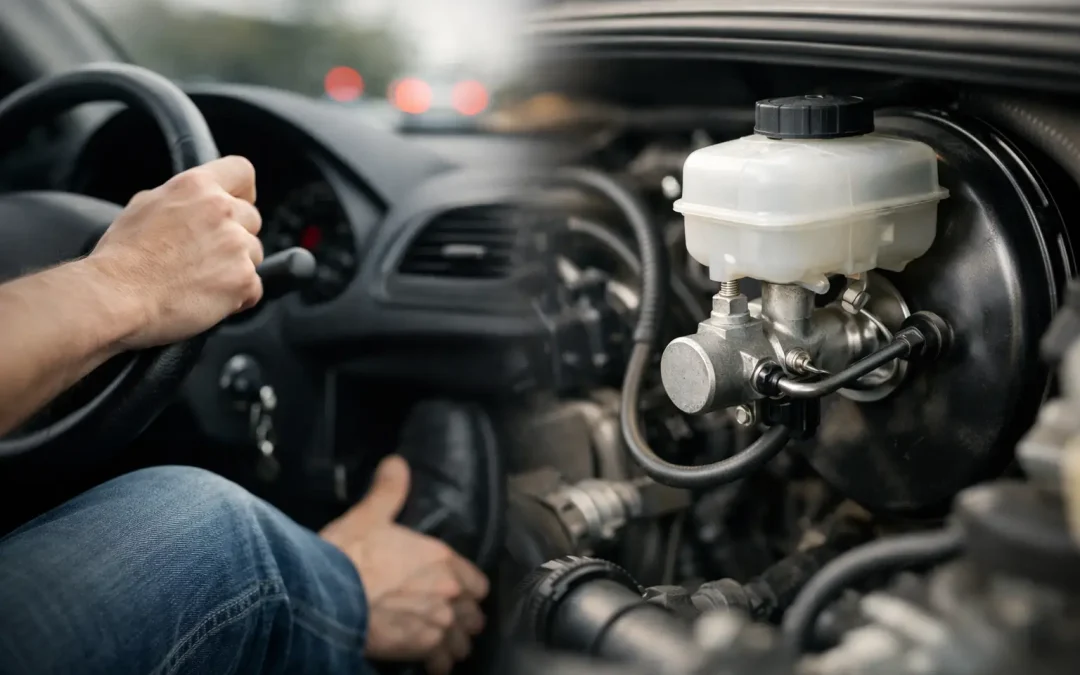
A brake pedal that suddenly feels harder than usual is not something to put in the too-hard basket. One of the most common brake booster failure symptoms is a pedal that takes much more effort to press, and that change can catch drivers out quickly – especially in traffic, on hills, or while towing.
The brake booster is there to reduce the amount of force you need to apply when braking. When it is working properly, the vehicle responds with firm, controlled braking without you having to stand on the pedal. When it starts to fail, stopping can feel heavy, slow, and unpredictable.
What the brake booster actually does
Your brake booster sits between the brake pedal and the master cylinder. In most vehicles, it uses engine vacuum to multiply the force from your foot, which makes braking easier and more consistent. Some newer vehicles use different assist systems, but the idea is the same – helping the driver apply enough braking force safely.
If that assistance drops away, the brakes may still work to a point, but they will not feel normal. That matters because many drivers assume a hard pedal means the brakes themselves are fine. In reality, reduced booster assistance can make the vehicle much harder to stop in a hurry.
Common brake booster failure symptoms
The clearest sign is a hard brake pedal. You press the pedal and it feels stiff, almost like the power assistance has vanished. The vehicle may still slow down, but you need noticeably more leg pressure to make it happen.
Longer stopping distances are another red flag. The issue is not always that the friction parts have failed. Sometimes the pads and rotors are doing their job, but the driver cannot apply braking force as easily or as quickly because the booster is not helping enough.
You might also notice the engine idling rough, hissing noises near the firewall, or a change in engine behaviour when the brake pedal is pressed. That is because many boosters rely on vacuum, and a vacuum leak can affect both braking feel and engine performance.
In some cases, the brake pedal feel changes after the engine is switched off and restarted. A healthy booster will usually store a small amount of vacuum assist for a short time. If that reserve disappears too quickly, it can point to an internal leak or a faulty check valve.
When the symptoms feel subtle at first
Not every booster fails all at once. Sometimes the early signs are easy to dismiss. The pedal may only feel heavy during the first stop in the morning, or after the vehicle has been parked for a few hours. You may hear a faint hiss but only when braking at low speed.
That is where proper diagnosis matters. A vehicle can have mild brake booster failure symptoms before the problem becomes obvious enough to feel dangerous. Leaving it too long usually means the issue gets worse, not better.
What causes a brake booster to fail?
Age is a big one. Like many brake components, boosters wear internally over time. The diaphragm inside can split, seals can leak, and valves can stop working as they should.
Vacuum hose problems are also common. A cracked hose, loose connection, or failed one-way check valve can mimic booster failure or contribute to it. That is why replacing parts based on guesswork can waste money. The booster itself might be the issue, but the fault could also sit in the vacuum supply.
Fluid contamination can cause trouble as well. If the rear seal of the master cylinder leaks brake fluid into the booster, internal damage can follow. In that situation, fitting a new booster without fixing the source of the leak is not a proper repair.
Hard brake pedal does not always mean booster failure
This is where a lot of people get caught. A hard pedal can be caused by brake booster failure, but it is not the only possibility. Problems with the vacuum system, a seized caliper, a blocked hose, or even engine-related vacuum issues can create similar complaints.
That is why the right approach is testing first, replacing second. In a specialist brake workshop, the job is not to throw parts at the vehicle and hope for the best. It is to confirm whether the booster, check valve, vacuum hose, master cylinder, or another part of the system is actually at fault.
How a faulty booster can affect different drivers
For a commuter car doing short trips around town, a failing brake booster can turn normal stop-start driving into hard work. You might not notice it much on an empty road, but in traffic the extra pedal effort becomes obvious fast.
For family vehicles, the risk is more serious because the car may be carrying passengers when braking performance drops. Extra stopping effort is the sort of thing that matters most when you need to react quickly.
For 4x4s, utes, and towing vehicles, the issue can feel even worse. Bigger tyres, extra load, caravans, trailers, and touring gear already put more demand on the brake system. If the booster is not doing its share, the added pedal effort becomes much more noticeable.
A few simple checks can point to the problem
There are some basic signs a technician will look for straight away. One is whether the pedal drops slightly when the engine starts. In many vehicles, that small movement shows the booster is receiving assist. If there is no change at all, that can point to a booster or vacuum supply issue.
Another check is whether vacuum is being held after shutdown. If the stored assistance disappears almost immediately, the system may be leaking. Hissing noises, visible hose damage, and poor idle quality all help narrow it down.
Still, these checks are only the starting point. A proper diagnosis should confirm the cause before any repair is recommended.
Is it safe to keep driving?
Usually, this is not something to ignore. Even if the vehicle still stops, reduced brake assist means reduced control in the moments that matter most. You may be able to manage around town for a short distance, but an emergency stop is where the real risk shows up.
It also depends on the vehicle and how it is being used. A lightly loaded car on local roads is one thing. A 4×4 towing a van, or a work ute carrying gear, is another. The heavier the load, the less margin you have when braking effort increases.
If the pedal suddenly goes hard, the stopping distance changes, or the engine runs differently when the brakes are applied, it is worth getting checked promptly rather than hoping it settles down.
What a proper repair should include
A brake booster replacement should never be treated as a quick guess-and-go job. The surrounding parts matter. The vacuum hose, check valve, master cylinder condition, and any signs of fluid contamination all need to be inspected.
If there is a leak upstream or another fault in the system, fitting a new booster alone may not solve the problem. Done properly, the repair should restore normal pedal feel, predictable braking performance, and confidence behind the wheel.
This is also a good time to look at the broader brake system. If pads, rotors, fluid, or hydraulic parts are already due, combining the work can save time and help avoid repeat visits.
Why diagnosis matters more than assumptions
Brake problems have a way of overlapping. A driver may describe poor braking, but that could mean hard pedal effort, faded friction material, hydraulic issues, vacuum loss, or a combination of faults. The symptom tells you there is a problem. It does not tell you which part is guilty.
That is why specialist brake diagnosis matters. At Albury Brake and Clutch Centre, the goal is straight answers and repairs done properly, not replacing parts that did not need replacing in the first place.
When to book it in
If the brake pedal has become stiff, the vehicle is taking more effort to stop, or you can hear hissing when braking, do not leave it until the next service. Those are all signs the brake assist system needs attention.
Brakes are one area where small changes in feel can point to bigger safety issues. If something feels off, trust that instinct and get it checked. A good brake system should feel predictable every time you press the pedal – not like it is asking you to guess.