


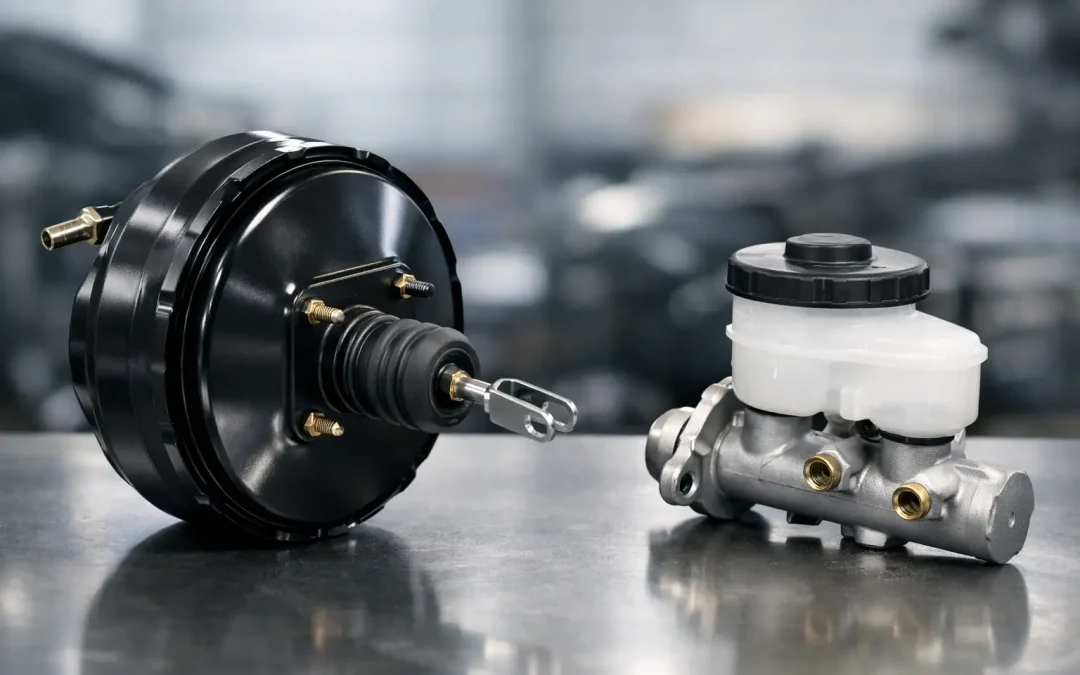
A brake pedal that suddenly feels hard, sinks too low or needs more effort than usual is not something to put off until the next service. When comparing a brake booster versus master cylinder, both parts are central to safe stopping, but they do very different jobs. The pedal feel can point towards one or the other, although a proper inspection is the only way to know what has failed and what needs repair.
For drivers, the practical difference is simple: the brake booster helps you apply the brakes with less physical effort, while the master cylinder turns pedal movement into hydraulic pressure. If either component is not doing its job, your vehicle may still stop, but it may not stop as predictably, quickly or safely as it should.
Brake booster versus master cylinder: what each part does
The brake booster sits between the brake pedal and the master cylinder. In most passenger vehicles, it uses engine vacuum to multiply the force from your foot. That assistance is why you can apply strong braking pressure without standing on the pedal.
When you press the pedal, the booster uses vacuum and atmospheric pressure to add assistance. The master cylinder then receives that force and pushes brake fluid through the brake lines to operate the calipers or wheel cylinders at each wheel.
The master cylinder is a hydraulic pump mounted high in the engine bay, usually with the brake fluid reservoir attached. Inside are pistons and seals that create and hold pressure in separate brake circuits. These circuits are designed as a safety measure, so a problem in one circuit does not necessarily remove all braking. It is still a serious fault when one is compromised.
In short, the booster makes the pedal easier to press. The master cylinder sends hydraulic pressure to the brakes. One is mainly about pedal assistance; the other is about applying the brakes themselves.
How brake booster faults usually feel
A failing brake booster most often causes a very hard brake pedal. You may need far more leg pressure than normal to slow down, particularly at low speed or when manoeuvring. The brakes may still work, but the lack of assistance makes emergency stopping harder and more tiring.
A hissing sound around the pedal area can also suggest a vacuum leak in the booster or its hose. On some vehicles, the engine idle may change when the pedal is pressed because a vacuum leak is affecting the engine. A damaged vacuum hose, failed one-way check valve or low engine vacuum can create similar symptoms, so replacing the booster without testing the rest of the system is not good diagnosis.
A basic workshop check involves pumping the brake pedal with the engine off to remove stored vacuum, then holding the pedal down while starting the engine. If the booster is working, the pedal should drop slightly as vacuum assistance comes in. This test is useful as an initial clue, but it does not replace checking for leaks, confirming vacuum supply and inspecting the brake system as a whole.
For diesel vehicles, some 4x4s and certain modern vehicles, brake assistance may come from a vacuum pump, hydraulic system or electric pump rather than directly from engine manifold vacuum. The symptoms can be similar, but the fault-finding process changes. That is one reason vehicle-specific diagnosis matters.
Signs the master cylinder may be the problem
Master cylinder issues are more commonly linked to a soft, spongy or sinking pedal. If you hold steady pressure on the brake pedal at a standstill and it slowly travels towards the floor, internal seals in the master cylinder may be allowing fluid to bypass the pistons.
Low brake fluid can also indicate an external master cylinder leak, though fluid loss may be coming from elsewhere in the system. Calipers, wheel cylinders, flexible hoses, pipes and ABS hydraulic components all need to be checked before blaming the master cylinder.
A soft pedal does not automatically mean the master cylinder has failed. Air in the brake lines, contaminated fluid, worn brake components, a leak or an ABS-related issue can all affect pedal feel. On vehicles with rear drum brakes, poor adjustment can also create extra pedal travel. The right repair depends on finding the cause, not choosing the most obvious-looking part.
Watch for these warning signs:
- The brake pedal slowly sinks while you keep firm pressure on it.
- Brake fluid level drops without an obvious reason.
- Fluid is visible around the master cylinder, brake booster or firewall area.
- The brakes feel inconsistent, spongy or require pumping to achieve a firm pedal.
If the brake warning light comes on, the pedal feels wrong or braking performance changes suddenly, avoid driving the vehicle where possible. Arrange an inspection rather than taking chances on a safety-critical system.
Why the symptoms can overlap
The main difference between a brake booster and master cylinder is clear on paper. In the workshop, symptoms can overlap because both parts sit at the start of the braking system and both affect what you feel through the pedal.
For example, a vehicle with a failed booster can have a hard pedal but still stop reasonably well if the hydraulic system is sound. A vehicle with a master cylinder issue may have a soft pedal, but the driver may describe it simply as needing to press harder or further than before. A brake fluid leak can reduce hydraulic performance, while a vacuum leak can make the pedal hard and affect engine operation at the same time.
There is another important connection. The master cylinder mounts to the booster, and a rear master cylinder seal leak can allow brake fluid into the booster. In that situation, replacing only the master cylinder may not be enough if the booster has been contaminated. Conversely, fitting a new booster without addressing the leaking master cylinder only delays the next repair.
This is where a proper inspection saves money. It helps avoid parts being fitted on a guess, and it makes sure the cause of the fault is corrected rather than just one symptom.
What proper brake diagnosis involves
A reliable diagnosis starts with the customer’s description of the problem: when it happens, whether the engine is running, whether the vehicle pulls while braking, and whether any warning lights are on. A road test may be appropriate, but only where it is safe to do so.
From there, a brake specialist checks the fluid level and condition, searches for leaks, inspects pads, rotors, calipers, hoses and wheel cylinders, and assesses pedal operation. The booster vacuum supply and check valve are tested where applicable. The master cylinder is inspected for external leakage and assessed for internal bypassing. Diagnostic scanning may also be needed on late-model vehicles where ABS, electronic brake assist or an electric brake booster is involved.
Brake fluid condition matters too. Fluid absorbs moisture over time, which lowers its boiling point and can contribute to internal corrosion. A brake fluid flush is worthwhile at the manufacturer’s recommended interval, but it will not repair worn seals, a damaged booster or a hydraulic leak. It is maintenance, not a substitute for repair.
For towing vehicles and modified 4x4s, braking concerns deserve extra attention. Larger tyres, added accessories, higher vehicle mass and regular towing all increase the work asked of the brake system. A hard pedal or poor braking response should be checked before the next trip, not after loading up the ute or caravan.
Can you drive with a faulty booster or master cylinder?
Neither fault should be treated as safe to ignore. A failed booster can leave you with manual braking effort, which may be manageable in a quiet car park but is a poor situation in traffic, on a wet road or when towing. A failing master cylinder or hydraulic leak can become worse without warning and may significantly reduce braking ability.
If the pedal is sinking, the brake warning light is on, fluid is leaking, or the vehicle does not stop normally, do not drive it. If the pedal is hard but braking has changed noticeably, have it checked promptly and avoid unnecessary driving. The cost and inconvenience of a proper repair are small compared with the risk of finding out your brakes are not right when you need them most.
At Albury Brake and Clutch Centre, the focus is on straight answers: test the system, explain what has been found, and repair only what is needed using quality components. If your pedal feels different, trust that change and book an inspection before a minor brake concern becomes a bigger one.