


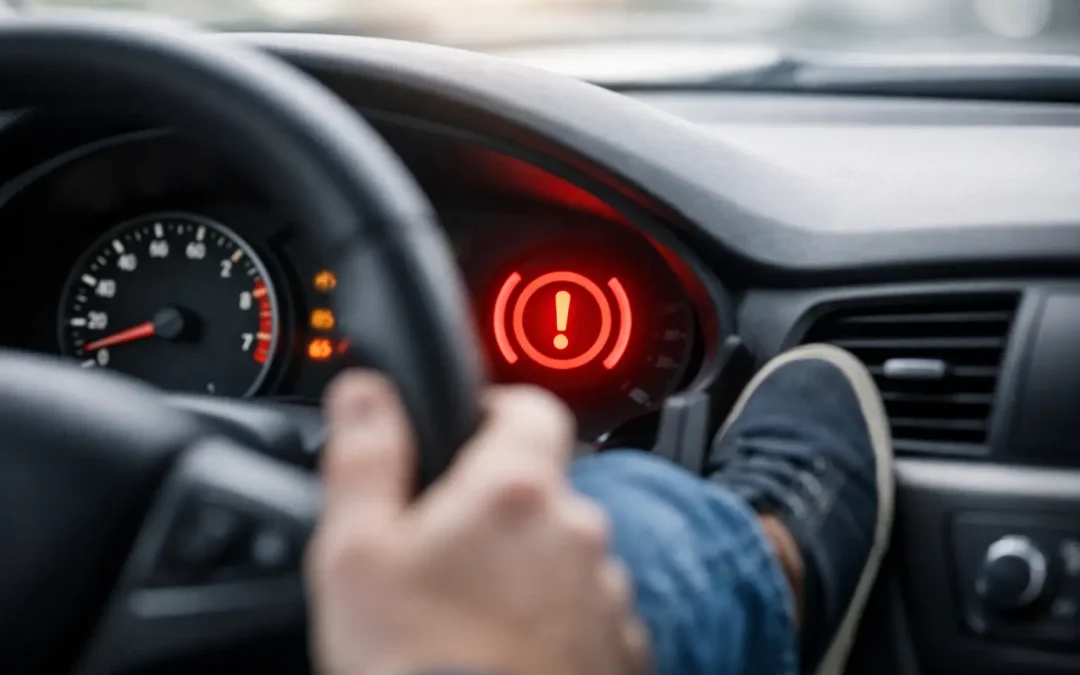
A brake light on the dash is not one to ignore until the next service. This brake warning light guide explains what the common symbols can mean, what to do safely at the roadside, and when your vehicle needs a proper inspection. The exact symbol and colour matter, but so does how the brake pedal feels and whether the vehicle is stopping normally.
First, identify the colour and symbol
Most vehicles use red lights for an urgent fault or a condition that needs immediate attention. Amber or yellow lights usually mean a system needs checking soon, although they should never be dismissed simply because the car still drives.
The owner’s manual is the final word for your make and model. Dash symbols vary between manufacturers, particularly on newer vehicles with electronic parking brakes, brake wear sensors and driver-assistance systems. Still, there are a few warning lights most drivers will come across.
Red brake system warning light
A red circle with an exclamation mark, often inside brackets, is commonly the main brake system warning light. It may come on because the handbrake or electronic parking brake is applied, but it can also indicate low brake fluid, a hydraulic fault or a problem with brake force distribution.
If the light stays on after the parking brake is fully released, treat it seriously. Do not assume it is only a sensor. A low fluid level can be caused by worn brake pads, but it can also point to a leak. Either way, the reason needs to be found before the vehicle is relied on again.
A red warning light combined with a soft, sinking or unusually hard pedal, poor stopping performance, a burning smell, fluid under the vehicle, or the car pulling when braking means stop driving as soon as it is safe. Pull over carefully, avoid sudden braking and arrange assistance rather than trying to nurse it home.
Amber ABS warning light
An amber ABS light means the anti-lock braking system has detected a fault. In many vehicles, the normal hydraulic brakes still work, but the ABS may not intervene if a wheel locks under hard braking. Depending on the vehicle, traction control and stability control may also be unavailable.
You may be able to drive cautiously to a workshop if the pedal feels normal, there are no red brake warnings and the vehicle stops properly. Leave extra room, avoid towing heavy loads and do not test the system with hard braking. If an ABS light appears with a red brake light, that is a different situation – stop and have the vehicle assessed.
Brake pad wear warning light
Some vehicles have a separate amber pad wear symbol, while others show a message on the instrument display. This usually means a sensor has detected that the brake pads are close to their service limit.
There may still be some material left, but it is not a reason to put the job off for months. Continuing to drive on worn pads can damage the brake rotors, increase repair costs and leave you with reduced braking performance. Book an inspection soon, particularly before a long trip, towing weekend or wet-weather driving.
Electronic parking brake or brake assist alerts
Modern vehicles can also display warnings for an electronic parking brake, brake assist, auto-hold or collision-avoidance braking. These systems are useful, but they rely on sensors, control modules and a healthy base braking system. A fault may be as simple as a switch or battery-voltage issue, or it may require more detailed diagnosis.
If the warning relates only to a convenience feature and the standard brakes feel normal, the vehicle may be safe to move carefully for assessment. If the parking brake will not release, do not force it or keep driving against it. That can quickly overheat and damage the rear brakes.
What to do when a brake warning light comes on
Your first job is to stay calm and assess the vehicle rather than focusing only on the dash. Ease off the accelerator, keep a safe distance from traffic and find a safe place to pull over. On a busy road, use your hazard lights if needed and choose a spot where you can stop without creating another risk.
Once stationary, confirm the parking brake is fully released. Look for obvious warning signs such as a spongy pedal, a pedal that travels farther than usual, a burning smell, smoke near a wheel or fresh fluid on the ground. Do not put your hands near hot brakes, and do not continue driving if braking feels different or unreliable.
Avoid the common shortcut of topping up brake fluid and carrying on. Brake fluid does not normally disappear without a reason. Adding fluid can hide the symptom while the underlying problem – worn pads, a leak or another fault – remains. It also makes a proper diagnosis less clear.
If the warning appeared after brake work, a wheel change, deep water crossing or a battery issue, mention that when booking the vehicle in. That detail can save time. The same applies if the light only comes on intermittently, when towing, after a long downhill run or during wet weather.
Why warning lights need proper diagnosis
Brake warnings are not all caused by the same component. A red brake light can involve fluid level, a pressure issue, the parking brake circuit or a fault in a related system. An ABS warning may trace back to a damaged wheel-speed sensor, wiring fault, tone ring, wheel bearing issue or control-module fault. Reading a code is useful, but it is only the starting point.
A proper inspection combines scan-tool information with a physical check of pads, rotors, calipers, hoses, fluid condition, wheel bearings and the parking brake system. The workshop should also road-test the vehicle when appropriate and confirm the repair has cleared the fault, rather than replacing parts on guesswork.
This matters because brake faults can overlap. For example, severely worn pads may lower fluid in the reservoir, while a failing wheel bearing can affect an ABS sensor signal. Replacing one visible part without checking the system can leave the actual cause unresolved.
Extra care for 4x4s, towing and loaded vehicles
A warning light is more urgent when the vehicle is regularly loaded, towing a caravan or trailer, fitted with larger tyres, or used for touring. Extra weight and altered tyre diameter place greater demand on the brakes, especially on long descents and in stop-start traffic.
A standard brake system in good condition may still be suitable for many vehicles, but it depends on the load, driving conditions and modifications. Heavy-duty 4×4 brake upgrades can be worthwhile where braking performance or heat management is consistently being pushed. They are not a substitute for fixing a warning light, though. The underlying fault must be repaired first.
For Albury Wodonga drivers heading into the hills, out on the highway or preparing for a towing trip, it makes sense to deal with a brake alert before the vehicle is loaded up. A short inspection now is far easier than a breakdown far from home.
When to book, and when not to drive
Book a brake inspection promptly for an amber ABS, pad wear or electronic brake-system warning where the brakes otherwise feel normal. Be clear about the symbol, whether it is constant or intermittent, and any noises, vibration or pulling you have noticed.
Do not drive the vehicle if a red brake warning remains on after releasing the parking brake, the pedal feel has changed, braking is weak, fluid is leaking, a wheel is hot or smoking, or a red brake light appears with an ABS warning. In those cases, arranging a tow protects you, other road users and the vehicle from a much bigger repair.
Brake warning lights are designed to give you time to act, not permission to wait. If something does not feel right, trust that instinct and have a brake specialist give you straight answers before the next trip.