


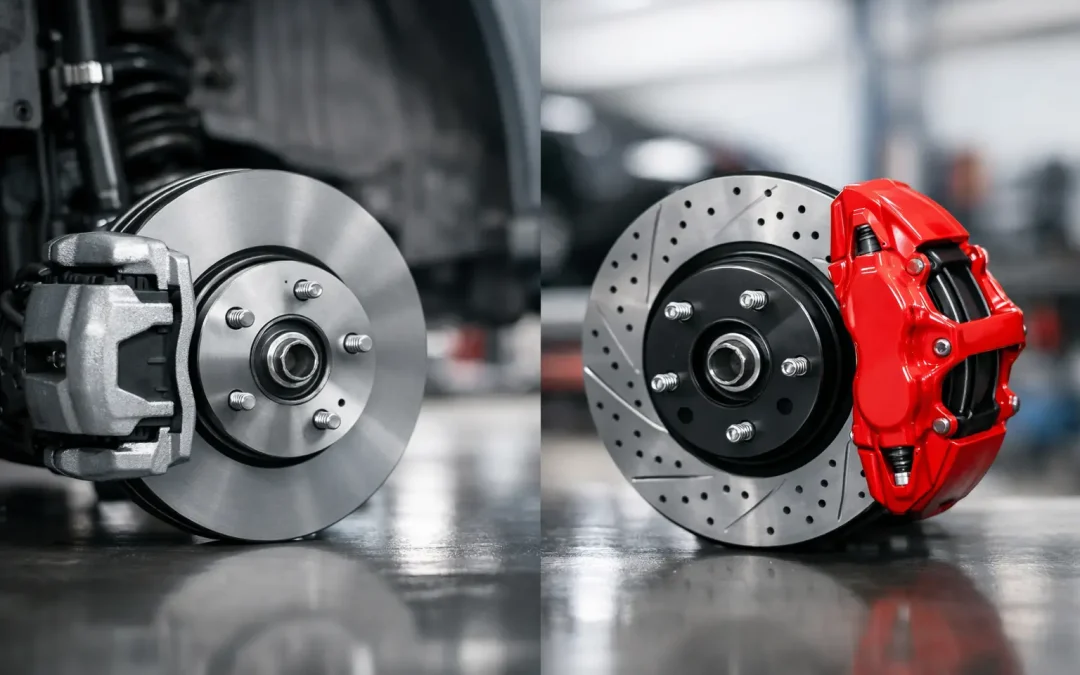
A brake quote can look simple until you see two very different options: OEM versus aftermarket brakes. One may cost more, the other may promise better performance, and both can be the right choice depending on the vehicle and how you use it. The key is not buying the most expensive part or the cheapest box on the shelf. It is fitting brake components that suit the job and are installed properly.
For a family SUV doing school runs around Albury-Wodonga, the best answer may be different from a work ute towing a caravan, or a 4×4 carrying larger tyres and extra touring weight. Good brake advice starts with the vehicle, the condition of the full braking system and the driving it has to handle.
What OEM brake parts actually mean
OEM stands for Original Equipment Manufacturer. In practical terms, OEM brake parts are made to the vehicle manufacturer’s original specification, or supplied by the company that produced the component for the vehicle when it was new.
OEM pads and rotors are designed around the vehicle’s original brake system. That usually means predictable pedal feel, low noise, good fitment and the same sort of everyday performance the vehicle delivered from the factory. For many late-model passenger vehicles, this makes OEM parts a sensible, low-risk option.
That does not mean every part sold in a vehicle-branded box is automatically the best possible choice for every driver. Factory specifications are generally designed for broad conditions and average use. They need to balance stopping performance, noise, dust, comfort, cost and service life across thousands of vehicles.
If your vehicle is used exactly as intended – normal commuting, family trips and light loads – OEM-quality components can be a very sound choice. They are particularly worthwhile where correct fitment, brake noise control and manufacturer specifications matter.
The benefits and limits of OEM
The main advantage of OEM brakes is consistency. The parts should fit correctly and work as intended with the original calipers, rotors, sensors and electronic safety systems. This can reduce guesswork, especially on vehicles with more complex brake setups.
The trade-off is price. OEM parts can cost more simply because of branding, supply arrangements or limited availability. They also may not be the best match for a vehicle that now does work beyond its original design brief, such as frequent towing, heavy loads or extended 4×4 touring.
When aftermarket brakes are the better option
Aftermarket brakes are not one single level of quality. The category includes budget parts of uncertain origin, as well as respected specialist brands that produce pads, rotors and upgrade kits for specific applications. Treating all aftermarket components as inferior is just as misleading as assuming every aftermarket part is an upgrade.
A quality aftermarket brake package can offer real benefits. Depending on the application, it may provide stronger resistance to brake fade, improved bite under load, longer rotor life, reduced dust, better wet-weather performance or a pad compound that is better suited to towing and touring.
For example, a ute that regularly tows a loaded trailer down long descents puts far more heat into its brakes than the same ute used mainly for commuting. A suitable heavy-duty pad and rotor combination may give that driver more dependable braking than the standard factory setup. The same applies to 4x4s fitted with larger tyres, suspension upgrades or increased GVM. Extra weight and rotational mass change what the brakes need to manage.
The catch is that aftermarket parts must be selected carefully. A high-performance pad may work well when hot but feel noisy, dusty or less responsive in cold stop-start driving. Drilled or slotted rotors can suit some applications, but they are not a cure for worn calipers, contaminated brake fluid or poor-quality pads. The right parts are only one part of a proper repair.
Cheap brakes can cost more later
Very cheap pads and rotors can be tempting when a vehicle needs repairs quickly. But inconsistent friction material, poor machining and incorrect fitment can lead to noise, vibration, uneven wear and shorter service life. In the worst cases, they can compromise braking performance.
A brake job should never be judged by the price of pads alone. The condition of the rotors, calipers, hoses, fluid, hardware and wheel bearings can all affect the result. Replacing parts without finding the cause of uneven wear or a pulling brake often means the problem returns.
OEM versus aftermarket brakes: how to choose
The right decision comes down to how the vehicle is used, not a badge on a box. Start with the vehicle manufacturer’s requirements, then consider the conditions it regularly faces.
For everyday cars, OEM or premium aftermarket replacement parts are often both good options. A quality aftermarket equivalent can provide reliable stopping performance and good value, provided it is made for the correct vehicle and installed as a matched system.
For performance vehicles, the choice needs more care. Brake compounds that improve track or spirited driving performance can be less pleasant in normal traffic. They may produce more dust, squeal at low speed or wear rotors faster. There is no point fitting an aggressive pad if the owner wants quiet, clean brakes for daily commuting.
For tradies, tow vehicles and 4×4 owners, braking demand can change dramatically with load. A vehicle that feels fine unladen may struggle when it is carrying tools, towing a camper or heading downhill with a full touring setup. In these cases, a properly engineered upgrade may be more appropriate than a like-for-like replacement.
It is also worth considering availability. A quality aftermarket part from an established brand may be readily available, while an OEM component could require more wait time. When a vehicle is needed for work or family duties, fast turnaround matters – but not at the expense of fitting unsuitable parts.
Brake pads and rotors need to work together
Brakes perform as a system. The pad compound, rotor material, caliper operation and brake fluid condition all contribute to how the pedal feels and how consistently the vehicle stops.
Fitting new pads to badly worn or heat-spotted rotors can cause noise, poor bedding-in and reduced pad life. Installing new rotors while leaving sticking caliper slides or seized pistons unresolved can quickly damage the new components. A vibration through the pedal may be blamed on “warped discs”, but it can also be linked to uneven pad deposits, wheel bearing issues or overheating caused by a fault elsewhere in the system.
That is why proper diagnosis matters before parts are chosen. A specialist should inspect pad wear, rotor thickness and condition, caliper movement, brake hoses, fluid condition and any warning lights or fault codes. The goal is to repair the reason for the problem, not just replace the visibly worn component.
Special considerations for towing and 4×4 upgrades
Heavy-duty brake upgrades are not about making a vehicle look tougher. They are about safely managing more heat, weight and demand. Larger tyres increase the effort required to slow the vehicle. Added accessories, passengers, tools, roof loads and towing equipment can push braking systems much harder than standard suburban driving.
A suitable upgrade may include larger rotors, improved pad compounds or a complete matched brake package designed for the vehicle. It should be chosen with the vehicle’s legal requirements, wheel clearance, intended load and actual use in mind.
Not every 4×4 needs an upgrade. If the vehicle is lightly used and remains close to standard, premium replacement pads and rotors may be all that is needed. But if the pedal has become soft under load, braking fades on descents, or the vehicle is regularly towing, it is worth getting straight answers before the next trip.
Signs your brakes need attention now
Do not wait for a scheduled service if the brake pedal feels different, the vehicle pulls to one side, there is grinding or persistent squealing, or the steering wheel shakes when braking. A brake warning light, burning smell after driving, reduced stopping confidence or a handbrake that no longer holds properly also need prompt inspection.
Some noises are minor, but they should not be guessed at. A small issue such as worn pads or seized hardware can become a more expensive rotor, caliper or safety problem if left too long.
At Albury Brake and Clutch Centre, the focus is on checking the whole system, explaining what has been found and recommending parts that make sense for the vehicle and its workload. Whether OEM or aftermarket is the better fit, the job should be done properly and built to last.
If you are unsure which brake option suits your vehicle, bring it back to the basics: how you drive, what you carry, what you tow and what the inspection shows. The best brake parts are the ones that give you reliable, predictable stopping every time you press the pedal.