


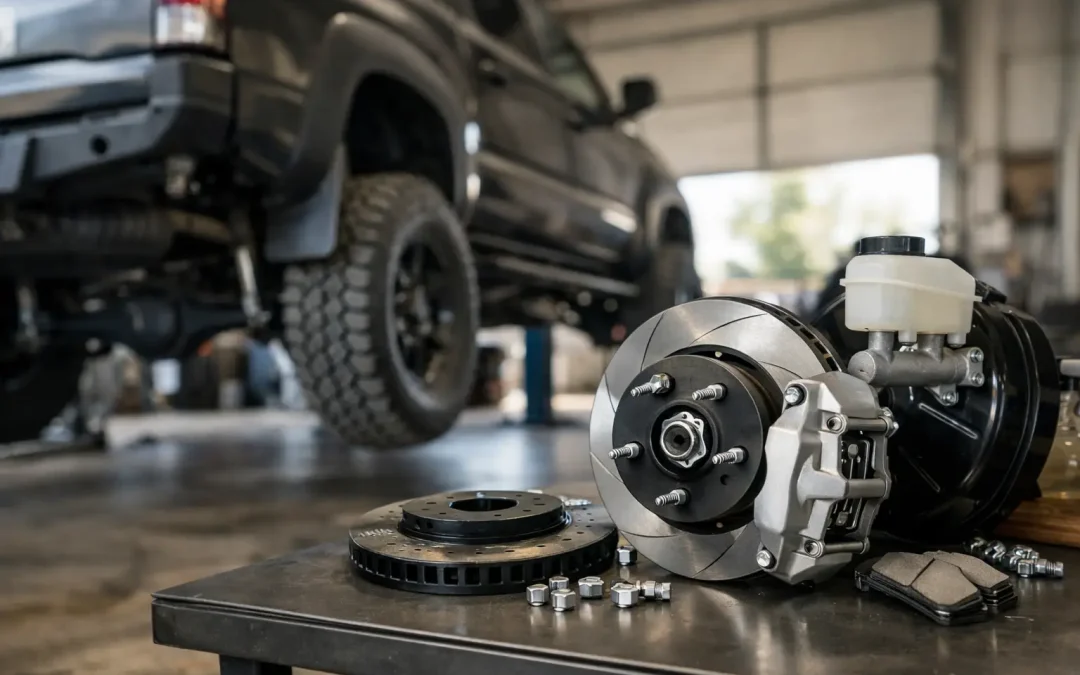
A loaded 4WD towing a caravan down a long descent has a lot more work to do than the same vehicle running empty around town. That is where a 4wd brake conversion can make genuine sense – but only when it suits the vehicle, its load and the way it is used. Bigger brakes are not automatically better. The right outcome comes from proper diagnosis, suitable components and fitment that works with the vehicle’s safety systems.
For many drivers, quality replacement pads and rotors are all that is needed. For others, particularly those towing, touring with constant weight or running larger tyres and an increased GVM, a properly planned brake upgrade can add valuable confidence and control.
What is a 4WD brake conversion?
A brake conversion changes more than a worn-out service item. It usually involves replacing or modifying major brake components to increase braking capacity. Depending on the vehicle and available kit, that may include larger rotors, higher-capacity calipers, upgraded mounting brackets, different brake lines or a rear drum-to-disc conversion.
The aim is not simply to make the brakes feel sharper on the first pedal press. A good conversion is designed to manage heat, preserve pedal feel and maintain repeatable braking when the vehicle is working hard. Heat is the enemy of braking performance. Once brakes overheat on a steep hill or while towing, pedal feel can change and stopping distances can increase.
A conversion also needs to work as a complete system. Brake balance between the front and rear matters. So do ABS, electronic stability control, wheel clearance, tyre size and the vehicle’s legal modification requirements. Fitting a larger rotor without considering those factors is not a proper brake upgrade.
When a 4WD brake conversion is worth considering
The clearest case for an upgrade is a 4WD that regularly carries more mass than it did in standard form. A touring setup can add a canopy, drawers, fridge, recovery gear, long-range fuel tank, roof rack, passengers and a full load of supplies. Add a caravan or work trailer and the brakes are being asked to manage much more energy than they were in everyday driving.
Larger tyres can also change braking behaviour. Their added diameter and rotating weight can make the vehicle feel slower to pull up, while heavy wheel and tyre packages place extra demand on the braking system. A GVM upgrade does not automatically require a brake conversion, but it is a sensible time to assess whether the original brakes remain suitable for how the vehicle will be used.
A conversion may be worth discussing if you regularly encounter one or more of these situations:
- Long towing trips through hilly country or mountain ranges
- A heavily equipped touring vehicle that is close to its legal loaded weight
- Larger, heavier tyres fitted for off-road use
- Repeated brake fade, a soft pedal or a burning smell after demanding descents
- A rear drum-brake setup that is difficult to keep performing consistently under load
These signs do not prove that a conversion is the answer. Brake fade can also come from worn pads, glazed rotors, old brake fluid, seized caliper slides, a sticking caliper or poor-quality components. That is why diagnosis comes before parts selection.
Bigger brakes are not the first fix
There is a common assumption that a hard-working 4WD needs the biggest brake kit available. In practice, a well-serviced standard system with quality pads, rotors and fresh fluid can be a major improvement over a neglected system.
Brake fluid absorbs moisture over time, which lowers its boiling point. On a long descent, old fluid can contribute to a spongy pedal when temperatures rise. Worn or incorrect pads may not provide the friction or heat resistance needed for towing. Rotors that are below specification, badly scored or heat-spotted cannot support consistent braking either.
Before recommending a conversion, a specialist should inspect pad thickness and condition, rotor condition and measurements, caliper operation, hoses, fluid condition and the rest of the hydraulic system. They should also ask how the vehicle is loaded, what it tows, where it travels and whether the concern is pedal feel, fade, stopping distance or all three.
That approach avoids spending money on an upgrade when a proper brake service would solve the real problem. It also prevents a more serious fault from being hidden behind new performance parts.
Choosing the right setup for towing and touring
There is no one brake package that suits every LandCruiser, Ranger, D-Max, Patrol or other 4WD. Vehicle model, wheel size, loaded weight and intended use all affect the right choice.
For a vehicle that spends most of its time on the road but tows on weekends, high-quality towing-rated pads and rotors may offer the best value. They can improve heat handling without changing the entire system. A more heavily loaded tourer that regularly travels long distances may benefit from a larger front rotor and caliper package, where compatible and approved for that vehicle.
The front brakes do most of the stopping, which is why many upgrades focus there first. That does not mean the rear brakes can be ignored. Rear braking contributes to stability, especially when towing, and drum brakes must be correctly adjusted and maintained. A rear disc conversion can offer benefits in some applications, but it needs careful engineering, correct proportioning and a properly integrated handbrake arrangement.
Wheel clearance is another practical issue. A larger caliper may not fit behind factory wheels or certain aftermarket rims. The wheel offset, spoke shape and clearance under suspension movement all need checking before parts are ordered. A good workshop will confirm these details rather than relying on assumptions.
Safety, compliance and insurance considerations
Brakes are safety-critical, so a 4WD brake conversion should never be treated as a bolt-on cosmetic job. Components need to be designed for the application, installed correctly and tested properly once fitted.
Modification requirements can vary depending on the vehicle, the parts fitted and the registration rules that apply where the vehicle is based. Some conversions may require engineering approval or certification. This is particularly relevant where major changes are made to calipers, mounting points, brake bias or the vehicle’s approved specifications.
It is also worth checking the impact on insurance before modifying the vehicle. An insurer may ask whether significant changes have been declared. Keeping invoices, specifications and any engineering paperwork is sensible. It provides a clear record of what has been fitted and why.
The same applies to GVM upgrades. A higher legal carrying capacity does not change the need to stay within axle limits, towball limits, trailer limits and the vehicle’s overall towing limits. Good brakes help manage a load, but they do not make an overloaded vehicle safe or legal.
What proper brake conversion work looks like
A conversion should begin with a conversation, not a catalogue. The workshop needs to understand the vehicle’s current setup and the job it is expected to do. From there, the existing brakes are inspected and measured so the recommendation is based on evidence.
Once the right path is clear, the work should use reputable components with known fitment and support. Installation is only part of the job. Caliper mounts must be correctly secured, hydraulic connections checked, brake fluid bled correctly and all clearances verified. The system then needs a careful road test and bedding-in procedure so pads and rotors can work as intended.
After the conversion, the driver should know what has changed, how to bed in the new components and when to return for an inspection. Brakes may need a short settling period, particularly after new pads and rotors are fitted. Any vibration, pulling, unusual noise or warning light should be checked promptly rather than ignored.
The practical question to ask
Instead of asking whether your 4WD needs bigger brakes, ask whether its current braking system is still appropriate for its real working weight and use. That question gets to the heart of the decision.
If your vehicle is showing fade, towing regularly, carrying a permanent touring setup or running larger tyres, have the full braking system assessed by a specialist. Albury Brake and Clutch Centre can provide straight answers on whether a service, targeted upgrade or full conversion is the sensible next step. The best brake upgrade is the one that gives you dependable stopping power without adding unnecessary cost or complication.