


That shudder as you pull away at the lights, a clutch pedal that feels different, or an engine that revs without the car picking up speed are not problems to put off until next month. This Wodonga clutch service guide explains what those signs can mean, when you can keep driving, and when your vehicle needs a proper inspection before a smaller repair turns into a breakdown.
A clutch is a wear item, but it should not be treated as a guesswork item. The right repair depends on the fault, the vehicle, how it is used and what has caused the problem in the first place. A commuter hatch, a work ute towing regularly and a 4×4 set up for touring can all wear clutches in very different ways.
Wodonga clutch service guide: know the warning signs
Most clutch problems give you some notice. The difficulty is that the early signs can be easy to dismiss, especially when the vehicle still gets you to work and back. Paying attention early may help you plan the repair rather than being caught out on the side of the road.
Clutch slip is one of the clearest warning signs. You may notice the engine revs rise quickly under acceleration, particularly in a higher gear or when climbing a hill, but the vehicle does not accelerate as it should. It can be more obvious when towing, carrying a load or overtaking. Slip generally means the clutch friction material is worn, contaminated or not clamping correctly. Continuing to drive can damage related components and leave you without drive when you least expect it.
A shudder or vibration when taking off can point to an uneven clutch surface, heat damage, contamination from an oil leak, worn engine or gearbox mounts, or an issue in the driveline. The clutch itself may be part of the problem, but it is not sensible to assume it is the only cause without checking properly.
Difficulty selecting gears is another common concern. If first or reverse is hard to engage with the engine running, or the vehicle creeps forward despite the clutch pedal being fully depressed, the clutch may not be releasing completely. Hydraulic faults, a worn release bearing, problems with the clutch fork or a damaged clutch assembly can all produce similar symptoms.
Listen for noises as well. A chirp, rumble or growl when pressing or releasing the clutch pedal may indicate a worn release bearing or another component around the bellhousing. A pedal that feels spongy, sticks to the floor or suddenly needs more effort can indicate a hydraulic issue. These faults deserve prompt attention because they can quickly leave the vehicle unable to select a gear.
Why an accurate clutch diagnosis matters
Replacing a clutch involves removing the gearbox, so it is work that needs to be done once and done properly. Fitting a new clutch without finding the underlying cause of the failure can waste money and shorten the life of the replacement.
A proper inspection starts with the symptoms you have noticed. When does it slip? Has the pedal feel changed? Does the noise occur only when the pedal is pressed? Has the vehicle been towing, carrying tools every day, working off-road or doing mostly stop-start driving? Those details help narrow down the likely fault before parts are removed.
Once access is available, the clutch disc, pressure plate, flywheel, release bearing and operating system should be assessed as a complete system. The workshop should also look for oil leaks from the engine rear main seal or gearbox input seal, because even a small leak can contaminate a new clutch. Mounts, hydraulic components and the condition of the flywheel matter too.
The flywheel is a good example of why diagnosis matters. Some flywheels can be machined if they are within specification and suitable for machining. Others, including many dual-mass flywheels, may need replacement if they have excessive movement, heat damage or wear. Reusing a damaged flywheel may save money on the day, but it can cause vibration, poor clutch operation and an early return visit.
At Albury Brake and Clutch Centre, the focus is on explaining what has been found in plain language, then recommending the repair that suits the vehicle and the way it is actually used. That means straight answers, quality components and no pressure to replace parts that do not need replacing.
Repair or replacement: what is usually involved?
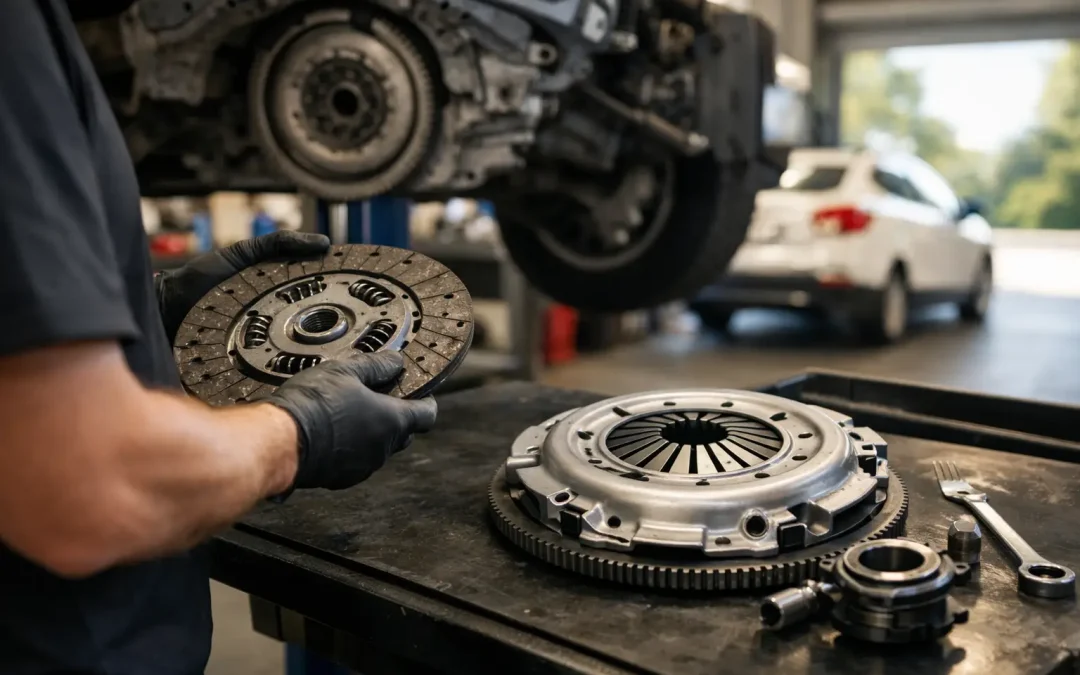
In many cases, a worn clutch requires a complete clutch kit rather than just one individual component. A quality kit commonly includes the clutch disc, pressure plate and release bearing. Depending on the vehicle and diagnosis, the repair may also involve a clutch slave cylinder, master cylinder, flywheel work, seals or gearbox oil.
There is a trade-off between the cheapest available parts and a clutch that will give reliable service. A low-cost kit may be tempting if the vehicle is older or being sold soon, but clutch replacement is labour-intensive. Choosing a proven component from a reputable manufacturer is often better value than paying to remove the gearbox again because a cheaper part has failed early.
The correct clutch specification matters just as much as the brand. For a standard daily driver, an original-equipment style clutch is often the best match for smooth take-offs and comfortable pedal feel. For a ute that regularly tows a caravan, carries heavy equipment or has larger tyres, a heavy-duty clutch may be more appropriate. It can offer greater clamping force and better heat handling, although some heavy-duty options can have a firmer pedal or be less forgiving in stop-start traffic.
Modified 4x4s need particular care. Increased GVM, bigger tyres, added accessories and regular towing all place more load through the driveline. A clutch that was adequate in standard form may not be the right fit once the vehicle is working harder. The answer is not automatically the heaviest clutch available. It is selecting a setup that suits the engine torque, vehicle weight and real-world use without sacrificing drivability.
Can you drive with a clutch problem?
It depends on the symptom, but waiting is rarely the low-cost option. Mild slip may allow you to drive gently to a workshop, yet it can worsen quickly under load. Avoid towing, steep hills, hard acceleration and long trips until it has been checked. A slipping clutch creates heat, and heat damages friction surfaces and flywheels.
If the pedal stays on the floor, gears will not engage, the vehicle lurches when starting, or there is a strong burning smell, it is safer to stop driving. Forcing gear changes can damage the gearbox, while a total loss of clutch operation can leave you stranded in an unsafe location.
Do not try to nurse a failing clutch by revving harder or riding the pedal. Resting your foot on the pedal, holding the car on a hill with the clutch and slipping it excessively in traffic all add unnecessary heat and wear. Use the handbrake for hill starts and select neutral when stopped for extended periods where practical.
Keeping your new clutch working longer
No clutch lasts for a fixed number of kilometres. Vehicle type, driving conditions, load and driver habits have a much bigger influence than the odometer alone. Highway kilometres are generally easier on a clutch than city traffic, frequent hill starts or heavy towing.
For longer service life, release the clutch smoothly rather than slowly slipping it, avoid launching under heavy throttle and make sure the vehicle is in the right gear for the load. If you tow, use sensible towing practices and do not overload the vehicle. A clutch is designed to connect engine power to the gearbox, not to absorb repeated abuse.
Regular mechanical servicing also helps identify leaks, mount issues and hydraulic concerns before they affect the clutch. If you notice a change in pedal feel or engagement point after a repair, raise it early. Small adjustments or developing faults are easier to deal with before they create further damage.
What to expect from a clutch service
A trustworthy clutch repair starts with clear communication. You should be able to explain the symptoms, receive a diagnosis based on inspection rather than assumption, and understand the recommended work before proceeding. If additional issues are found once the gearbox is removed, the reason for the extra work should be explained clearly.
Turnaround time varies by vehicle, parts availability and what is found during the job. Some clutch replacements are straightforward, while others involve difficult access, flywheel replacement or related hydraulic repairs. The important part is not rushing a safety-critical driveline repair simply to meet an unrealistic deadline.
If your clutch is slipping, shuddering or making noise, arranging an inspection now gives you more control over the repair. A proper diagnosis can protect the gearbox, reduce the chance of an inconvenient breakdown and get you back on the road with confidence that the job has been done properly.