


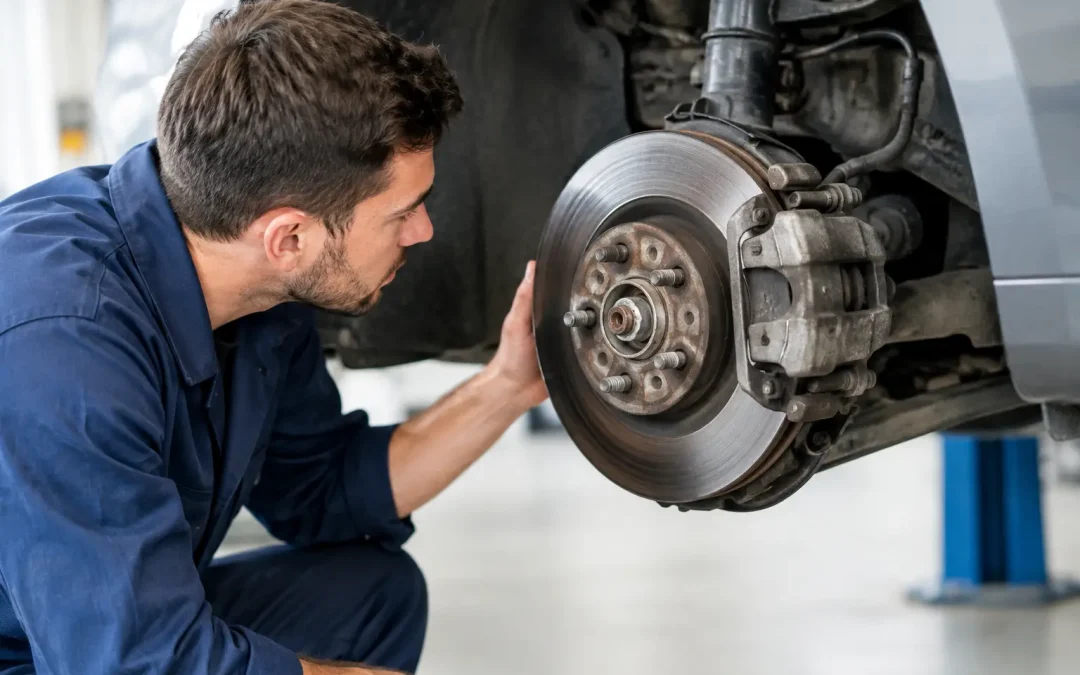
A noise from around a wheel can make every trip feel uncertain. Is it a wheel bearing noise or brake problem? The sound may seem similar from the driver’s seat, but the cause matters. One fault can affect steering and wheel stability; the other can reduce braking performance. Guessing – or waiting for the noise to get worse – can turn a straightforward repair into a larger one.
The good news is that noises usually leave clues. Paying attention to when the sound happens, how it changes and whether the vehicle feels different can help narrow it down. A proper inspection is still the only way to be certain, particularly where brakes, bearings and suspension components work close together.
Wheel bearing noise or brake problem: the key differences
A worn wheel bearing most often creates a humming, droning, rumbling or growling sound that rises with road speed. It can be easy to mistake for tyre noise, especially on coarse country roads. Unlike an engine-related noise, the sound generally continues when you lift off the accelerator because it is linked to wheel rotation, not engine revs.
The noise may change when the vehicle turns. For example, a bearing on one side can become louder when cornering in the opposite direction, as the vehicle’s weight transfers across the suspension. This is a useful clue, but it is not a reliable home diagnosis on its own. Tyres with uneven wear and some driveline faults can produce similar behaviour.
Brake noises tend to be more closely connected to brake pedal use. A high-pitched squeal when slowing down can be caused by brake pad wear indicators, glazed pads, dust or a minor vibration in the brake hardware. A scraping or grinding sound when braking is more serious. It may mean the brake pad material is worn away and metal is contacting the brake rotor.
There are exceptions. A damaged rotor, loose brake hardware or a stone caught near the backing plate can make noise even when you are not touching the pedal. That is why the right question is not simply whether a sound is “brakes” or “bearings”. It is whether the vehicle is safe to drive until it can be checked.
Sounds and symptoms worth paying attention to
A failing wheel bearing commonly starts as a low hum at suburban speeds and becomes more obvious on the highway. It may be accompanied by a vibration through the floor, steering wheel or seat, although vibration can also point to tyre or wheel issues. In more advanced cases, there may be noticeable wheel play, poor steering feel or an ABS warning light if the bearing assembly includes a wheel speed sensor.
Brake issues can feel as well as sound different. Pulsing through the brake pedal or steering wheel during braking may indicate rotor run-out, uneven rotor deposits or another brake-system issue. A vehicle pulling to one side when braking, a soft pedal, reduced stopping power, a burning smell or smoke near a wheel needs prompt attention.
Do not rely on noise alone. A quiet brake system is not automatically a healthy one, and a noisy system is not always an emergency. What changes the urgency is the type of sound and any change in braking, steering or vehicle control.
When grinding means stop driving
If you hear heavy metal-on-metal grinding when applying the brakes, stop driving as soon as it is safe to do so. Continuing to drive can damage the rotors, calipers and other parts, while seriously reducing safe braking performance.
The same applies if a wheel bearing is producing a loud growl alongside wobbling, wandering steering, visible wheel movement, or a feeling that the wheel is not tracking correctly. A severely worn bearing can create excessive heat and play at the hub. This is not a fault to put off until the next service.
If your brake warning light comes on, the pedal sinks unusually low, or brake fluid is leaking, arrange recovery rather than driving the vehicle to a workshop. Safety-critical faults deserve a cautious approach.
Why wheel and brake noises are often misdiagnosed
The wheel area is a busy place. Bearings, tyres, brake rotors, pads, calipers, CV joints, suspension bushes and dust shields can all make or transfer noise. Sound also travels through the body of a vehicle, so a noise that seems to come from the front left may not actually start there.
Tyres are a common source of confusion. Cupped, scalloped or badly uneven tyre wear can create a bearing-like roar that increases with speed. A wheel bearing can also wear in a way that only becomes obvious under load. Simply spinning a wheel while the car is raised may not reproduce the noise.
Brake repairs can be misdirected too. Replacing pads may reduce a squeal, but it will not fix a rough bearing. Replacing a bearing will not solve a sticking caliper or heavily scored rotor. This is where a proper inspection saves money. The aim is to identify the failed component, check the related parts and explain what actually needs doing – no pressure and no unnecessary add-ons.
What a proper diagnosis should include
A technician will normally begin with a road test where it is safe to do so. This helps identify whether the sound changes with speed, turning, acceleration or brake application. The vehicle is then inspected with the wheels off, allowing the brakes, tyres, hubs and suspension components to be checked properly.
For suspected bearing faults, the inspection may include checking wheel play, bearing roughness, hub condition and wheel speed sensor operation where relevant. For brake concerns, the condition and thickness of pads, rotor surfaces, caliper movement, brake hoses and fluid are assessed. Heat damage, leaks, seized components and uneven wear patterns can reveal problems that are not obvious from the driver’s seat.
The repair approach depends on the vehicle and the fault. Some bearings are replaced as a hub assembly, while others require a bearing to be pressed in correctly. Brake work may involve pads and rotors together, caliper repairs, new hardware or a brake fluid service. Quality parts and correct fitment matter because shortcuts around brakes and wheel hubs rarely stay cheap for long.
For 4x4s, utes and tow vehicles, extra load changes the picture. Larger tyres, increased GVM, long touring runs and towing can place more demand on brakes, hubs and suspension. A standard repair may be suitable in some cases, while others benefit from a brake upgrade designed for the way the vehicle is actually used. The right answer depends on load, tyre size, towing weight and driving conditions.
Can you keep driving until your booking?
A light brake squeal with normal pedal feel and normal stopping performance is not always an immediate stop-driving fault, but it should still be booked in soon. The sound could be a pad wear indicator, and waiting may mean the pads wear into the rotors.
A mild bearing hum also needs an inspection without delay, even if the vehicle otherwise feels normal. Bearings do not repair themselves, and deterioration can accelerate once wear begins. Avoid long highway trips, heavy towing and unnecessary driving until you have a clear answer.
Do not keep testing the noise with hard braking, fast cornering or repeated high-speed runs. That does not diagnose the fault and may make a marginal safety issue worse. If you are unsure whether the vehicle is safe, the sensible option is to stop driving and seek advice.
Get a straight answer before the problem grows
A sound near the wheel is easy to ignore when the car still gets you to work, school drop-off or the job site. But brakes and wheel bearings are not components to monitor indefinitely. Early diagnosis gives you more repair options and a better chance of avoiding collateral damage.
At Albury Brake and Clutch Centre, the focus is on finding the real cause, explaining it in plain language and carrying out the repair properly. If the noise has changed, the brake pedal feels different or you simply do not trust what the vehicle is telling you, arrange an inspection before the next trip makes the decision for you.