


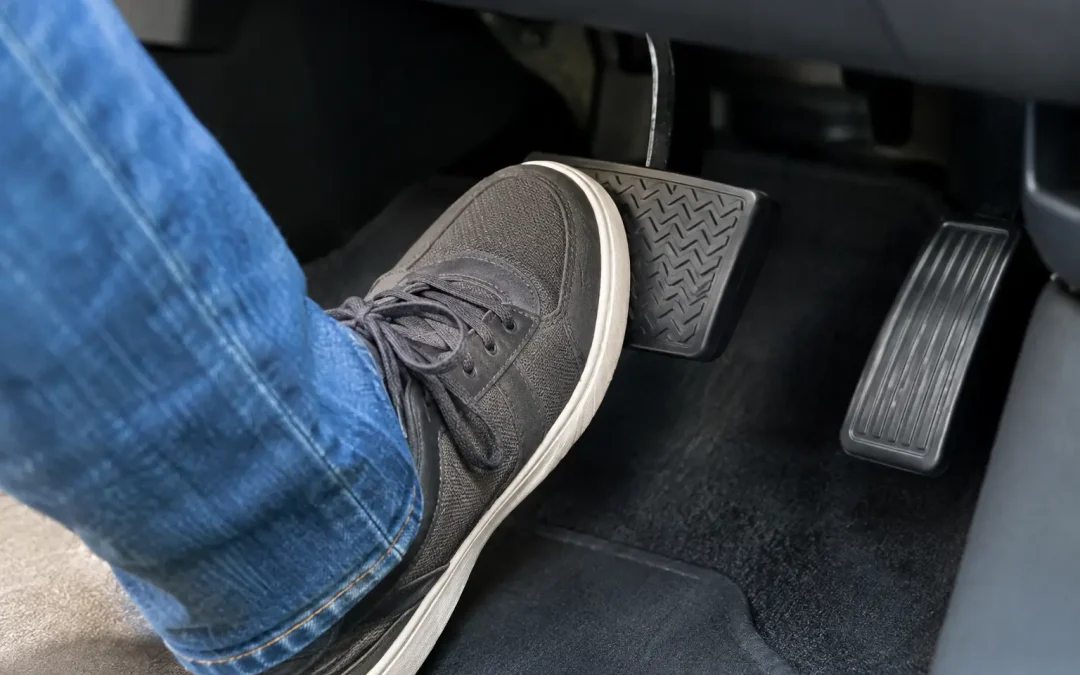
A brake pedal that shudders under your foot is not something to ignore. Brake pedal vibration commonly appears when slowing from road speed, and while the cause can be straightforward, it can also point to a fault that needs proper attention before it affects stopping performance.
The key detail is when the vibration happens. A shake only under braking tells a different story to a constant steering wheel wobble, a pulse at low speed, or a pedal that feels soft. That is why replacing parts based on a guess is rarely the right approach. A proper inspection identifies the source, checks the condition of the whole braking system and makes sure the repair will last.
What brake pedal vibration usually feels like
Most drivers describe a pulsing or juddering feeling through the brake pedal as they slow down. It may be mild at first and only noticeable on a downhill run, when towing, or when braking from higher speeds. In other cases, it is strong enough to shake the steering wheel or the whole vehicle.
The vibration may be accompanied by a scraping noise, a pull to one side, a burning smell after driving, or reduced braking confidence. Those extra symptoms matter. They help narrow down whether the issue is centred on the brake discs and pads, a sticking caliper, wheel and tyre condition, or components in the steering and suspension.
If the vehicle is difficult to control, pulls sharply, makes harsh grinding noises, or has a brake warning light on, do not keep driving it as normal. Arrange an inspection as soon as it is safe to do so.
Common causes of brake pedal vibration
Uneven brake disc thickness
Brake discs are often called rotors, but they are the same component: the metal discs clamped by the brake pads to slow the vehicle. Over time, discs can develop uneven thickness around their surface. As the pads pass over these high and low areas, they are pushed back slightly, which creates a pulse through the pedal.
People often call this “warped discs”. Heat can certainly play a part, especially after repeated heavy braking, towing, long descents or hard 4×4 use. But the underlying issue is frequently uneven disc wear or friction material transfer rather than a disc simply bending out of shape.
The correct fix depends on the disc thickness, run-out, surface condition and the cause of the uneven wear. In many cases, replacing the discs and pads as a matched set is the sensible long-term repair. Fitting new pads to badly worn or uneven discs can leave the problem unresolved and shorten the life of the new pads.
Sticking calipers or seized slide pins
A brake caliper needs to release cleanly after you take your foot off the pedal. If a piston is sticking or the caliper slide pins have seized, one pad may remain in contact with the disc. This creates excess heat and uneven wear, often leading to vibration later on.
You may notice the vehicle pulling under brakes, one wheel producing more brake dust than the others, or a hot smell after a short trip. Sometimes the symptoms are subtle until the disc and pads have already been damaged.
Replacing discs and pads without fixing the caliper fault is false economy. The new parts can quickly suffer the same damage. A specialist inspection should assess caliper movement, hoses, slides and pad wear patterns before recommending the repair.
Wheel bearing, hub or fitting issues
Brake discs sit against the wheel hub. If there is corrosion, dirt or damage on that mounting surface, the disc may not sit perfectly true. Even a small amount of run-out can contribute to pedal pulsation over time.
Wheel bearing play can also affect how the disc runs. On vehicles that have recently had brake work, incorrect wheel nut tension is another possible contributor. Wheel nuts should be tightened evenly to the manufacturer’s specification, not rattle-gunned on without care.
This is one reason brake repairs need more than a quick parts swap. Clean mounting faces, accurate measurement and correct assembly all matter to the result.
Worn suspension or steering components
Not every vibration under braking starts in the brake system. Worn control arm bushes, ball joints, tie-rod ends or other front-end components can allow the wheel to move under braking load. The result may be a steering wheel shake, a knocking noise, wandering on the road, or vibration that feels similar to a disc problem.
These faults can be more noticeable in heavier vehicles, utes and 4x4s, particularly where they tow, carry regular loads or run larger tyres. The brakes may still need attention, but the suspension and steering must be checked as part of the diagnosis. Replacing only the obvious brake parts may not restore the safe, steady feel you expect.
Tyres and wheels
A wheel balance issue generally causes vibration at certain road speeds whether you are braking or not. A damaged tyre, buckled wheel or loose wheel nuts can also create shaking that becomes more apparent as the vehicle slows.
The difference matters. If the vibration occurs only when the brakes are applied, the braking system is more likely to be involved. If it is present while cruising, start by looking at tyres, wheels and suspension as well. A technician can separate these symptoms during a road test and inspection.
Why towing and heavy driving make it worse
A vehicle that spends most of its life on short suburban trips puts different demands on brakes than a loaded 4×4 towing a caravan through the hills. More weight means more heat every time you slow down. Larger tyres and increased GVM setups can add further strain, especially if the standard brake package was already working near its limit.
That does not mean every towing vehicle needs a major brake upgrade. It depends on the vehicle, how much it carries or tows, tyre size, driving conditions and the condition of the existing components. But if brake pedal vibration keeps returning after ordinary repairs, it is worth discussing whether the parts fitted are suited to the way the vehicle is actually used.
Quality discs, pads and caliper components are particularly important here. Cheap parts that do not manage heat well can wear quickly or create noise and vibration problems. The goal is not the most expensive option by default. It is the right component combination for reliable stopping and sensible long-term value.
What happens during a proper brake inspection
A good brake inspection starts with the driver’s description of the problem. When does the vibration occur? Does it happen only at speed? Has the vehicle recently towed, travelled off-road, had brake work completed or sat unused for a long period?
From there, the technician checks pad thickness and wear patterns, disc condition and measurements, caliper operation, brake hoses, hub surfaces, wheel bearings and relevant steering and suspension components. A road test may also be needed to confirm the symptom and make sure the repair has resolved it.
This approach avoids unnecessary upselling. Sometimes the repair is a straightforward disc and pad replacement. Other times, a seized caliper, worn bush or hub issue needs to be addressed first. Straight answers at this stage save money compared with fitting parts that will not fix the underlying fault.
Can you keep driving with a vibrating brake pedal?
A mild vibration does not always mean the brakes will fail immediately, but it is still a warning that something is not right. Continued driving can increase disc and pad damage, place extra stress on other components and reduce confidence when you need to stop quickly.
Avoid heavy braking, towing and long downhill runs until the vehicle has been checked. If the vibration is severe, braking feels inconsistent, the vehicle pulls to one side, or you hear metal-on-metal grinding, treat it as urgent. Your brakes are a safety-critical system, not a repair to put off until the next service.
For drivers across Albury Wodonga, the practical next step is simple: have the vehicle inspected by a brake specialist who will identify the cause before recommending parts. A smooth, firm pedal and predictable stopping feel are worth protecting, whether you are doing the school run, heading to site, or setting off with the caravan behind you.