


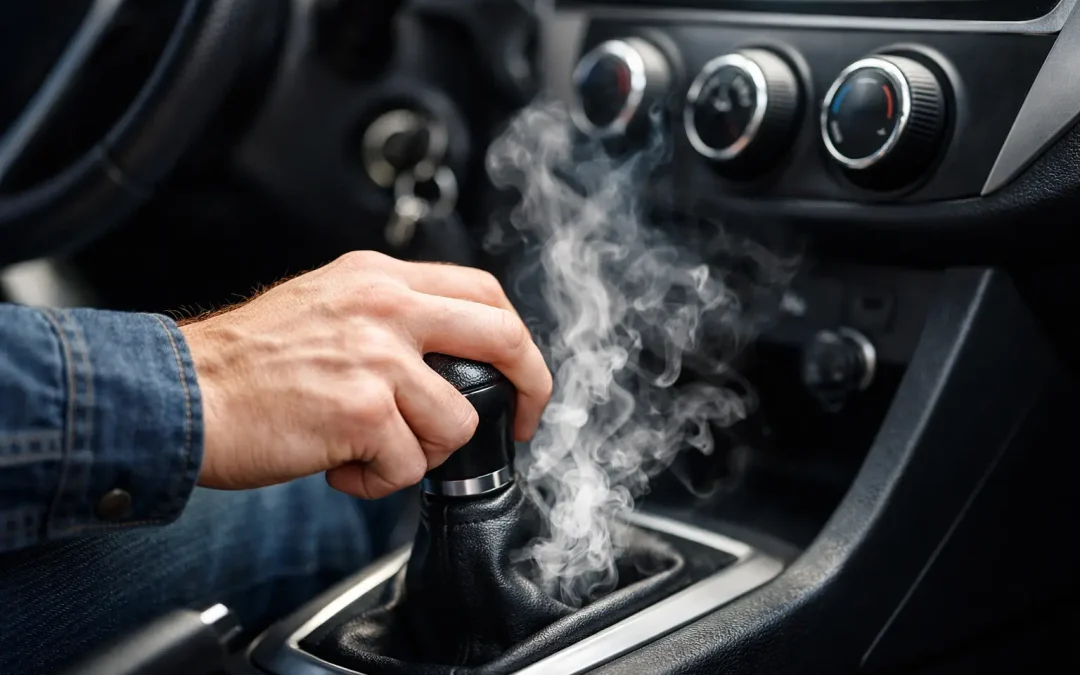
That sharp, acrid smell after taking off on a hill, reversing a trailer or crawling through traffic is not something to brush off. Of all the clutch burning smell causes, clutch slip is the one most drivers think of first – and often for good reason. But the smell alone does not tell the whole story. A slipping clutch, oil contamination, an adjustment issue or excessive heat from hard use can produce similar warning signs.
The key is knowing when a brief smell is a sign to change your driving habit and when it means the vehicle needs to come off the road for a proper inspection. Catching a clutch problem early can sometimes prevent damage to the flywheel, pressure plate and other parts that add to the repair bill.
What does a burning clutch smell like?
A clutch usually gives off a strong hot, chemical smell. Some people describe it as burnt paper, overheated brakes or hot rubber. It is most noticeable just after the clutch has been worked hard, particularly on a steep driveway, at a boat ramp, while manoeuvring with a caravan, or in slow stop-start traffic.
The odour comes from the clutch friction material overheating. In a manual vehicle, the clutch disc sits between the engine flywheel and pressure plate. When you press the clutch pedal, those surfaces separate so you can change gear. When the pedal is released, they clamp together and transfer engine power to the gearbox.
If the disc spends too long partly engaged, it slips against the flywheel instead of locking firmly. Friction creates heat quickly. Enough heat can glaze or wear the clutch lining, reduce its grip and leave you with a problem that becomes more obvious each time you drive.
Common clutch burning smell causes
Riding the clutch
Resting your foot on the clutch pedal can keep the clutch slightly disengaged, even if you do not notice it. The same applies to holding a vehicle on a hill using clutch bite rather than the brake or handbrake. Both habits create unnecessary slip and heat.
This is particularly common in traffic and when drivers are learning in a manual. Use neutral where practical, keep your left foot off the pedal once the gear is selected, and use the brakes to hold the vehicle on an incline. A one-off smell after an awkward hill start may not mean the clutch is worn out, but repeated overheating will shorten its life.
A worn or slipping clutch
A clutch disc wears over time. As its friction material becomes thin, the clutch may no longer grip properly under load. The engine revs rise, but the vehicle does not accelerate as strongly as it should. You might notice it first in a higher gear, climbing a hill, overtaking, carrying a load or towing.
A burning smell combined with slipping is a strong sign that the clutch needs attention. Continuing to drive can overheat the pressure plate and flywheel. In severe cases, the flywheel surface can crack, distort or develop heat spots, making the job more involved than a straightforward clutch replacement.
Heavy towing, 4×4 work or repeated hill starts
Even a healthy clutch can smell if it is worked beyond its usual conditions. A loaded ute towing a caravan through the hills, a 4×4 negotiating soft ground, or a vehicle repeatedly manoeuvring a heavy trailer all place more demand on the clutch.
That does not automatically mean a fault is present. It does mean the clutch must be correctly matched to the vehicle and its workload. Standard replacement parts may not be the best choice for a vehicle with larger tyres, increased GVM, frequent towing or touring duties. The right clutch setup is about dependable driveability, not simply fitting the cheapest available kit.
Oil or fluid contaminating the clutch
A clutch needs clean, dry friction surfaces to grip. If engine oil leaks past the rear main seal, or gearbox oil leaks from the transmission input area, fluid can reach the clutch disc. The lining may then slip and overheat even when there is plenty of material left on it.
This is why replacing only the clutch disc without finding the source of contamination can be false economy. The leak needs to be diagnosed and repaired at the same time. Otherwise, a new clutch can quickly develop the same symptoms.
A problem with clutch adjustment or hydraulics
Some older vehicles use a cable-operated clutch, while many newer vehicles use a hydraulic master and slave cylinder. If there is not enough pedal free play, or if a hydraulic component is not allowing the clutch to fully engage, the clutch can remain partly released.
The result is much like riding the clutch: slip, heat and a burning smell. Other clues can include a pedal that feels unusual, difficulty selecting gears, a changing engagement point or fluid loss around the clutch hydraulic components. These faults should be checked rather than adjusted blindly, because the underlying issue may be a worn component.
Incorrect installation or unsuitable parts
A burning smell soon after a clutch replacement is not always normal bedding-in. New components can need a short, gentle bedding period, but a strong or ongoing odour, slipping, shuddering or poor gear changes should be assessed promptly.
Possible causes include incorrect parts, a clutch disc fitted the wrong way around, damaged components, an unmachined or unsuitable flywheel surface, or a release system issue. Quality parts and careful installation matter because the clutch system relies on every component working together.
When should you stop driving?
If you smell the clutch once after a difficult take-off and it disappears, ease off, allow the vehicle to cool and pay attention to how it drives afterwards. Avoid towing, steep hills and heavy throttle until you are confident the clutch is gripping normally.
Stop driving and arrange an inspection if the smell keeps returning, becomes stronger, or comes with noticeable slipping. The same applies if the engine revs flare without matching acceleration, the clutch pedal feels different, gears are hard to select, or smoke appears from under the vehicle. These symptoms can leave you without drive with little warning.
Do not try to test a suspected slipping clutch by repeatedly loading it up or doing aggressive hill starts. That only creates more heat and can turn a manageable fault into greater damage.
How a proper clutch inspection finds the real fault
Clutch faults are not diagnosed properly by smell alone. A technician needs to road test the vehicle where safe, check pedal operation and clutch actuation, look for leaks, and assess whether the clutch slips under load. In some cases, the gearbox must be removed to inspect the clutch disc, pressure plate, flywheel and release bearing.
This process matters because several faults can feel similar from the driver’s seat. A clutch that will not disengage properly can make gear changes difficult. A clutch that slips can produce the burning odour. A release bearing or dual-mass flywheel fault may create noise or vibration as well. Replacing parts without confirming the cause can waste time and money.
At Albury Brake and Clutch Centre, the focus is on straight answers: identify what has failed, explain what needs replacing and check for related damage before the vehicle goes back together. That approach is especially valuable for towing vehicles and work utes, where downtime and repeat repairs cost more than doing the job properly once.
Reducing clutch heat in everyday driving
A few driving habits make a real difference to clutch life. Select first gear, move away smoothly and release the pedal fully once the vehicle is rolling. On a hill, hold the vehicle with the foot brake or handbrake, then move away without lingering at the bite point.
When reversing a trailer or manoeuvring slowly, use short controlled movements where possible rather than balancing the vehicle on the clutch for long periods. In low-range four-wheel driving, choose the right gear early and let the vehicle’s gearing do the work. If the clutch starts to smell, stop somewhere safe and let it cool rather than forcing on.
A burning clutch smell is your vehicle telling you that too much heat is building where it should not. Treat it as an early warning, not a challenge to drive through, and you give yourself the best chance of a smaller, more reliable repair.