


A clutch that slips under load, shudders when taking off or makes selecting gears hard can turn an ordinary drive into a frustrating one. Clutch kits are designed to restore smooth, reliable power transfer between the engine and gearbox, but choosing the right one is not as simple as ordering the cheapest part that fits.
For most drivers, a clutch only gets attention once it starts causing trouble. The better approach is to understand the warning signs early, have the fault diagnosed properly and fit components that suit how the vehicle is actually used. That matters whether the car does school runs and commuting, spends weekends towing a van, or works hard on regional roads and job sites.
What Is Included in Clutch Kits?
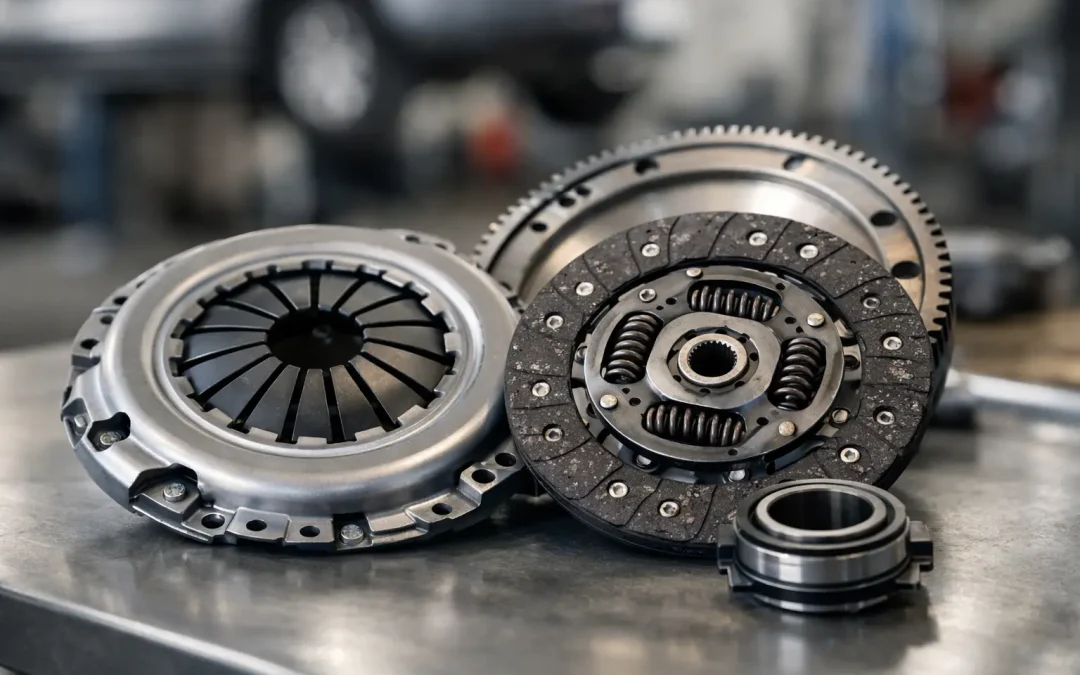
A standard clutch kit usually includes three main parts: the clutch disc, pressure plate and release bearing. Together, these parts allow the engine to disconnect from the gearbox when you press the clutch pedal, then reconnect progressively as you move away.
The clutch disc is the friction material that wears over time. The pressure plate clamps it firmly against the flywheel, while the release bearing operates the pressure plate when the pedal is pressed. If one component has failed or is badly worn, replacing the full kit is generally the sensible option. The labour involved in removing a gearbox is significant, so fitting only one worn part can create an avoidable second repair later.
Some vehicles also need related parts checked at the same time. Depending on the design, that can include the flywheel, clutch fork, spigot bearing, slave cylinder, master cylinder and hydraulic lines. A new clutch cannot perform properly if the flywheel surface is damaged or a leaking hydraulic component prevents full clutch release.
Signs Your Clutch May Need Attention
Clutches rarely fail without some warning. The signs can begin subtly, particularly when a vehicle is used for short trips or driven gently most of the time. A slipping clutch is one of the clearest symptoms. Engine revs rise, but the vehicle does not accelerate as strongly as it should, often most noticeable when overtaking, climbing a hill or towing.
A burning smell after a difficult take-off, a heavy or unusually soft clutch pedal, and shuddering as the vehicle moves away can also point to a clutch issue. Difficulty selecting gears, especially reverse or first gear, may mean the clutch is not releasing fully. However, it can also be caused by a hydraulic fault, worn gear linkage or an internal gearbox problem.
Noises matter too. A growl or whirr when the clutch pedal is pressed may be related to the release bearing. A rattle at idle that changes when the pedal is operated can involve the clutch, flywheel or gearbox input shaft. The symptom gives a technician a starting point, but it is not a complete diagnosis on its own.
Choosing Clutch Kits for How You Drive
The correct clutch is not always the heaviest-duty option. A quality standard replacement clutch is often the best choice for a family car, commuter or light commercial vehicle used within its normal load limits. It should deliver smooth engagement, sensible pedal feel and dependable everyday service.
For a 4×4, ute or work vehicle that regularly tows, carries heavy loads or has larger tyres and a GVM upgrade, a heavy-duty clutch may be a better fit. These clutch kits are built to handle increased torque and heat, reducing the chance of premature slipping under sustained load. The trade-off is that some heavy-duty setups can have a firmer pedal or less forgiving engagement, particularly in traffic.
Performance clutches need even more care when selecting. A higher clamping force or specialised friction material can cope with more power, but it may not suit a vehicle used for daily stop-start driving. An aggressive clutch that feels fine on a modified weekend car can become tiresome in a work ute or family vehicle.
Brand quality matters as well. A clutch is not a part worth gambling on, because installation requires extensive labour. Reputable manufacturers such as Exedy, Aisin and Powerdrive build kits for specific vehicle applications and duty levels. The right choice comes down to the vehicle, its condition, the engine output and what you ask it to do day to day.
Why Proper Diagnosis Comes First
It is easy to assume every clutch symptom means the clutch kit needs replacing. Sometimes that is correct. Other times, the fault sits elsewhere.
A hydraulic clutch system with a leaking master or slave cylinder can cause a pedal to sink or gears to clash, even when the clutch disc still has serviceable life. Oil contamination from an engine rear main seal or gearbox input seal can make a clutch slip or shudder. A damaged dual-mass flywheel can create vibration and noise that a new clutch alone will not fix.
That is why a proper inspection is worth more than a quick guess. A specialist workshop should discuss the symptoms, assess pedal operation and road-test the vehicle where appropriate. Once the gearbox is removed, the clutch components, flywheel and surrounding seals can be inspected properly. This prevents unnecessary work while making sure worn or damaged related parts are not left behind.
At Albury Brake and Clutch Centre, the aim is straightforward: identify the real cause, explain the repair in plain language and fit parts that are suited to the job. It is a better outcome than replacing components on assumption and hoping the problem disappears.
What a Complete Clutch Replacement Should Address
A clutch replacement is a chance to put the driveline back into reliable working order, not simply bolt in new friction material. The flywheel should be measured and inspected for heat marks, cracks, scoring and excessive wear. In some cases it can be machined to specification; in others, replacement is the safer and more durable option.
Hydraulic components deserve attention too. On vehicles with a concentric slave cylinder inside the bellhousing, replacing the cylinder during clutch work is often wise if there is any sign of wear, leakage or age-related risk. It is far more cost-effective than removing the gearbox again soon after the clutch has been fitted.
The installer should also check for oil leaks, inspect mounts and make sure the clutch system is bled and adjusted correctly where adjustment applies. Quality workmanship includes correct torque settings, careful alignment and a final test to confirm smooth operation. These details are what help a repair last.
Getting More Life From a New Clutch
Even a quality clutch has limits. Resting your foot on the pedal, holding the vehicle on a hill with the clutch, or repeatedly slipping it while manoeuvring puts heat into the friction material and shortens its life. Use the handbrake for hill starts where practical and select low range when a 4×4 is doing slow, heavy work off-road.
When towing, match the clutch to the load and avoid trying to pull away in too high a gear. If the clutch starts to smell, shudder or slip, do not keep pushing through it. Early inspection may prevent damage to the flywheel and other components.
Is it safe to drive with a slipping clutch?
A mildly slipping clutch may still let you drive for a short time, but it is not something to ignore. Slipping can worsen quickly under load and may leave you unable to accelerate safely in traffic, on a hill or while towing. Continued driving can also overheat and damage the flywheel.
How long should a clutch kit last?
There is no fixed kilometre figure. A clutch in a mostly highway-driven car can last well beyond 150,000 km, while a vehicle used in city traffic, towing, off-road work or frequent heavy loads may need attention much earlier. Driving habits, vehicle condition and clutch quality all make a difference.
A clutch repair should leave you confident when you pull away, change gear or hook up a load. If something does not feel right, getting a straight answer early is usually the cheapest way to keep a small driveline issue from becoming a larger one.